Tag Archives: biometrics

Iris identification post-mortem avec utilisation en police scientifique - Forenseek

Post-Mortem Iris Identification

For a long time, the iris was thought to become unusable almost as soon as a person died. Several recent studies show the opposite, and the most comprehensive of them has just been published in the United States.

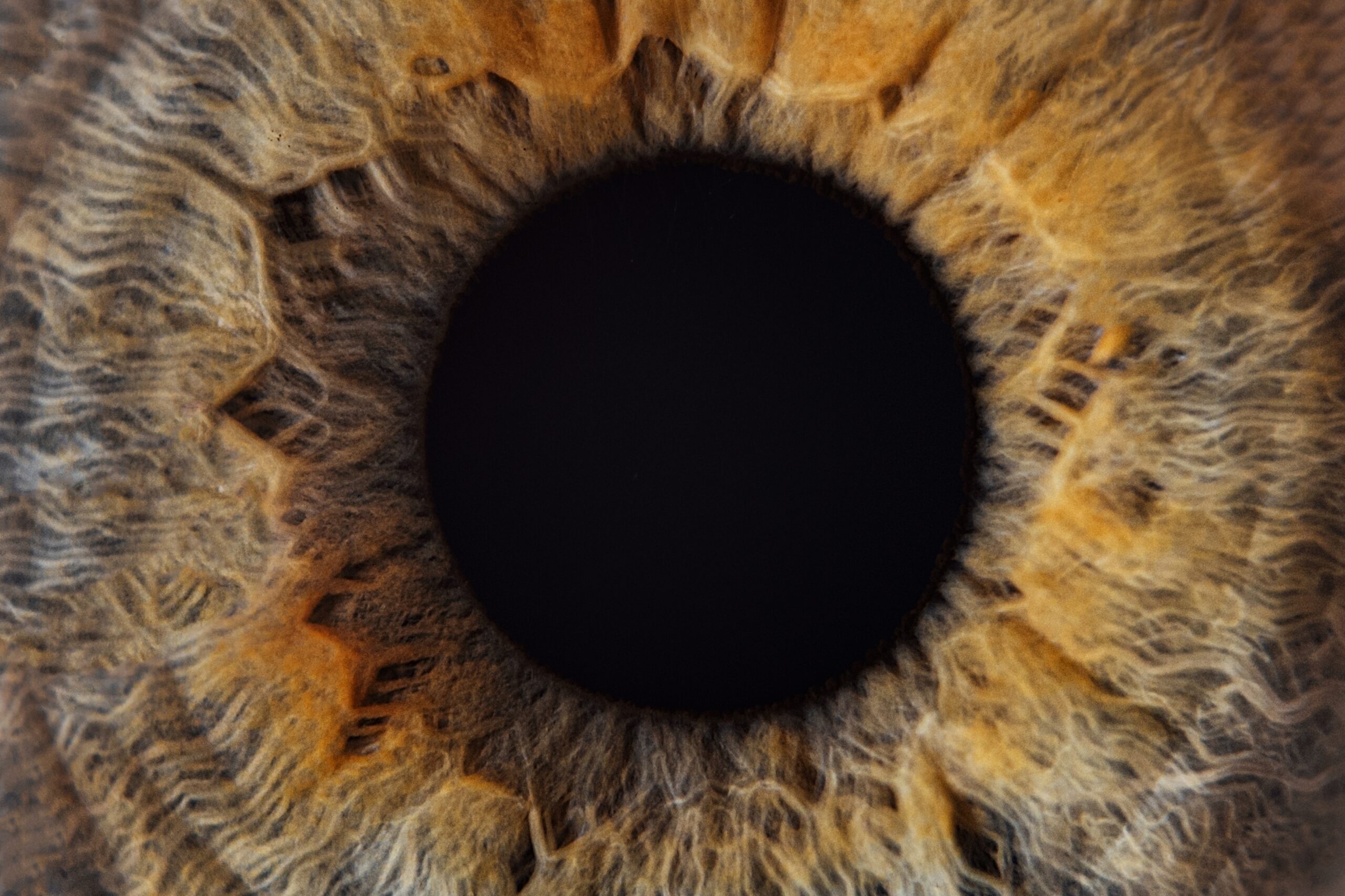
The iris is the coloured ring that surrounds the pupil. Its relief, made up of crypts, furrows and striations, forms a texture that belongs to one individual alone and becomes fixed in early childhood, never changing afterwards. A high-resolution photograph is enough to capture it, after which an algorithm encodes it into a template unique to that person and compares it against every record already held in a database. In France, iris biometrics remains very little used, yet for years it has supported the identification of living individuals elsewhere in the world. In the United States, the FBI has turned it into a service in its own right, the NGI Iris Service, fed by a national network in which sheriffs enrol the iris of suspects and convicted offenders at the time of booking. One question nonetheless remained open, one that almost no one had seriously examined. What becomes of this identifier once the person has died?

A certainty that science eventually overturned

When death occurs, the pupil becomes fixed, most often wide open, and the cornea is gradually veiled by a whitish film, the milky sheen sometimes seen in the gaze of the dead. As early as 2001, John Daugman, the British engineer behind automated iris recognition, told the BBC that this twofold change made the task considerably harder. The notion took firm hold, to the point of feeding the claim, repeated as though self-evident, that the iris became unusable within minutes.

The past 15 years have patiently dismantled that certainty, one study after another [3]. As early as 2016, it was established that an iris could still be recognised several days after death [3]. How the body is preserved soon proved to be the decisive factor. Left outdoors, the iris degrades quickly, whereas fingerprints and the face withstand decomposition far better, as Bolme and colleagues observed [3]. At the other extreme, Sauerwein and colleagues recovered irises that were perfectly analysable 34 days after death, on bodies left outdoors but exposed to the cold of winter [3]. The first studies genuinely tracked over time, carried out in Warsaw by Mateusz Trokielewicz and colleagues, reached a conclusion that few specialists had anticipated. Under favourable conditions, the iris can be analysed without notable difficulty 5 to 7 hours after death, and identification sometimes remains possible up to 3 weeks afterwards [4].

The most comprehensive study to date

The most accomplished demonstration is very recent. It comes from a large team bringing together the University of Notre Dame and Michigan State University, led by Rasel Ahmed Bhuiyan, and it has been accepted by a leading biometrics journal [1]. The researchers first assembled an image collection without precedent, more than 10,000 iris photographs gathered from 259 deceased subjects, in visible light as well as near-infrared, the wavelength that best reveals the texture of the iris [1]. For some of them, the interval between death and image capture reached 1,674 hours, close to 70 days [1].

The corpus includes a case never before published, that of a person whose eye was photographed both before and after death, which made it possible to compare the iris of the living individual directly with that of the deceased [1]. It also contains atypical configurations, rarely documented until then, such as an eye dislodged from its orbit by an injury [1]. Adding the few collections already available, the team brought together images of 338 deceased subjects, the largest sample ever assembled on the subject, then ran them through 5 recognition systems, from the oldest to the most recent, some based on artificial intelligence and others already on the market [1]. The results confirm and refine what the literature had hinted at. When the body has been kept in good conditions, current systems still recognise the iris several hours, sometimes several days, after death [1]. Here again, everything hinges on preservation, and the gap can be considerable. A body left in a field at the height of summer will see its iris degrade within a few days, until any comparison becomes impossible. The same body placed in a refrigerated mortuary drawer at a medico-legal institute, at around 6 degrees Celsius, keeps a usable iris for several weeks [1].

For an investigator, a magistrate or a forensic pathologist, the consequence is clear. No fixed deadline marks the moment when the iris would cease to be identifiable. There are only more or less favourable conditions, which will have to be reconstructed and documented in each case.

The study does not stop at measuring performance. It also delivers an open-source software tool, named PMExpert, designed to support the examiner and already in use since 2021 within a United States medico-legal institute [1]. Rather than returning a definitive ‘yes’ or ‘no’, it highlights the regions of the iris on which it relies to match two images, ante-mortem and post-mortem, leaving the expert free to verify and weigh the correspondence [1]. The software and the accompanying data are made available to forensic services free of charge, through the public United States criminal justice data archive [1].

Estimating how long a person has been dead

The same images fed a second piece of research, one that must be carefully distinguished from the first [2]. This one no longer seeks to identify an individual from the iris, but to estimate how long that individual has been dead. Conducted by Rasel Ahmed Bhuiyan and Adam Czajka and presented at the WACV 2025 conference, it draws on European collections and on the new dataset, 348 subjects in all [2]. The principle is nothing new. For centuries, the forensic pathologist has estimated the post-mortem interval from the positive signs of death that evolve at a relatively steady pace, such as algor mortis, the onset of livor mortis, or the appearance and then the disappearance of rigor mortis. What is new lies in the sign chosen and in the way it is read.

Here, what the machine observes is the white veil that gradually spreads across the eye after death. The more advanced it is, the longer ago death occurred. The researchers trained a deep learning model to perform this reading from the iris photograph alone [2]. Accuracy depends, once again, on environmental factors. In the scenario closest to real conditions, when the model must rule on bodies and settings it has never encountered, it is off by an average of about 3 days [2]. It can therefore point to a window, but never to a precise hour. Feasibility is established, yet we remain far from a fully reliable tool for dating death [2].

For the courts, a lead to handle with caution

In practical terms, what use is this in an investigation? Faced with an unidentified body, the eye is photographed, the software proposes a list of possible matches from a database, and an expert then confirms or rules out each of them [1]. The iris will replace neither DNA, nor fingerprints, nor forensic odontology, the three primary identifiers used to formally identify a body. It is an addition to them, above all when those methods take time or prove unusable, for want of ante-mortem data, on bodies that are too degraded or fragmented.

Its main advantage is speed. Comparing the iris of an eye against a biometric database takes only a few seconds, an argument that can weigh heavily when many victims must be identified under time pressure, after a mass-casualty event for example. This ability to reliably identify someone after death nonetheless raises a security concern of the first order. If the iris of a deceased person remains identifiable, one can imagine that a deliberately removed eye, or even a stored image, might be used to unlock a phone or to clear a biometric checkpoint based on this method. The authors anticipated this scenario and adapted software designed to flag fake eyes, a form of presentation attack detection, showing that it very quickly learns to recognise a deceased person’s iris and reject it [1].

Conclusion

The real reach of this advance remains to be measured. The window of opportunity exists, but it closes quickly, as the corneal veil thickens and the tissues decompose. The images needed to train and test the software remain scarce and hard to gather, something the researchers themselves acknowledge as a major obstacle [1]. And no framework yet defines what would make such an identification admissible in court. As long as that framework is missing, the iris of a deceased person is to be weighed like any other expert finding, with its conditions to document and its share of debate.

One obvious point deserves to be stressed above all. Identifying someone from the iris presupposes that this iris is already on file, recorded while the person was alive, when applying for a biometric passport in countries that provide for it, or when gaining access to a secure site through iris recognition. Without that reference, even the most powerful analysis leads nowhere. In France, where the iris feeds no identification file, the technique is therefore, for now, a matter of horizon-scanning more than routine practice. It nonetheless deserves close attention, for it illustrates a deeper trend, that of a forensic science learning to make the body speak when DNA and fingerprints fall silent.

References

  • [1] Bhuiyan R. A., Farmanifard P., Sharma R., Kuehlkamp A., Boyd A., Flynn P. J., Bowyer K. W., Ross A., Chute D., Czajka A. (2026). Beyond Mortality, Advancements in Post-Mortem Iris Recognition through Data Collection and Computer-Aided Forensic Examination. IEEE Transactions on Biometrics, Behavior, and Identity Science, early access. arXiv:2603.26976. https://ieeexplore.ieee.org/document/11063436
  • [2] Bhuiyan R. A., Czajka A. (2025). Forensic Iris Image-Based Post-Mortem Interval Estimation. IEEE/CVF Winter Conference on Applications of Computer Vision, WACV 2025. arXiv:2404.10172.
  • [3] Boyd A., Yadav S., Swearingen T., Kuehlkamp A., Trokielewicz M., Benjamin E., Maciejewicz P., Chute D., Ross A., Flynn P., Bowyer K., Czajka A. (2020). Post-Mortem Iris Recognition, A Survey and Assessment of the State of the Art. IEEE Access, vol. 8, p. 136570-136593.
  • [4] Trokielewicz M., Maciejewicz P., Czajka A. (2024). Post-mortem Iris Biometrics, Field, Applications and Methods. Forensic Science International.
Can human activity be reconstructed from a smartphone ?

A recent study conducted by researchers at the Netherlands Forensic Institute and the University of Amsterdam examines whether data generated by smartphone sensors can be meaningfully exploited in a judicial context. The central question is whether motion signals recorded by these devices can be translated into a probabilistic evaluation capable of assessing whether a specific human activity occurred at a particular point in time. As everyday objects increasingly capture fine-grained behavioral traces, the methodological integration of such data into judicial reasoning has become a critical issue.

Understanding Human Activity Recognition

Human Activity Recognition, commonly referred to as HAR, is a research field that has developed over the past decade, initially within connected health, sports tracking, and smart device applications. Its principle is to use embedded smartphone sensors to identify categories of movement based on numerical signals. Most smartphones are equipped with an accelerometer and a gyroscope that continuously record variations in movement and orientation. From these time series, statistical models trained on known activities learn to recognize characteristic patterns. Walking, running, and periods of inactivity generate distinct signatures that the algorithm can compare with data extracted from a phone under examination.

In everyday use, this classification supports functions such as physical activity tracking or fall detection. In a judicial setting, however, the objective is narrower and more demanding. The issue is not simply to label a movement, but to determine what these recordings can reasonably support regarding a specific activity, and what they cannot establish.

From classification to probabilistic evaluation

In forensic science, the task is not to assert that an event occurred, but to assess the strength with which observed data support one hypothesis over an alternative. Outputs from activity recognition models can be incorporated into this framework by expressing their evidential value in the form of a likelihood ratio. In practical terms, this involves evaluating whether the recorded sequence is more probable under one clearly defined scenario than under another. The algorithm does not decide that a person was running or walking. It provides a comparative measure of how strongly the data support one of the competing hypotheses.

Methodological illustration in a judicial context

Consider a smartphone seized in the course of an assault investigation. At a time considered critical to the events, the motion sensors recorded a sequence of data.

Two hypotheses are formulated. Under the first, the individual was walking normally. Under the second, the individual was running. The analysis indicates that the observed signals are ten times more probable under the running hypothesis than under the walking hypothesis. The likelihood ratio is therefore ten in favor of the proposition that the person was running. This result does not constitute direct proof of running. It expresses the relative probabilistic support that the data provide for that hypothesis compared with the alternative. The evidential weight of this information within the case file will depend on the remaining evidence and on the overall coherence of the competing scenarios.

The principal advantage of this approach lies in its compatibility with the Bayesian logic already recognized in the evaluation of scientific evidence.

Scientific and methodological limitations

Human Activity Recognition models are typically trained on datasets collected under controlled conditions. In real-world situations, however, numerous factors influence the recorded signal. The way the phone is carried, whether in a pocket, a bag, or held in the hand, the nature of the ground surface, the individual’s emotional state, and the device’s software configuration may all affect the measurements. Acute stress, for example, can alter the amplitude and regularity of movements. Similarly, a software update may modify the sampling frequency or the filtering parameters applied to sensor data. These technical aspects, often invisible to users, directly shape the structure of the data being analyzed.

Inter-individual variability must also be considered. Two individuals running at comparable speeds may nevertheless produce slightly different motion signatures.

In addition, data integrity must be verified. Sensor logs may be incomplete, altered, or disabled depending on device settings. As with any algorithmic method, independent validation, knowledge of error rates, and transparency regarding the model used are essential prerequisites for admissibility in a judicial context.

From source to activity, a parallel with Forensic Genetics

These findings echo a distinction that has become central in forensic genetics, namely the difference between the source level and the activity level.

In our article “Cigarette Butts: Can a Simple Kiss Distort DNA Interpretation?”, we emphasized that identifying the origin of a genetic profile does not, by itself, explain how it was deposited. The same reasoning applies here. Demonstrating that a motion pattern is compatible with running does not, on its own, establish the precise circumstances of the action. In both contexts, the key issue is identical. Moving from a technical observation to an interpretation at the activity level requires explicit scenario comparison and rigorous probabilistic evaluation. Data extracted from a smartphone, like DNA profile data, acquire meaning only within this structured analytical framework.

For judges and forensic experts, the primary challenge lies less in the technology itself than in understanding its methodological foundations. Producing a likelihood ratio requires clearly defined competing hypotheses, documented model validation, and explicit acknowledgment of analytical limitations. A smartphone does not become an automatic witness to events. Under strict conditions, however, it may provide probabilistic information capable of informing one scenario among several. The central issue is therefore not the mere availability of digital data, but the scientific robustness and legal relevance of their interpretation.

Source :

McCarthy, C., van Zandwijk, J. P., Worring, M., & Geradts, Z. (2025). Forensic Activity Classification Using Digital Traces from iPhones: A Machine Learning-based Approach.
Disponible en ligne : https://arxiv.org/abs/2512.03786

Fichier FAED empreintes Forenseek police scientifique

The Automated Fingerprint Identification System (FAED) shares its data.

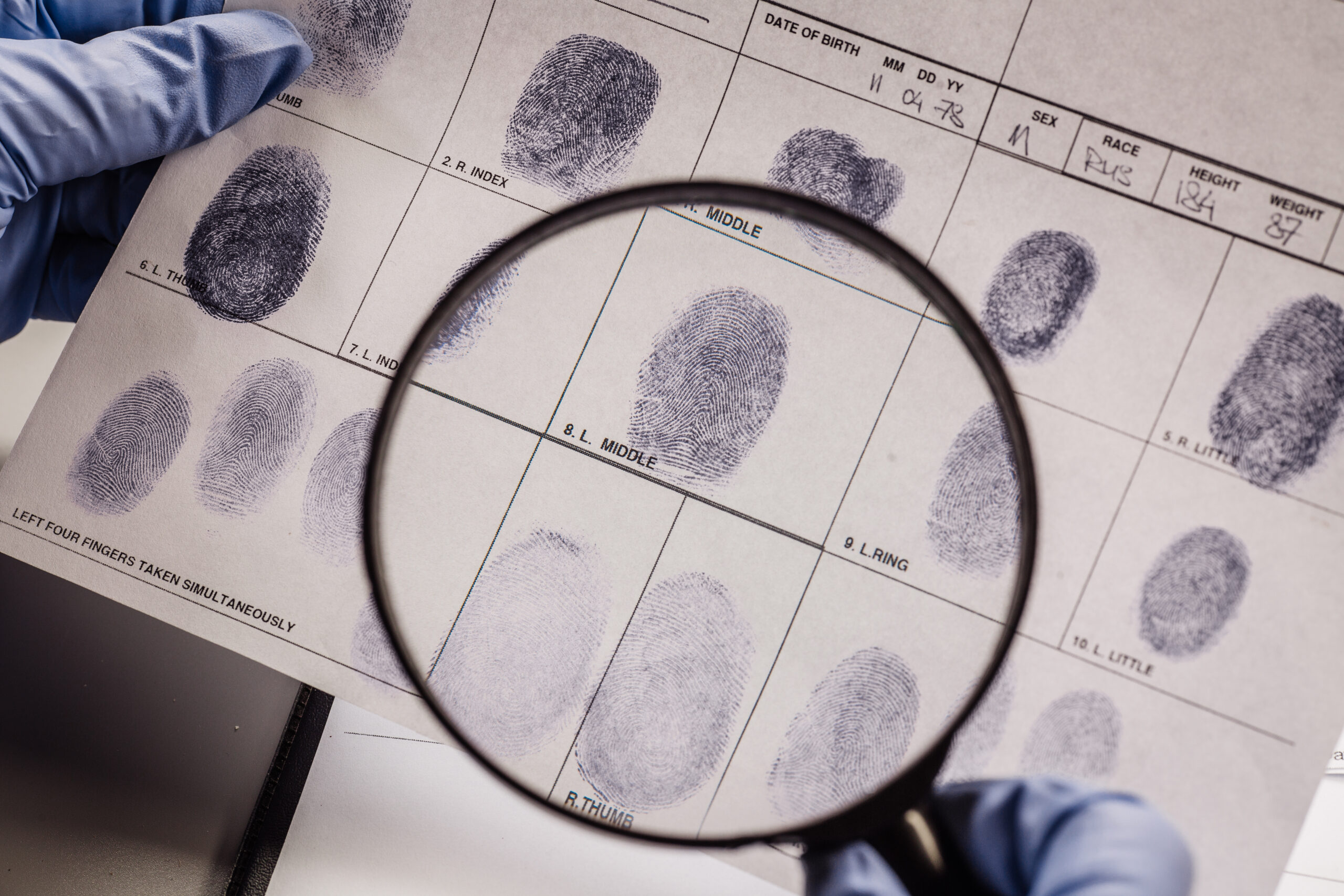
Created in 1987, the Automated Fingerprint Identification System (FAED, France) stores various types of data collected during judicial investigations. Its use, strictly regulated by law, was recently modified by a decree issued on April 23, 2024.


As of January 2024, the FAED contained the fingerprints and palm prints of more than 6.7 million individuals, as well as nearly 300,000 unidentified latent prints (CNIL data). Each year, over one million new records are added. This vast amount of information makes the database a valuable tool in criminal investigations, as its consultation allows investigators to establish links between cases or to identify missing persons.

More interconnections for greater efficiency.

The FAED is far from being the only existing database. France operates several others, including the TAJ (Traitement des Antécédents Judiciaires – Criminal Records Processing System), the CJN (Casier Judiciaire National – National Criminal Record), the DPN (Dossier Pénal Numérique – Digital Criminal File), and the FPR (Fichier des Personnes Recherchées – Wanted Persons File), each of which contains millions of data entries. Added to these are the police and gendarmerie procedural software systems, LRPPN and LRPGN, which enable the automated processing of personal data.

The decree, which came into force on April 24, 2024, aims to establish interoperability among these different databases, with the clear objective of facilitating cross-references and improving overall efficiency.

Enhanced European cooperation.

The project does not solely focus on the national level; it also aims to link these national databases with European systems, allowing access to their data repositories. This will notably be the case for the Second Generation Schengen Information System (SIS II), which includes a central unit based in Strasbourg, connected to national databases in each Schengen member state. This system centralizes information on individuals or objects reported by administrative and judicial authorities across the participating countries. Another beneficiary will be the Entry/Exit System (EES), which automatically records and monitors data relating to nationals of non-EU countries traveling within the Schengen area.

In both cases, this data sharing aims to facilitate information exchange, strengthen controls, and consequently enhance security within the European area, now free of internal borders.

Des données suffisamment sécurisées ?

The decree also modifies the retention period for data stored in the FAED. It is now set at twenty-five years for crimes and certain offenses, and may extend up to forty years for specific criminal procedures.

Given the vast volume of data processed and the new interconnections among databases, concerns naturally arise regarding the protection of personal information. Following a warning issued by the CNIL (Commission Nationale de l’Informatique et des Libertés – French Data Protection Authority), which had expressed concerns to the Ministry of the Interior, measures have been implemented to safeguard data confidentiality and to ensure the automated updating and deletion of records once their retention period expires. Whether these measures will prove sufficient remains to be seen…

Source :
Décret n° 2024-374 du 23 avril 2024 modifiant le code de procédure pénale et relatif au fichier automatisé des empreintes digitales – Légifrance (legifrance.gouv.fr)
Chapitre Ier : Système d’information Schengen de deuxième génération (SIS II) (Articles R231-1 à R231-16) – Légifrance (legifrance.gouv.fr)
L’entrée dans l’espace Schengen : la future mise en place des systèmes EES et ETIAS – Ministère de l’Europe et des Affaires étrangères (diplomatie.gouv.fr)
FAED : la CNIL clôt l’injonction prononcée à l’encontre du ministère de l’Intérieur 01 février 2024 – Global Security Mag Online

Learn more: Levitra

Vidéosurveillance intelligent lors des jeux olympiques de Paris 2024

Quand la vidéosurveillance devient “intelligente”

Le 23 mars dernier, l’Assemblée Nationale a adopté l’article 7 du projet de loi relative aux jeux olympiques, autorisant l’utilisation de la vidéosurveillance algorithmique. Une décision prise pour renforcer la sécurité de l’événement qui ne fait pas l’unanimité.

Avec des milliers d’athlètes et des millions de visiteurs venus du Monde entier, les Jeux Olympiques qui se dérouleront en France du 24 juillet au 8 septembre 2024 constituent un véritable casse-tête sécuritaire.

Pour y faire face, le gouvernement a souhaité mettre en place des capacités de surveillance supplémentaires dont ces caméras d’un nouveau type qui fonctionnent avec l’Intelligence Artificielle.

Vous avez dit intelligente ?

Déjà bien implantée dans les rues, les zones commerciales et les lieux de forte fréquentation, la vidéosurveillance fait désormais partie de notre panorama quotidien. Mais jusqu’à présent, il s’agissait d’une technologie classique fonctionnant avec des caméras analogiques placées sous le contrôle d’opérateurs humains formés à leur exploitation.

Les dispositifs mis en œuvre pour 2024 font quant à eux appel à des caméras dites « augmentées »qui analysent automatiquement les situations grâce à des algorithmes spécifiques et peuvent signaler rapidement des colis, des comportements suspects ou des mouvements de foule. Cette nouvelle vidéosurveillance, plus économe en ressources humaines (un seul agent peut gérer des dizaines, voire des centaines de caméras) permet en outre aux forces de sécurité de gagner un temps précieux entre l’identification d’une anomalie et l’intervention, notamment dans des lieux aussi animés que les transport en commun et les manifestations sportives ou culturelles. Un sérieux atout dans une période où le risque terroriste reste particulièrement élevé.

La surveillance, oui mais jusqu’où ?

Même si l’utilisation de cette technologie entre dans un cadre juridique spécifique « expérimental et temporaire » qui la limite théoriquement dans le temps (à priori jusqu’au 31 décembre 2024), elle ne suscite pas moins des inquiétudes, notamment chez certains élus et du côté de la CNIL (Commission Nationale de l’Informatique et des Libertés) .Ils craignent que le déploiement de ces technologies puisse dériver vers une surveillance de masse permanente et l’ identification biométrique des individus par reconnaissance faciale. Face à un système algorithmique entièrement automatisé, on peut aussi redouter des interprétations erronées de gestes ou d’attitudes émanant d’un individu ou d’un groupe d’individus. En clair, quelles seraient les conséquences si la machine se trompait ?

A l’heure ou l’IA et l’apparition d’algorithmes de plus en plus sophistiqués comme Chat GPT font l’objet de nombreux débats pour en assurer l’encadrement à la fois déontologique et législatif dans le respect des droits fondamentaux, les interrogations sur l’emploi de la vidéosurveillance augmentée risquent fort de se multiplier.

Fingerprints: beyond identification

Widely used by law enforcement agencies worldwide for personal identification, fingerprints can also serve as a basis to carry out various screening tests.

Interest in fingerprints has recently been reignited thanks to a new study published on February 1, 2023, by researchers at the Jasmine Breast Unit of Doncaster Royal Infirmary in the United Kingdom. The scientists have developed a digital technique capable of detecting breast cancer with an accuracy of nearly 98%.

Secretions that reveal the disease…

In this case, the focus is not on analyzing fingerprint pattern classes or minutiae—the characteristic points located along the ridge lines that allow for reliable personal identification. Instead, by taking swabs from the fingertips to collect sweat, physicians were able to detect the presence of proteins and peptides identified as biomarkers of potential breast cancer.

This non-invasive, painless technique for patients could make it possible to distinguish between benign, early-stage, or metastatic tumors. If the results are confirmed, it may soon be commercialized in the form of a kit, providing a rapid and reliable diagnostic tool that is significantly less traumatic and less costly than mammography, which remains the current gold standard in breast cancer screening.

…And also detect narcotics!

From medicine to forensic science, there is often only a small step—and in this case, technology has taken it. Sweat sampling from fingerprints is already among the available methods to detect the presence of four classes of narcotics: amphetamines, cannabis, cocaine, and opiates.

Here again, it is the sweat that reveals the presence of these molecules, whether the substance was merely handled or actually ingested. The procedure requires nothing more than pressing the fingertips onto a special piece of paper and then analyzing it using mass spectrometry, which can detect the substance up to 48 hours after contact or ingestion.

Unlike blood tests, which require significant logistics, this analytical method takes only a few minutes and can also be applied to latent fingerprint residues collected at a crime scene. It has also proven effective in the medico-legal context, using post-mortem sweat samples.

Sources :

https://www.nature.com/articles/s41598-023-29036-7

https://www.businesswire.com/news/home/20181008005386/fr/

Utilisation de l'ADN dans le portrait-robot génétique

L’ADN à l’origine des portraits-robot !

Pour dessiner le portrait-robot d’un suspect, on avait coutume de faire appel à un portraitiste et à des logiciels spécialisés. Désormais, la police scientifique utilise aussi l’ADN récupérée sur la scène de crime pour dresser un profil physique très proche de la réalité.

En 1982, Edward Crabe, un australien de 57 ans, est assassiné dans sa chambre d’hôtel de Gold Coast situé dans l’état du Queensland. Malgré les nombreux témoignages recueillis et le prélèvement d’échantillons de sang sur la scène de crime, les enquêteurs ne réussissent pas à retrouver le coupable. 40 ans plus tard, la police australienne relance ce « cold case » en faisant appel au phénotypage de l’ADN. Cette technique encore récente, pratiquée notamment dans le laboratoire d’hématologie médico-légal de Bordeaux, permet de créer à partir de quelques cellules sanguines, le portrait-robot d’un suspect susceptible d’être identifié par les témoins ou l’entourage. 

Même inconnu, l’ADN parle !

C’est en tout cas ce qu’espèrent les policiers du Queensland qui ont lancé un nouvel appel à témoins le 9 novembre 2022. Ils comptent ainsi résoudre l’assassinat d’Edward Crabe grâce au portrait-robot établi à partir du sang retrouvé dans la chambre de la victime. Un premier profil ADN avait déjà été établi en 2020 mais celui-ci n’étant pas enregistré dans les bases de données nationales, les enquêteurs s’étaient rapidement retrouvés dans une impasse. Or, l’immense avantage du phénotypage, c’est que même lorsqu’un ADN n’est fiché nulle part, il n’en constitue pas moins une mine de renseignements sur la personne correspondante.

En quoi consiste cette technique ? On sait aujourd’hui que le matériel génétique renferme de très nombreuses informations, notamment sur le sexe, l’origine ethnique, la santé et l’apparence physique d’un individu. Les récentes techniques de séquençage de l’ADN permettent désormais d’analyser les séquences génétiques dites « codantes » et d’isoler celles qui renferment les indications morphologiques. Les scientifiques peuvent ainsi déterminer de façon suffisamment précise la forme d’un visage, la couleur de la peau, des yeux et des cheveux, une prédisposition à la calvitie ou encore la présence de taches de rousseur. A partir de ce profil génétique, il est possible d’établir un profil physique qui n’est à l’heure actuelle, ni complet, ni parfait mais qui peut permettre de réveiller les souvenirs de potentiels témoins.

Une technique qui tend à se perfectionner

Il existe aujourd’hui dans le Monde plusieurs équipes de chercheurs qui travaillent à perfectionner l’analyse de ces séquences génétiques liées au phénotype. L’objectif ?  Aller toujours plus loin dans la recherche des caractéristiques physiques des individus en prédisant par exemple la forme du lobe des oreilles ou encore l’âge de la personne étant à l’origine de la trace relevée.

Tous ces renseignements servent ensuite à mettre au point des programmes statistiques capables d’élaborer un portrait-robot génétique le plus proche possible de la réalité. Ces programmes, qui existent déjà aux États Unis, sont nourris par les entreprises proposant aux particuliers des tests ADN pour connaître leur généalogie et qui collaborent également avec les forces de l’ordre.

Dernièrement, une étude sur les sosies réalisée par une équipe de chercheurs du Leukaemia Research Institute à Barcelone (Espagne), est venue renforcer la réalité de ce portrait physique littéralement inscrit dans les gènes. En analysant l’ADN de ces « jumeaux virtuels », les scientifiques ont identifié des caractéristiques génétiques communes qui ne s’arrêtent d’ailleurs pas à  une apparence physique similaire. Elles sont également capables d’influencer certains comportements en matière d’alimentation et même d’éducation. Des résultats qui selon l’auteure principale de l’étude, Manel Esteller  «  auront des implications futures en médecine légale – reconstruire le visage du criminel à partir de l’ADN – et en diagnostic génétique – la photo du visage du patient  donnera déjà des indices sur le génome qu’il possède. Grâce à des efforts de collaboration, le défi ultime serait de prédire la structure du visage d’une personne à partir de son paysage multiomique .

Portraits-robot ADN génétique police scientifique aide dans la résolution des enquêtes judiciaires.
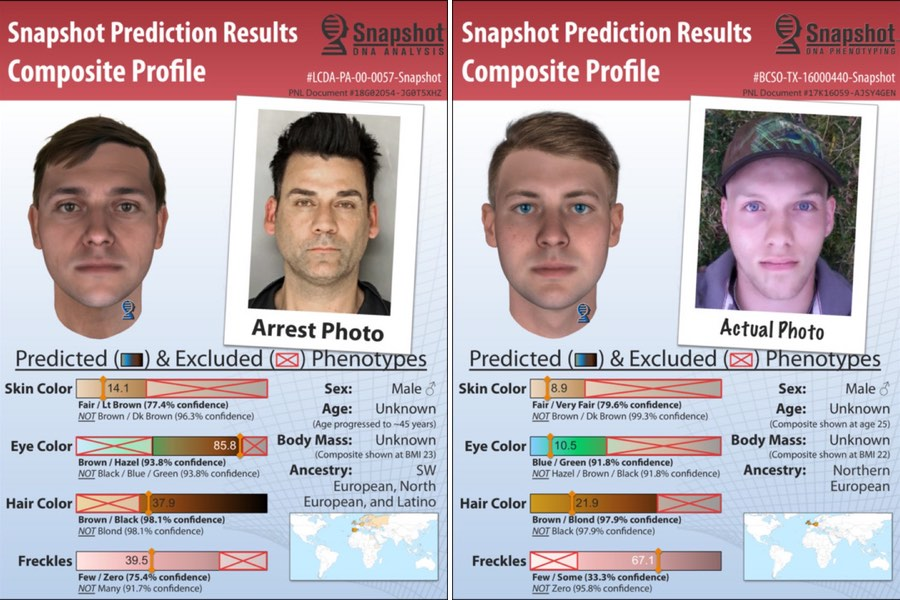
Exemple de portraits-robot génétique édités par Snapshot DNA analysis

Le projet européen VISAGE

L’objectif global du projet européen VISAGE (VISible Attributes Through GEnomics) est d’élargir l’utilisation judiciaire de l’ADN vers la construction de portraits-robot d’auteurs inconnus à partir de traces ADN le plus rapidement possible dans les cadres juridiques actuels et les lignes directrices éthiques.

Le consortium VISAGE est composé de 13 partenaires issus d’institutions universitaires, policières et judiciaires de 8 pays européens, et réunit des chercheurs en génétique légale et des praticiens en ADN judiciaire, des généticiens statistiques et des spécialistes en sciences sociales. Les objectifs sont :

  • d’établir de nouvelles connaissances scientifiques dans le domaine du phénotypage de l’ADN,
  • d’élaborer et valider de nouveaux outils dans l’analyse de l’ADN et l’interprétation statistique,
  • de valider et mettre en œuvre ces outils dans la pratique judiciaire,
  • d’étudier les dimensions éthiques, sociétales et réglementaires,
  • de diffuser largement les résultats et sensibiliser les différents protagonistes concernant la prédiction de l’apparence, de l’âge et de l’ascendance bio-géographique d’une personne à partir de traces d’ADN,
  • d’aider la justice à trouver des auteurs inconnus d’actes criminels au moyen du profilage de l’ADN

Pour aller plus loin :

https://snapshot.parabon-nanolabs.com/

Sources

https://www.newsendip.com/fr/comment-la-police-australienne-espere-resoudre-un-meurtre-de-1982-avec-un-nouveau-portrait-robot-issu-de-ladn-du-suspect/

https://www.francetvinfo.fr/faits-divers/police/enquete-quand-ladn-dessine-des-portraits-robots_4882409.html

https://www.sciencedaily.com/releases/2022/08/220823115609.htm

Empreinte cérébrale une nouvelle méthode d'identification - biométrie et police scientifique Forenseek

Brain fingerprinting: a new identification method?

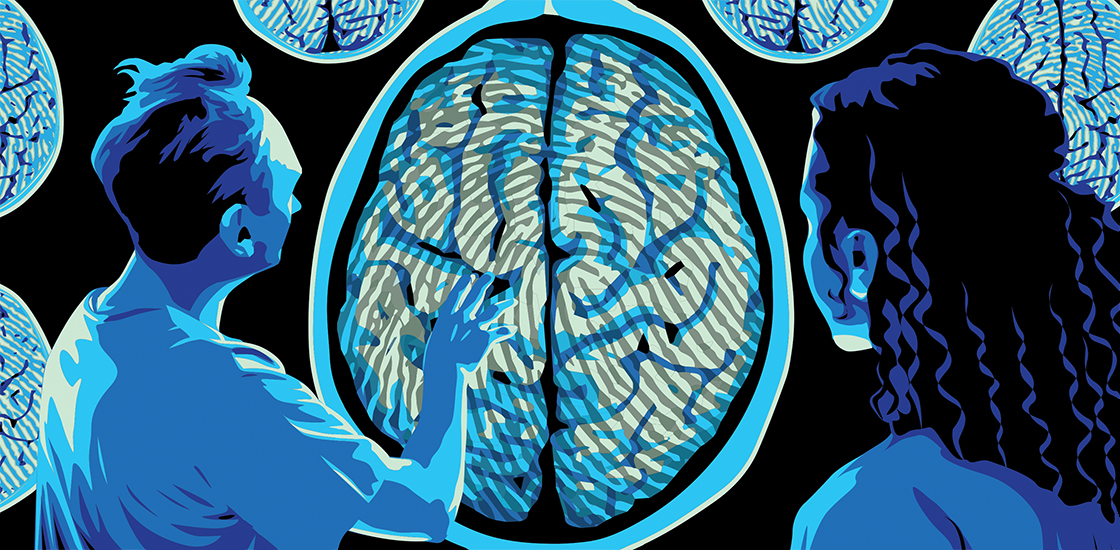
The Earth is home to eight billion people, and each of them is unique. This individuality has long been harnessed in identification processes—through genetics, fingerprint analysis, and, in the near future, brain fingerprinting.

If the 20th century was marked by technological progress, the 21st will undoubtedly be the century of neuroscience. Thanks to new fMRI (functional Magnetic Resonance Imaging) techniques, it is now possible to capture the “fingerprint” of a brain in less than two minutes—an imprint just as unique as those found at the tips of our fingers, enabling the identification of an individual with an accuracy approaching 100%.

A unique brain fingerprint

Beyond overall brain volume and cortical thickness, the research team at the University of Zurich working on this question has identified anatomical features that are specific to each brain, particularly in the organization of gyri and sulci—patterns that strongly resemble fingerprint ridges. This cerebral “architecture” is shaped not only by genetics but also by the practice of certain activities, life events (such as physical trauma), and the wide range of experiences that a person may undergo throughout their lifetime.

However, it is not so much the image of the brain as its neuronal activity that defines this brain fingerprint. The signals captured by fMRI are synthesized to generate a map of neural networks known as the functional brain connectome. By analyzing this connectome, researchers can create a visual summary in the form of a graph that allows them to track brain activity, identify which regions are engaged (whether sensory or cognitive), and—most importantly for identification purposes—distinguish one individual from another.

Brain fingerprinting in biometrics

Since MRI scans are still time-consuming and expensive procedures, it is unlikely that this identification method will replace fingerprint scanners in the near future.

Nevertheless, government institutions and certain private companies operating in sensitive sectors are showing strong interest in developing biometric technologies based on the identification of brain signals, which could provide advanced security for digital identities.

From smartphones to high-security facilities, systems equipped with fingerprint readers are already in widespread use, but experience has shown that such methods can be falsified. Brain fingerprinting, on the other hand, is essentially tamper-proof, as it relies on a technology driven by a specific and complex algorithm. To implement this form of cerebral biometrics, scientists use an EEG headset (electroencephalography) to record brainwaves generated in response to various sensory stimuli—such as infrequent words, black-and-white or colored images. These responses, which differ from one person to another, constitute an inviolable identity encoded within the brain. Moreover, this profile would be disrupted if the individual were subjected to coercion or violence. Thus, brain fingerprinting could emerge as a biometric technique superior to existing methods, even surpassing retinal scanning, often considered one of the most sophisticated techniques, and opening the door to new applications in forensic science..

Sources :

https://www.futura-sciences.com/tech/actualites/technologie-biometrie-empreintes-cerebrales-nous-identifier-62535/

https://www.sciencesetavenir.fr/sante/cerveau-et-psy/neurosciences-chaque-cerveau-possede-sa-propre-empreinte-digitale_158577

https://ici.radio-canada.ca/nouvelle/1832469/cerveau-empreintes-cerebrales-empreintes-digitales