For a long time, the iris was thought to become unusable almost as soon as a person died. Several recent studies show the opposite, and the most comprehensive of them has just been published in the United States.
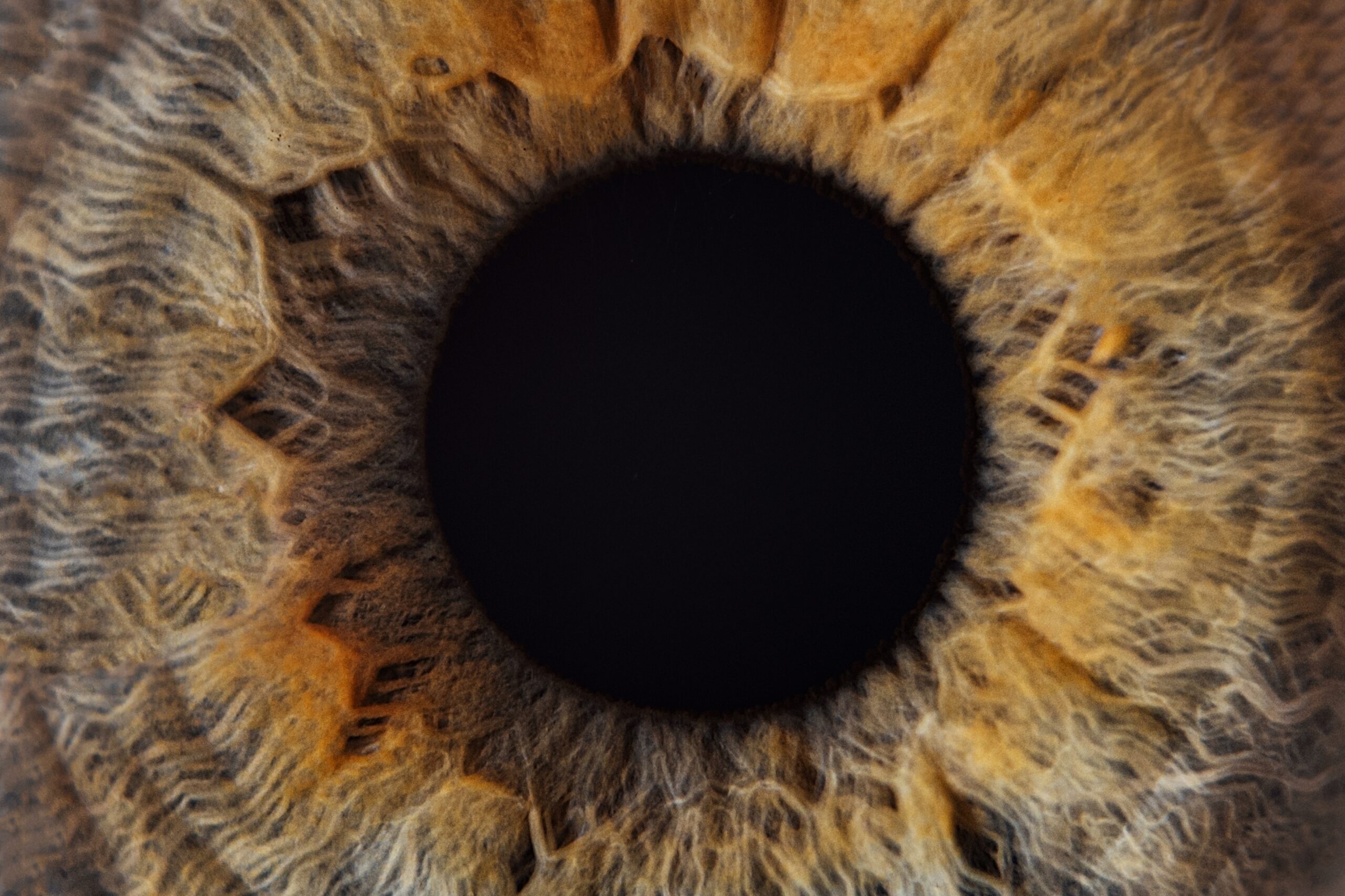
The iris is the coloured ring that surrounds the pupil. Its relief, made up of crypts, furrows and striations, forms a texture that belongs to one individual alone and becomes fixed in early childhood, never changing afterwards. A high-resolution photograph is enough to capture it, after which an algorithm encodes it into a template unique to that person and compares it against every record already held in a database. In France, iris biometrics remains very little used, yet for years it has supported the identification of living individuals elsewhere in the world. In the United States, the FBI has turned it into a service in its own right, the NGI Iris Service, fed by a national network in which sheriffs enrol the iris of suspects and convicted offenders at the time of booking. One question nonetheless remained open, one that almost no one had seriously examined. What becomes of this identifier once the person has died?
A certainty that science eventually overturned
When death occurs, the pupil becomes fixed, most often wide open, and the cornea is gradually veiled by a whitish film, the milky sheen sometimes seen in the gaze of the dead. As early as 2001, John Daugman, the British engineer behind automated iris recognition, told the BBC that this twofold change made the task considerably harder. The notion took firm hold, to the point of feeding the claim, repeated as though self-evident, that the iris became unusable within minutes.
The past 15 years have patiently dismantled that certainty, one study after another [3]. As early as 2016, it was established that an iris could still be recognised several days after death [3]. How the body is preserved soon proved to be the decisive factor. Left outdoors, the iris degrades quickly, whereas fingerprints and the face withstand decomposition far better, as Bolme and colleagues observed [3]. At the other extreme, Sauerwein and colleagues recovered irises that were perfectly analysable 34 days after death, on bodies left outdoors but exposed to the cold of winter [3]. The first studies genuinely tracked over time, carried out in Warsaw by Mateusz Trokielewicz and colleagues, reached a conclusion that few specialists had anticipated. Under favourable conditions, the iris can be analysed without notable difficulty 5 to 7 hours after death, and identification sometimes remains possible up to 3 weeks afterwards [4].
The most comprehensive study to date
The most accomplished demonstration is very recent. It comes from a large team bringing together the University of Notre Dame and Michigan State University, led by Rasel Ahmed Bhuiyan, and it has been accepted by a leading biometrics journal [1]. The researchers first assembled an image collection without precedent, more than 10,000 iris photographs gathered from 259 deceased subjects, in visible light as well as near-infrared, the wavelength that best reveals the texture of the iris [1]. For some of them, the interval between death and image capture reached 1,674 hours, close to 70 days [1].
The corpus includes a case never before published, that of a person whose eye was photographed both before and after death, which made it possible to compare the iris of the living individual directly with that of the deceased [1]. It also contains atypical configurations, rarely documented until then, such as an eye dislodged from its orbit by an injury [1]. Adding the few collections already available, the team brought together images of 338 deceased subjects, the largest sample ever assembled on the subject, then ran them through 5 recognition systems, from the oldest to the most recent, some based on artificial intelligence and others already on the market [1]. The results confirm and refine what the literature had hinted at. When the body has been kept in good conditions, current systems still recognise the iris several hours, sometimes several days, after death [1]. Here again, everything hinges on preservation, and the gap can be considerable. A body left in a field at the height of summer will see its iris degrade within a few days, until any comparison becomes impossible. The same body placed in a refrigerated mortuary drawer at a medico-legal institute, at around 6 degrees Celsius, keeps a usable iris for several weeks [1].
For an investigator, a magistrate or a forensic pathologist, the consequence is clear. No fixed deadline marks the moment when the iris would cease to be identifiable. There are only more or less favourable conditions, which will have to be reconstructed and documented in each case.
The study does not stop at measuring performance. It also delivers an open-source software tool, named PMExpert, designed to support the examiner and already in use since 2021 within a United States medico-legal institute [1]. Rather than returning a definitive ‘yes’ or ‘no’, it highlights the regions of the iris on which it relies to match two images, ante-mortem and post-mortem, leaving the expert free to verify and weigh the correspondence [1]. The software and the accompanying data are made available to forensic services free of charge, through the public United States criminal justice data archive [1].
Estimating how long a person has been dead
The same images fed a second piece of research, one that must be carefully distinguished from the first [2]. This one no longer seeks to identify an individual from the iris, but to estimate how long that individual has been dead. Conducted by Rasel Ahmed Bhuiyan and Adam Czajka and presented at the WACV 2025 conference, it draws on European collections and on the new dataset, 348 subjects in all [2]. The principle is nothing new. For centuries, the forensic pathologist has estimated the post-mortem interval from the positive signs of death that evolve at a relatively steady pace, such as algor mortis, the onset of livor mortis, or the appearance and then the disappearance of rigor mortis. What is new lies in the sign chosen and in the way it is read.
Here, what the machine observes is the white veil that gradually spreads across the eye after death. The more advanced it is, the longer ago death occurred. The researchers trained a deep learning model to perform this reading from the iris photograph alone [2]. Accuracy depends, once again, on environmental factors. In the scenario closest to real conditions, when the model must rule on bodies and settings it has never encountered, it is off by an average of about 3 days [2]. It can therefore point to a window, but never to a precise hour. Feasibility is established, yet we remain far from a fully reliable tool for dating death [2].
For the courts, a lead to handle with caution
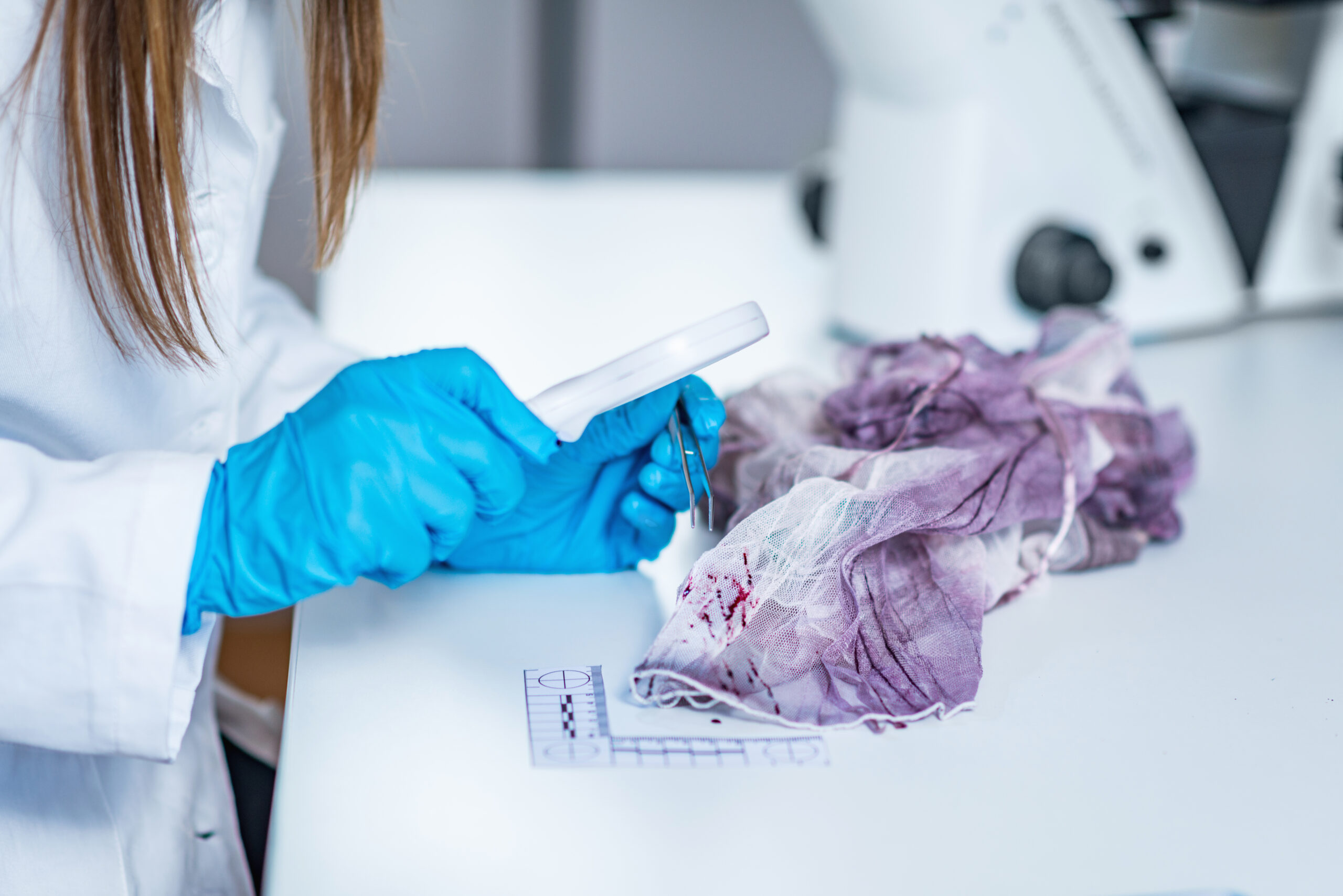
In practical terms, what use is this in an investigation? Faced with an unidentified body, the eye is photographed, the software proposes a list of possible matches from a database, and an expert then confirms or rules out each of them [1]. The iris will replace neither DNA, nor fingerprints, nor forensic odontology, the three primary identifiers used to formally identify a body. It is an addition to them, above all when those methods take time or prove unusable, for want of ante-mortem data, on bodies that are too degraded or fragmented.
Its main advantage is speed. Comparing the iris of an eye against a biometric database takes only a few seconds, an argument that can weigh heavily when many victims must be identified under time pressure, after a mass-casualty event for example. This ability to reliably identify someone after death nonetheless raises a security concern of the first order. If the iris of a deceased person remains identifiable, one can imagine that a deliberately removed eye, or even a stored image, might be used to unlock a phone or to clear a biometric checkpoint based on this method. The authors anticipated this scenario and adapted software designed to flag fake eyes, a form of presentation attack detection, showing that it very quickly learns to recognise a deceased person’s iris and reject it [1].
Conclusion
The real reach of this advance remains to be measured. The window of opportunity exists, but it closes quickly, as the corneal veil thickens and the tissues decompose. The images needed to train and test the software remain scarce and hard to gather, something the researchers themselves acknowledge as a major obstacle [1]. And no framework yet defines what would make such an identification admissible in court. As long as that framework is missing, the iris of a deceased person is to be weighed like any other expert finding, with its conditions to document and its share of debate.
One obvious point deserves to be stressed above all. Identifying someone from the iris presupposes that this iris is already on file, recorded while the person was alive, when applying for a biometric passport in countries that provide for it, or when gaining access to a secure site through iris recognition. Without that reference, even the most powerful analysis leads nowhere. In France, where the iris feeds no identification file, the technique is therefore, for now, a matter of horizon-scanning more than routine practice. It nonetheless deserves close attention, for it illustrates a deeper trend, that of a forensic science learning to make the body speak when DNA and fingerprints fall silent.
References
- [1] Bhuiyan R. A., Farmanifard P., Sharma R., Kuehlkamp A., Boyd A., Flynn P. J., Bowyer K. W., Ross A., Chute D., Czajka A. (2026). Beyond Mortality, Advancements in Post-Mortem Iris Recognition through Data Collection and Computer-Aided Forensic Examination. IEEE Transactions on Biometrics, Behavior, and Identity Science, early access. arXiv:2603.26976. https://ieeexplore.ieee.org/document/11063436
- [2] Bhuiyan R. A., Czajka A. (2025). Forensic Iris Image-Based Post-Mortem Interval Estimation. IEEE/CVF Winter Conference on Applications of Computer Vision, WACV 2025. arXiv:2404.10172.
- [3] Boyd A., Yadav S., Swearingen T., Kuehlkamp A., Trokielewicz M., Benjamin E., Maciejewicz P., Chute D., Ross A., Flynn P., Bowyer K., Czajka A. (2020). Post-Mortem Iris Recognition, A Survey and Assessment of the State of the Art. IEEE Access, vol. 8, p. 136570-136593.
- [4] Trokielewicz M., Maciejewicz P., Czajka A. (2024). Post-mortem Iris Biometrics, Field, Applications and Methods. Forensic Science International.