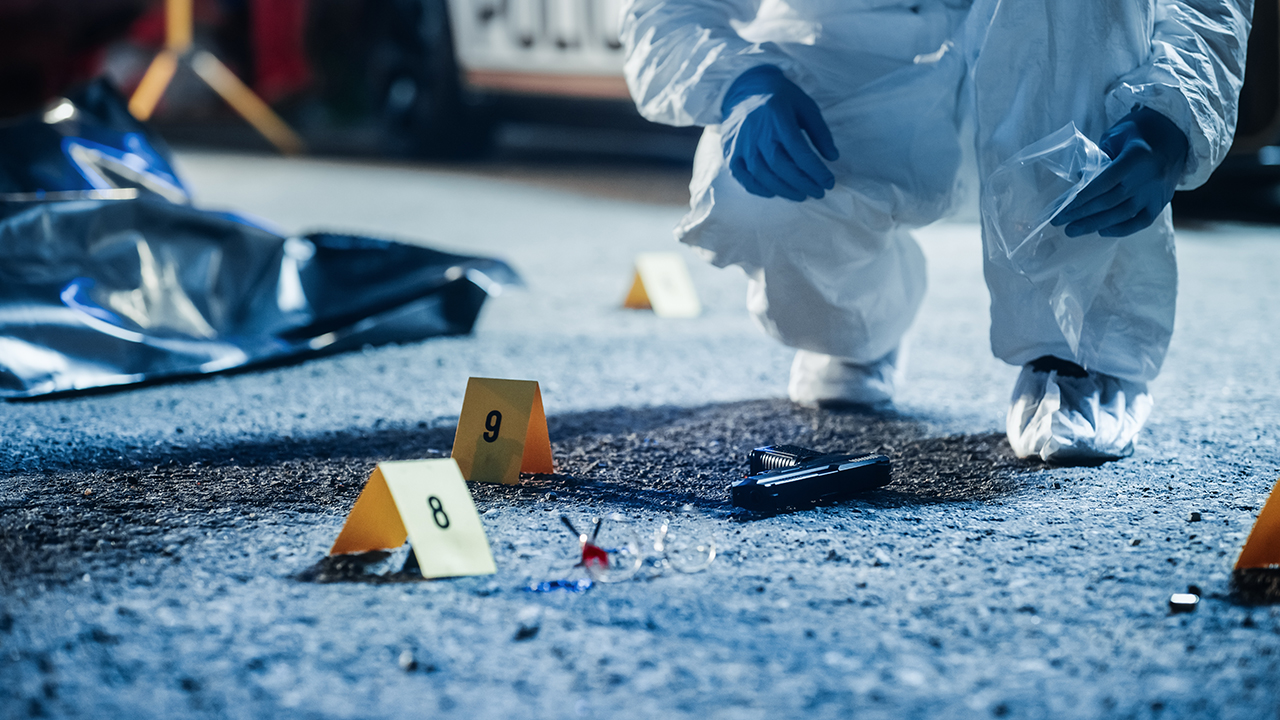
Despite the ever-accelerating development of new technologies for the detection, collection, and analysis of traces, the forensic process remains fundamentally characterized by human decision-making. The priorities established and the various forms of triage that define each stage of the process, from the incident scene to the laboratory, have the potential either to facilitate the resolution of an investigation or, conversely, to hinder it. Understanding the factors that influence the choices made by crime scene unit personnel therefore appears essential for the continuous optimization of forensic investigation practices.
The importance of decision-making in crime scene unit work
The quality of crime scene unit work at an incident scene is critical for the remainder of the forensic process. Decisions concerning scene delimitation, documentation of the scene condition, identification of relevant areas to be examined, and the search for and collection of traces constitute some of the earliest decisions within that process. Crime scene examiners therefore represent the principal actors responsible for mobilizing and prioritizing the resources dedicated to scene investigation, with little or no opportunity to revisit the scene once it has been released. In this respect, it is essential to recognize the full significance and relevance, for a crime scene examiner, of making the right – or at least the best possible – decisions at a scene in order to maximize the subsequent use of physical and digital traces. Such decision-making has the potential to influence both the successes and failures of the subsequent stages of the criminal investigation, judicial process, and intelligence development.
First, certain decisions made during scene examination can increase both the effectiveness and efficiency of investigative efforts. Building on Locard’s premise that “time that passes is truth that escapes”, numerous empirical studies have demonstrated the importance of the temporal dimension in the successful resolution of criminal investigations. Generally speaking, the longer an investigation remains unresolved, the lower the likelihood that it will ultimately be solved. A scene investigation that is strategically prioritized rather than unnecessarily laborious is therefore likely to exert a positive influence on case resolution.
Similarly, an investigative approach focused on the search for, detection, and collection of relevant and useful traces – that is, traces that are related to the case under investigation and that provide added value – is likely to have a positive impact on the remainder of the forensic process. Such an approach not only increases the likelihood that collected physical traces will contribute to the identification or exclusion of individuals, the reconstruction of events, and the detection of broader criminal phenomena, but also helps prevent the overburdening of forensic laboratories, which are already operating under considerable demand. Improved prioritization of scene sampling is frequently recommended as a means of reducing delays and backlogs, particularly in forensic biology unit, by avoiding the expenditure of substantial resources on material that essentially constitutes background noise.
Finally, decisions made during incident scene investigation must ensure the systematicity, comprehensiveness, integrity, and impartiality of the approach deployed by crime scene unit personnel. Ultimately, sound decisions in forensic investigation are those that reduce the risk of challenges to forensic practices, minimize criticism in judicial procedures, and decrease the likelihood of wrongful convictions. Conversely, hasty decisions, approaches driven solely by intuition, or investigations guided by unilateral assumptions may have significant adverse consequences for the remainder of the judicial process. For example, an insufficiently comprehensive and systematic search for physical and digital traces may result in relevant evidence being overlooked, while an approach lacking sufficient caution and rigor may increase the risk of contamination or alteration of valuable traces. Such errors are particularly consequential because they are irreversible : once the scene has been released, crime scene unit personnel cannot return to it in its original condition. Traces that escape forensic analysis and interpretation may hinder the resolution of an investigation, prevent the detection of a criminal series, or compromise the successful prosecution of an accused individual, as illustrated by cases such as the 1994 O.J. Simpson case in the United States or the 1986 double homicide at the Bayonne harbourmaster’s office in France, which remains unsolved.
More concerning still, inadequate decisions during the forensic investigation of incident scenes may ultimately contribute to the wrongful conviction of innocent individuals. Several internationally documented cases (including the murder of Meredith Kercher in Italy in 2007 and the John Tomaino case in the United States in 1999) have demonstrated how problematic crime scene processing can contribute to miscarriages of justice. Statistics reported by several researchers estimate that wrongful convictions resulting from forensic science errors – whether attributable to scene examination practices or laboratory procedures – account for approximately 30% to 50% of all miscarriages of justice, depending on the jurisdiction and period under study.
Complexity and systematic noise in the prioritization of forensic efforts
The importance of the decision-making process underlying crime scene investigation supports a proposition that is gaining increasing consensus within the forensic community : the search for, detection, and collection of physical and digital traces is not a purely mechanical task. A series of decision points characterize scientific scene investigation and make the prioritization of forensic efforts particularly complex :
Police officers present at the scene may […] or may not collect physical evidence themselves. They determine whether the attendance of a crime scene examiner is necessary. The examiner may or may not be informed about the offence and about the elements that could most productively be sought. They may arrive sooner or later and collect items or physical traces based on what has or has not been communicated to them. They subsequently decide which items should or should not be analysed. In certain cases, analyses will be performed within a police laboratory, whereas in others they will be submitted to an external laboratory. […] (Roux et al., 2018, p. 3).
In other words, because scene investigation is necessarily constrained (e.g., in terms of available human and material resources), it may vary considerably in its degree of comprehensiveness and systematicity. It may be conducted more or less rapidly and extensively, a wider or narrower range of traces may be sought and detected, and a broader or more limited array of techniques and tools may be deployed. The work of crime scene unit personnel therefore almost always involves some form of triage and prioritization, whereby certain actions are favored over others.
Research conducted over recent decades on forensic practices and performance nevertheless suggests that such prioritization is far from homogeneous. Differences have been observed both at the individual level, between crime scene examiners, and at the collective level, that is, between units or organizations. These divergences in working methods and performance have been documented in interventions involving scenes that were ostensibly similar in terms of offence type and severity, and in some cases virtually identical (see, among others, the work of de Gruijter and colleagues using controlled simulated crime scenes).
According to various studies conducted among crime scene practitioners, scientific scene investigation is characterized by substantial heterogeneity in practice. For example, the average time devoted to burglary scene examinations has been reported as approximately 20 minutes in the United Kingdom, 44 minutes in the United States, and one hour in Switzerland for broadly comparable incidents (see, among others, Baechler, Cartier, Schucany and Guéniat (2015)). A similar phenomenon of variation in scene examination duration has also been documented under experimental conditions where all participants were confronted with the exact same simulated crime scene, further reinforcing the observation of heterogeneous performance.
Similarly, over the past fifteen years, several studies investigating expertise in crime scene examination have identified significant differences in search patterns for physical traces, notably through the use of eye-tracking technologies. Different crime scene examiners do not distribute or focus their attention on the same locations within an incident scene. This observation is consistent with the finding that information-gathering practices are not homogeneous among crime scene unit personnel. Several studies examining the prevalence of confirmation bias in forensic science have demonstrated that some individuals (or groups of individuals) collect substantially more information and intelligence prior to conducting their examinations than others, who instead prefer to avoid or minimize the risk that their decision-making may be influenced by contextual information of varying reliability.
Finally, other research has shown that substantial variation exists in the physical traces collected at incident scenes. Certain categories of incident scenes result in more extensive trace collection than others, and some individuals collect considerably more physical traces than their colleagues. Differences are also observed later in the forensic process, revealing variation in the quality, relevance, and/or utility of collected samples. Indeed, some specialist units reportedly achieve identification rates (e.g., through DNA and fingerprint evidence) that are two to three times higher than those of other units when investigating burglary scenes. At the individual level, traces collected by certain crime scene examiners are submitted for analysis up to twice as quickly as those collected by their colleagues and result in a greater number of positive identifications. According to research conducted in the United States and the United Kingdom, the highest-performing practitioners achieve up to three times as many DNA identifications as their least successful counterparts.
Research in cognitive science and psychology over recent decades has undoubtedly highlighted the scale of bias-related issues in forensic science and crime scene investigation. The studies discussed above further support the need for a better understanding of how such issues affect crime scene unit practice. However, they also point toward a phenomenon of systematic noise that has thus far received comparatively less attention within the scientific community. This concept of noise, notably introduced and developed by Daniel Kahneman, Olivier Sibony, and Cass Sunstein (2021), refers to variability in the judgments of a group of experts (e.g., physicians, judges, economists, recruiters, forensic practitioners) who, when confronted with an identical situation, should theoretically arrive at the same conclusion. In the present context, the concept is particularly useful for understanding decision-making in forensic investigations because it reiterates both the complexity of the task and the broad range of possible configurations within crime scene unit practices. Professor Christophe Champod, of the School of Criminal Justice at the University of Lausanne, notably entitled one of his articles “Research focused mainly on bias will paralyse forensic science” in 2014, thereby highlighting the limitations of an understanding of decision-making based exclusively on bias. Such a perspective encourages the emergence of complementary concepts and approaches, such as systematic noise, for studying the heterogeneity of decisions made by crime scene unit personnel.
The systematic noise documented in the scientific literature is not particularly surprising given that, at present, a substantial proportion of textbooks and manuals intended for crime scene investigation practice focus primarily on cataloguing the procedures and techniques available for detecting, enhancing, collecting, and preserving traces while preventing contamination. In doing so, they address only superficially the question of how priorities should actually be established regarding the search for and collection of traces at a scene.
Factors influencing decision-making in crime scene investigation
Various individual, contextual, and organizational factors are likely to influence the prioritization of efforts and the exercise of judgment by crime scene unit personnel during crime scene investigations. Some of these factors have already been examined empirically, whereas others remain hypotheses that have yet to be formally tested.
For example, several studies in the forensic domain have shown that crime scene unit personnel, like all decision-makers, are susceptible to a range of cognitive biases. A bias, sometimes also referred to as a heuristic, may influence decision-making, appropriately or inappropriately, in a manner that favors a pre-existing hypothesis, belief, or item of knowledge. Restricted access to information may reduce the influence of certain biases, whereas greater integration of information may, conversely, promote a more comprehensive understanding of the context. The timing at which information is communicated to crime scene examiners is likewise recognized as a factor capable of influencing decision-making during crime scene investigations. Indeed, early access to contextual information may orient technical and scientific personnel toward a particular line of inquiry from the outset. Conversely, delayed access to certain information may lead to different interpretations and evaluations of traces and their relevance to the case under investigation. The pace at which information is transmitted, as well as its nature, are therefore acknowledged as factors that influence both initial hypotheses and the prioritization of certain traces during the search process. In the absence of a clear consensus in the literature, the most promising approach appears to lie in achieving a balance between awareness of tunnel vision effects, the communication of information that is genuinely relevant to decision-making (as opposed to information likely to introduce unnecessary bias) and the diligent collection and verification of available intelligence and information in support of rigorous reasoning.
In parallel, the educational background of crime scene unit personnel, particularly whether or not they have completed university-level education, appears to be one of the factors influencing the problem-solving abilities that are essential to crime scene investigation. According to the study conducted by Illes et al. (2019), this may in fact be the factor exerting the greatest influence on the mobilization and application of reasoning skills. By contrast, professional experience – which is frequently used as a recruitment criterion within crime scene unit – appears to play a much more secondary role. Whether personnel are sworn police officers or civilian employees also appears to have only a limited impact on reasoning performance. However, this issue remains insufficiently studied to permit definitive conclusions, particularly because this variable is closely associated with educational attainment, as civilian personnel recruited into police organizations often hold university degrees.
Another factor that warrants consideration is the degree of discretionary power, or latitude, available to crime scene unit personnel when carrying out their duties and making decisions regarding the prioritization of crime scene investigations. On the one hand, in some environments, crime scene unit services are still incorrectly perceived as units whose work consists of little more than mechanical assistance. Under such conditions, crime scene examiners have limited capacity to exercise their professional judgment fully and to adapt decisions to the contingencies of the case under investigation. The direction of the intervention also becomes more dependent upon priorities established by other investigative actors, who generally possess more limited forensic knowledge. On the other hand, in other contexts, crime scene unit personnel are viewed as experts fully integrated into investigations and therefore enjoy substantial discretionary authority regarding both the orientation and nature of scene interventions. This operational autonomy, even when implicit, allows practitioners to base their decisions on the knowledge available to them. However, it also has the potential to generate and/or reinforce heterogeneity in practices and decision-making if individuals prioritize their own personal or idiosyncratic preferences. Consequently, it may create a risk of differential treatment depending on the particular examiner or crime scene unit involved.
Nevertheless, numerous questions remain unanswered with respect to fully understanding the factors that influence decision-making within crime scene unit services and identifying the most effective and appropriate approaches for optimizing crime scene interventions. For example, relatively few empirical studies have directly examined the effects of initial and continuing professional training on the decision-making processes of crime scene examiners. Training format, duration, and the pedagogical tools employed (e.g., virtual reality), to name only a few characteristics, are all factors capable of influencing crime scene investigation practices. Another factor increasingly associated by researchers with decision-making in forensic investigations is the importance of optimally selecting candidates for crime scene unit roles. Several authors have identified and grouped a number of key competencies associated with superior performance including cognitive abilities, communication skills, stress management, life experience, holistic knowledge, professional attitude and a genuine interest in the work itself. However, studies that have rigorously tested these characteristics remain comparatively scarce. Similarly, we still know relatively little about the actual impact of other personnel involved in crime scene interventions on the decision-making processes of crime scene unit personnel. To what extent do patrol officers or criminal investigators exert a beneficial or detrimental influence on decision-making ? This remains an open question. Finally, it should be emphasized that despite the growing international trend toward implementing standardization and quality assurance mechanisms within crime scene units – one of whose explicit objectives is the harmonization of forensic science practices – there remains limited empirical evidence clearly demonstrating the advantages and/or disadvantages of such managerial strategies in terms of actual performance. This, too, constitutes a factor that may theoretically influence the direction of forensic efforts at a crime scene. However, research has not yet provided definitive answers, notably because governance and quality assurance frameworks specifically developed for forensic science (e.g., ISO 21043) have been implemented only relatively recently.
Conclusion : the importance of synergy between practice and research
Despite the rapid technological evolution of the forensic field, decision-making by crime scene unit personnel remains the foundation upon which the entire process of searching for, detecting, collecting, analysing, and interpreting traces is built. It is therefore imperative to rely on sound decision-making practices rather than placing excessive confidence in the ability of technological tools alone to provide the desired answers. However, gaining a better understanding of how decisions are made during crime scene interventions is not merely a matter of identifying biases and the factors that contribute to the failure of certain investigations. It also represents an opportunity to identify the most effective practices and to propose genuine avenues for optimization aimed at maximizing the contribution of physical and digital traces to both public safety and the administration of justice. Such a refined understanding makes it possible to promote a decision-making process that neither ignores the information available nor accepts it uncritically. Instead, information should be integrated into a rigorous hypothetico-deductive reasoning process, in which working hypotheses are continuously confronted with the intelligence and traces detected throughout the investigation. This perspective also underscores the importance of transparent documentation by crime scene unit personnel, so that it remains possible to understand what actions were undertaken, why those actions were undertaken and upon which information the resulting decisions were based.
In seeking to continuously improve our understanding of this decision-making process, collaboration between researchers and practitioners is essential. For crime scene unit services, such collaboration may take the form of greater openness to exchanges with the research community and improved access to operational data, enabling a better understanding of day-to-day realities and a more accurate assessment of the true impact of various factors on professional practices. Research can therefore contribute meaningfully to reflection on the evolution of professional practices and on the mechanisms required to support their development.
For researchers, this also entails recognizing the value of the expertise developed by crime scene examiners in the investigation of incident scenes and integrating this perspective more effectively into research initiatives. Consequently, beyond studies focused on identifying potential biases and developing theoretical models – which remain essential research objectives – there is growing interest in research specifically designed to address the needs of crime scene unit services and to work collaboratively with practitioners in identifying the factors that positively and negatively influence performance. In this respect, understanding how decisions are made in operational environments is not a secondary exercise but rather the key to ensuring more effective approaches to crime scene investigation. Because the robustness of the forensic process is determined by its weakest link, sound decision-making at the very beginning of that process is essential, and its optimization depends largely upon a continuous dialogue between practice and research.
Références
- Adderley, R., & Bond, J. W. (2008). The Effects of Deprivation on the Time Spent Examining Crime Scenes and the Recovery of DNA and Fingerprints. Journal of Forensic Sciences, 53(1), 178-182. https://doi.org/10.1111/j.1556-4029.2007.00634.x
- Baechler, S., Cartier, D., Schucany, P., & Guéniat, O. (2015). Les interventions de la police scientifique suite à des cambriolages: Quelle est la perception des lésés et y a-t-il lieu de s’en soucier? Revue Internationale de Criminologie et de Police Technique et Scientifique, 68(2), 228–247.
- Baechler, S., Morelato, M., Roux, C., Margot, P., & Ribaux, O. (2020). Un modèle continu, non linéaire et collaboratif de l’enquête. Criminologie, 53(2), 43–76. https://doi.org/10.7202/1074188ar
- Buzzini, P., Kammrath, B. W., & Forest, P. D. (2019). Trace evidence? The term trace from adjective to noun. Wiley Interdisciplinary Reviews: Forensic Science, 0(0), e1342. https://doi.org/10.1002/wfs2.1342
- Casey, E., Ribaux, O., & Roux, C. (2019). The Kodak Syndrome: Risks and Opportunities Created by Decentralization of Forensic Capabilities. Journal of Forensic Sciences, 64(1), 127–136. https://doi.org/10.1111/1556-4029.13849
- Chowdhury, M. (2021b). Beyond bagging and tagging—An empirical investigation into the roles, designations and responsibilities of crime scene practitioners. Science & Justice, 61(3), 271–279. https://doi.org/10.1016/j.scijus.2021.01.002
- Cooper, G. S.; Meterko, V. (2019). Cognitive Bias Research in Forensic Science: A Systematic Review. Forensic Science International, 297, 35–46. https://doi.org/10.1016/j.forsciint.2019.01.016
- Delémont, O., Bitzer, S., Jendly, M., & Ribaux, O. (2017). The practice of crime scene examination in an intelligence- based perspective. In Q. Rossy, D. Décary-Hétu, O. Delémont, & M. Mulone (Eds.), The Routledge International Handbook of Forensic Intelligence and Criminology (pp. 86–101). Routledge International Handbooks.
- Howes, L. M., Julian, R., Oosthuizen, T., Reid, C. A., Cashman, K., & White, R. (2022). Redrawing the Boundaries of Criminology: Increasing Forensic Literacy by Including Forensic Studies in the Curriculum. Journal of Criminal Justice Education, 0(0), 1–19. https://doi.org/10.1080/10511253.2022.2096249
- Illes, M., Wilson, P., & Bruce, C. (2019). Forensic epistemology: Testing the reasoning skills of crime scene experts. Canadian Society of Forensic Science Journal, 1–23. https://doi.org/10.1080/00085030.2019.1664260
- Kahneman, Daniel, Olivier Sibony, and Cass R. Sunstein. Noise: A flaw in human judgment. Hachette UK, 2021.
- Ludwig, A., & Fraser, J. (2014). Effective use of forensic science in volume crime investigations: Identifying recurring themes in the literature. Science & Justice, 54(1), 81–88. https://doi.org/10.1016/j.scijus.2013.09.006
- Mousseau, V. (2024). L’orientation des stratégies de recherche de traces matérielles par les techniciens en identité judiciaire : Entre savoirs occupationnels et pouvoir(s) discrétionnaire(s) [Thèse de doctorat]. Université de Montréal.
- Roux, C., Willis, S., & Weyermann, C. (2021). Shifting forensic science focus from means to purpose: A path forward for the discipline? Science & Justice, 61(6), 678–686. https://doi.org/10.1016/j.scijus.2021.08.005
- Thomson, G. S. (2018). Criminal Dismemberment: Determining and Defining Commonly Available Cutting Implements and the Analysis of Kerf Morphology on Proxy Mediums.
- Tilstone, W. J., Hastrup, M. L., & Hald, C. (2019). Fisher’s Techniques of Crime Scene Investigation First International Edition. Auerbach Publications. https://doi.org/10.1201/b12825
- Williams, R. (2004). The management of crime scene examination in relation to the investigation of burglary and vehicle crime. Home Office.