Tag Archives: génétique

The Hedgepeth trial, when DNA statistics put the interpretation of evidence to the test

A likelihood ratio of 170 septillion was presented to the jury in Durham, North Carolina, at the trial of Miguel Salguero-Olivares, who is accused of murdering Faith Hedgepeth in 2012 [1]. Derived from the analysis of a DNA mixture recovered from the victim’s body, this figure provides extremely strong statistical support for the proposition that the defendant is one of the contributors to the mixture. It is not, however, proof of his guilt. The testimony given on 14 and 15 October 2026 illustrates a central difficulty of forensic DNA evidence, namely understanding exactly what the statistics can establish and which questions they cannot answer.

Nine years of investigation before a genetic identification

On 7 September 2012, Faith Hedgepeth, a 19-year-old student at the University of North Carolina at Chapel Hill, was found dead in her apartment. The investigation generated a large number of biological samples, but the initial DNA comparisons failed to identify a suspect. In 2021, investigative genetic genealogy led detectives to Miguel Salguero-Olivares [2]. The method uses genetic matches with relatives to direct enquiries towards an individual who may be the source of a trace. In this case it identified distant relatives of the suspect, who were then interviewed and provided DNA samples [2]. A sample obtained without his knowledge during a traffic stop, two days before his arrest was announced on 16 September 2021, allowed a direct comparison with his profile [2].

Fourteen years after the events, his trial opened in Durham. The trial sessions held in October 2026 gave a prominent place to the DNA results. Erin Ermish, a forensic scientist at the North Carolina State Crime Laboratory, presented the analyses carried out on samples from the victim’s body and on several items recovered from the scene [1]. Her testimony drew particular attention to the use of likelihood ratios to assess the strength of the DNA comparisons.

What 170 septillion actually means

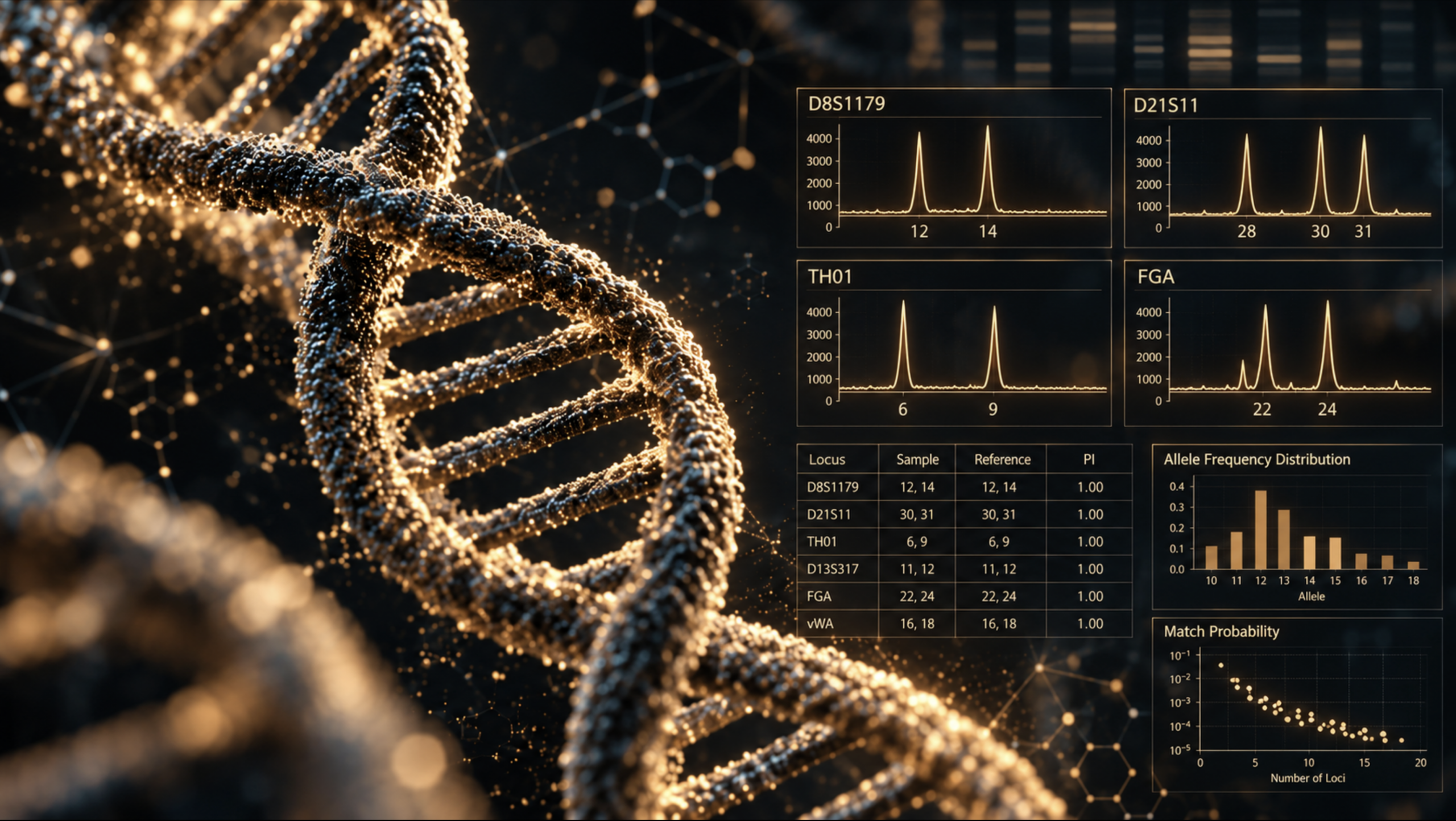
According to WRAL, a US news outlet, the scientist stated on 15 October 2026 that the results obtained from a sample taken from the victim’s body were 170 septillion times more probable if the mixture originated from Faith Hedgepeth (the victim) and Miguel Salguero-Olivares (the defendant) than if it originated from the victim and an unknown, unrelated individual [1]. As one septillion is 1 followed by 24 zeros, the value can be written 1.7 × 10²⁶ [1].

This figure is a likelihood ratio (LR). It compares the probability of observing the scientific findings under two alternative propositions, usually framed with reference to the positions of the prosecution and the defence. The higher the ratio, the more the findings support the first proposition over the second. It does not mean that the defendant’s guilt is 170 septillion times more probable than his innocence, nor does it represent the probability that the DNA came from him. This distinction is fundamental, since the ratio concerns the probability of the findings given the propositions considered, not the probability that those propositions are true [5].

The value also depends on the alternative proposition chosen. The one used here refers to an unknown, unrelated individual and therefore does not cover the possibility that a close relative of the defendant, who shares part of his DNA, is the source of the mixture. The question arises all the more naturally because the identification was made through relatives, and a ratio calculated against the proposition that a brother of the defendant was the contributor would be considerably lower.

To rule out this possibility, investigators do not rely on the statistical calculation alone. They also examine the suspect’s family circle to identify relatives who could plausibly be alternative sources of the DNA, such as a brother or father living in the area at the time of the offence. Where such individuals exist, it must then be established whether they can be eliminated, either by direct comparison of their DNA profiles or by evidence showing that they could not have been at the scene, such as a verified alibi. If no relative comes into consideration, or if all have been excluded, an unknown unrelated individual is indeed the appropriate alternative for the evaluation.

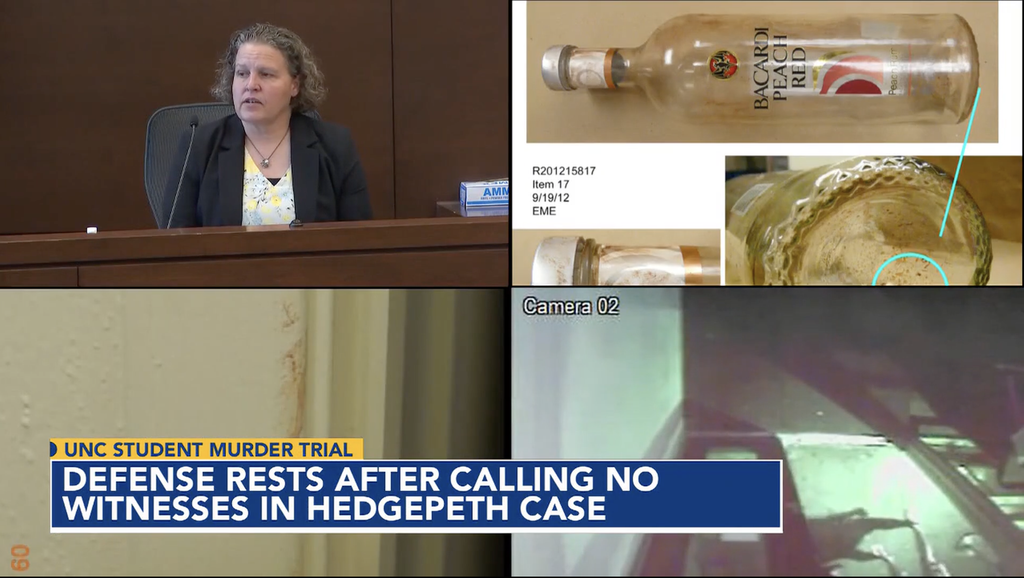
The other analyses presented at trial also illustrate the range of results. A second sample from the body produced a value of 114 septillion, calculated under the same propositions [3]. For the top of a rum bottle that the prosecution regards as the murder weapon, the scientist reported a likelihood ratio of 48.6 tredecillion, roughly 4.86 × 10⁴³ [3]. This figure, far higher than those obtained for the body samples, does not mean that the bottle provides stronger support for the defendant’s involvement, because the propositions compared were not the same. For the body samples, the alternative proposition paired the victim with an unknown individual, whereas for the bottle it assumed two unknown contributors [3]. The calculation therefore also reflects the rarity of the victim’s own profile, even though the presence of her DNA on an item found in her home was hardly surprising. The defence did ask the scientist whether this choice could affect the value obtained [4].

By contrast, the DNA recovered from the main body of the bottle, an area that had not been analysed initially, could not be associated with either the defendant or the victim [4]. The profiles obtained from beneath the fingernails of the victim’s left hand neither associated the defendant with the sample nor excluded him [3]. These results are not necessarily contradictory, since the quantity of DNA recovered and the composition of mixtures can vary from one area of an object to another. Their interpretation nevertheless requires a clear distinction between the samples concerned and the conclusions each one actually supports.
Procès de Hedgepeth

By Monica Casey, WRAL Durham reporter

Identifying a source does not explain a contact

A DNA match, even one accompanied by an extremely high likelihood ratio, does not necessarily show how the DNA came to be on a surface. The evaluation may address the biological origin of a trace, which forensic science refers to as the source level [6]. It may also seek to discriminate between different activities that could explain its presence, such as direct contact or indirect transfer. This second level, the activity level, requires additional information and, where the scientific data allow, a specific evaluation [7]. A likelihood ratio calculated for the source question therefore cannot be carried over as it stands to the activity question [6].

DNA can persist after contact and be transferred indirectly through a person or an object [7]. Its presence alone therefore does not allow the deposit to be dated precisely or the action that produced it to be established. The nature of the biological material does, however, bear on this evaluation. In the Hedgepeth case, the detection of spermatozoa in intimate swabs considerably narrows the range of plausible activities, without establishing when the deposit occurred or its connection with the killing [3]. The reports presented in court thus provide information on the possible contributors to the DNA mixtures, but they should not automatically be read as demonstrating the circumstances of the murder.

This distinction is central to the guidance of the European Network of Forensic Science Institutes (ENFSI), which recommends that scientific findings be evaluated against clearly defined propositions suited to the issues in the case [5].

The risk of transposing the conditional

One of the best-known errors in the interpretation of scientific evidence is the prosecutor’s fallacy, a term coined by Thompson and Schumann in 1987 [8]. Despite its name, it is not confined to the prosecution and can be committed by anyone involved in a trial. It consists in confusing the probability of observing a result if a proposition is true with the probability that the proposition is true given the result. An everyday example shows that the two are far from equivalent. The probability that a judge in France speaks French is close to 1, whereas the probability that a French speaker is a judge is minute. Nobody would make this confusion here, but it becomes much harder to detect when it involves numerical values derived from a DNA analysis. Reading the 170 septillion as a probability of guilt, an interpretation rejected above, would be one example.

Bayesian reasoning places the contribution of the expert evidence in its proper context. The likelihood ratio measures how strongly the findings support one proposition rather than the other, without indicating on its own the probability that either is true. It acts as a multiplier applied to the view that could be taken of these propositions before the DNA analysis, on the basis of the other evidence in the case, such as the whereabouts of the person concerned or the witness statements obtained. That assessment is a matter for the fact-finder, not the expert [9]. The same likelihood ratio can therefore lead to very different conclusions depending on whether the person was identified through a body of corroborating evidence or solely through a hit on a DNA database such as the FNAEG, the French national DNA database. When the ratio reaches values comparable to those in the Hedgepeth trial, this prior assessment carries much less weight on the source question, and the debate shifts to the choice of propositions, the risk of error and the circumstances of the deposit.

The Sally Clark case in England illustrates the consequences of this confusion. Tried for the murder of her two sons, who died when only a few weeks old, she was convicted in November 1999 after the paediatrician Roy Meadow told the jury that the probability of two sudden infant deaths in a family like hers was 1 in 73 million [10]. The figure had been obtained by squaring an estimate of 1 in 8,543, as if the two deaths were independent, although genetic or environmental factors shared within a family make that assumption highly questionable [11]. Above all, it was understood, including by part of the press, as the probability that the deaths were accidental, in other words as the probability that the mother was innocent [12]. Yet the murder of two infants by their mother is also an extremely rare event, and the only relevant question was the relative probability of the two explanations in the light of the findings [11]. The convictions were quashed in January 2003, mainly because of microbiological results that had not been disclosed to the defence [10]. As early as October 2001, the Royal Statistical Society had publicly condemned the misuse of statistics in the case [11].

The growth of probabilistic genotyping makes this vigilance all the more necessary. Software such as STRmix or EuroForMix can interpret complex mixtures and low-template traces by modelling the phenomena that affect profiles, in particular allele drop-out and drop-in [13]. These systems frequently produce likelihood ratios in the billions, and sometimes values of the same order as those presented in Durham. The value obtained nevertheless depends on the propositions compared, the number of contributors assumed, the model parameters and the population data used, so two analyses of the same profile may yield different values without either necessarily being wrong.

Nor does a likelihood ratio of 170 septillion mean that the risk of error is 1 in 170 septillion. The calculation assumes that the profile was correctly generated and attributed to the right sample. The risks of contamination or sample mix-up, even if small, are generally far greater than such values and, where they are not negligible, can limit the probative value of the DNA evidence much more than the rarity of the profile [14].

Expert evidence that must be understood and open to challenge

Erin Ermish’s cross-examination focused on the analytical methods and on the possibility that samples stored for several years had degraded [3]. The defence also questioned the sampling choices and the results obtained from different parts of the rum bottle [4]. These exchanges show how important it is to make scientific conclusions understandable without altering their scope. A striking figure can give an impression of absolute certainty, whereas its interpretation remains limited to a specific question.

ENFSI recommends in particular that expert reports set out the propositions considered and the limitations of the evaluation [5]. The aim is to enable those who receive the report to understand the strength of the findings without confusing this scientific assessment with the judicial decision. This requirement applies directly to experts, who must explain their results in accessible language without losing the necessary nuance. It also applies to legal practitioners and investigators, whose questions can help determine whether a conclusion genuinely addresses the propositions at issue in the case.

In the Hedgepeth trial, understanding the ratio of 170 septillion therefore requires knowing which samples it relates to and which propositions were used to calculate it. The results obtained from the other exhibits must be examined for what each contributes in its own right, without being overshadowed by the most striking figures.

Interpretation and the true value of the evidence

The scientific testimony heard in Durham is a reminder that a DNA analysis does not necessarily answer every question raised by an investigation. It can provide extremely strong support for a proposition about the origin of a trace without establishing the exact circumstances of its deposit. A likelihood ratio replaces neither the examination of the other evidence in the case nor the assessment of propositions about the facts, which is a matter for the court. For judges and lawyers, the reported value only makes sense in the light of the conditions under which it was calculated. Knowing which sample was analysed, which propositions were compared and whether the evaluation addresses the source of the DNA or the activity that led to its deposit makes it possible to determine what the expert evidence actually establishes. The clarity with which the expert sets out these elements, both in the report and in court, is an integral part of the quality of the work [5].

Références

[1] WRAL. 170 septillion times more likely, Expert testifies about DNA in UNC student murder trial. 15 octobre 2026.
[2] ABC11. Court documents reveal how investigators linked suspect in Faith Hedgepeth’s murder. 24 janvier 2022.
[3] 9th Street Journal. Day 14 of the Faith Hedgepeth trial, Scientist testifies on DNA evidence. 15 octobre 2026.
[4] The Daily Tar Heel. Forensic scientist connects defendant’s DNA to crime scene during Faith Hedgepeth murder trial. Octobre 2026.
[5] European Network of Forensic Science Institutes (ENFSI). ENFSI Guideline for Evaluative Reporting in Forensic Science. Version 3.0, 2015.
[6] Gill P., Hicks T., Butler J.M. et al. (2018). DNA commission of the International society for forensic genetics, assessing the value of forensic biological evidence, guidelines highlighting the importance of propositions, Part I, evaluation of DNA profiling comparisons given (sub-) source propositions. Forensic Science International, Genetics, 36, 189-202.
[7] Gill P., Hicks T., Butler J.M. et al. (2020). DNA commission of the International society for forensic genetics, assessing the value of forensic biological evidence, guidelines highlighting the importance of propositions, Part II, evaluation of biological traces considering activity level propositions. Forensic Science International, Genetics, 44, 102186.
[8] Thompson W.C., Schumann E.L. (1987). Interpretation of statistical evidence in criminal trials, the prosecutor’s fallacy and the defense attorney’s fallacy. Law and Human Behavior, 11(3), 167-187.
[9] Aitken C., Roberts P., Jackson G. (2010). Fundamentals of probability and statistical evidence in criminal proceedings, guidance for judges, lawyers, forensic scientists and expert witnesses. Royal Statistical Society, Practitioner Guide No 1.
[10] Court of Appeal (England and Wales). R v Clark [2003] EWCA Crim 1020, 11 avril 2003.
[11] Royal Statistical Society (2001). Royal Statistical Society concerned by issues raised in Sally Clark case. Communiqué de presse, 23 octobre 2001.
[12] Royal Statistical Society (2002). Lettre au Lord Chancellor relative à la présentation des preuves statistiques dans les procès pénaux, janvier 2002.
[13] Gill P., Gusmão L., Haned H. et al. (2012). DNA commission of the International Society of Forensic Genetics, recommendations on the evaluation of STR typing results that may include drop-out and/or drop-in using probabilistic methods. Forensic Science International, Genetics, 6(6), 679-688.
[14] Thompson W.C., Taroni F., Aitken C.G.G. (2003). How the probability of a false positive affects the value of DNA evidence. Journal of Forensic Sciences, 48(1), 47-54.

What does DNA on a domestic violence victim really prove?

A bite and a strangulation are two common acts in domestic violence, yet they leave very different genetic traces. That is one of the lessons from research to be presented in late October at ISHI 37, the largest annual international meeting devoted to DNA-based human identification [1]. The findings speak to a real difficulty in intimate partner violence cases. Finding a partner’s DNA on the victim’s body is not enough to establish how it got there, particularly when the two people live together and are in regular contact.

The paradox of DNA between partners

In most criminal cases, detecting a suspect’s DNA profile on a victim carries considerable probative weight. That reasoning largely breaks down in domestic violence cases. Partners live together and share the same bed, the same bathroom, the same clothes and countless everyday contacts. Each partner’s DNA is therefore very often found on the other [2]. Specialists call this background DNA, meaning genetic material that has built up through ordinary cohabitation rather than through any specific act.

The question that matters is then no longer really whose DNA it is. It becomes which activity led to its deposition, an ordinary contact of shared life or an act of aggression. This is what Daniel Arend, a young researcher featured in the Student Ambassador programme of the ISHI 37 symposium, is trying to put on an objective footing [1]. His work examines the transfer, persistence, prevalence and recovery of DNA (DNA-TPPR) in two acts emblematic of domestic violence, biting and strangulation [1].

Bites leave a different kind of trace

Daniel Arend’s research looks in particular at DNA recovery after simulated bites. According to the interview published by the organisers ahead of the meeting, bitten areas yielded near-complete profiles of the biting individual in many samples up to 16 hours after contact, the longest interval studied, even though the volunteers had returned to their usual activities [1]. The person who bit was often the major contributor to the mixture, whereas that person generally appeared only as a minor contributor when no biting had occurred [1]. These results should nonetheless be treated with caution, as they have not yet been published in a peer-reviewed journal.

Such persistence is not surprising in light of earlier work on salivary DNA. A study published in 2011 found that a full male profile could still be obtained 96 hours after saliva had been deposited on unwashed skin, in 8 of 9 experiments [3]. A bite can therefore leave a trace whose interpretation differs markedly from that of a simple skin contact.

The strangulation problem

Simulated strangulation involving skin-to-skin contact alone, by contrast, mostly produced only partial profiles [1]. These profiles were often impossible to distinguish from the background DNA associated with cohabitation [1]. The observation echoes research on manual strangulation going back to the late 1990s. Early work showed that the assailant’s DNA could be typed from epithelial cells transferred to the victim’s neck [4]. About a decade later, a British team found that even without any assault, nearly a quarter of the neck areas swabbed from 24 adult volunteers already carried non-donor alleles [5]. A Norwegian study later observed that among participants living with a partner, the partner’s DNA persisted on the neck and accumulated over the course of the day [2]. A neck swab showing the partner’s DNA may therefore prove nothing about strangulation, while a weak or partial profile is no more able to rule it out.

What this means for investigators and expert witnesses

For investigators and forensic practitioners, these data argue for early, targeted swabbing of bite sites, whose evidential value appears to hold over several hours, and for considerable caution when relying on neck swabs from partners who live under the same roof. For expert witnesses, judges and prosecutors, they support the evaluative approach advocated by the European Network of Forensic Science Institutes (ENFSI). This approach asks the scientist to assess the probability of the findings given competing propositions, framed here at the activity level, while taking into account the time elapsed, the victim’s activities and the context of cohabitation, rather than stopping at the mere presence of a DNA profile [6].

Daniel Arend’s work is part of this shift. Its value lies in the effort to generate data that document these situations more thoroughly, rather than treating the mere presence of a profile as direct proof of the alleged activity [1].

Findings that remain preliminary

The scope of this work still calls for caution. Daniel Arend’s results concern experimental scenarios and will be presented as a poster at ISHI 37 [1]. They do not yet amount to a study published in a peer-reviewed journal. They do, however, belong to a broader body of research built up over the past 15 years or so on how DNA moves between people who share the same living or working space. A recent Italian study of shared workspaces showed, for instance, that the DNA of one participant’s cohabiting spouse could be found on that participant’s personal items, in this case a credit card, even though the spouse had taken no part in any of the handling experiments [7]. This shared genetic background, largely overlooked twenty years ago, is now regularly invoked to challenge DNA evidence in the criminal courts.

In domestic violence cases, finding a partner’s DNA on the victim is therefore a piece of information that has to be read in context. The trace may well be relevant, but its evidential value also depends on how it could have been deposited and on the alternative explanations consistent with the findings.

Références

[1] Luther T. « Student Ambassador Poster Preview, Daniel Arend on DNA Transfer in Domestic Violence Cases ». ISHI News, 17 septembre 2026. https://www.ishinews.com/student-ambassador-poster-preview-daniel-arend-on-dna-transfer-in-domestic-violence-cases/
[2] Fantinato C., Gill P., Fonneløp A.E. « Non-self DNA on the neck, a 24 hours time-course study ». Forensic Science International: Genetics, 2022, 57, 102661. DOI 10.1016/j.fsigen.2022.102661.
[3] Kenna J., Smyth M., McKenna L., Dockery C., McDermott S.D. « The recovery and persistence of salivary DNA on human skin ». Journal of Forensic Sciences, 2011, 56(1), 170-175. DOI 10.1111/j.1556-4029.2010.01520.x.
[4] Wiegand P., Kleiber M. « DNA typing of epithelial cells after strangulation ». International Journal of Legal Medicine, 1997, 110(4), 181-183. DOI 10.1007/s004140050063.
[5] Graham E.A.M., Rutty G.N. « Investigation into “Normal” Background DNA on Adult Necks, Implications for DNA Profiling of Manual Strangulation Victims ». Journal of Forensic Sciences, 2008, 53(5), 1074-1082. DOI 10.1111/j.1556-4029.2008.00800.x.
[6] European Network of Forensic Science Institutes (ENFSI). « ENFSI Guideline for Evaluative Reporting in Forensic Science », approved version 3.0, 8 mars 2015. https://enfsi.eu/wp-content/uploads/2016/09/m1_guideline.pdf
[7] Onofri M., Tommolini F., Severini S., Gambelunghe C., Lancia M., Carlini L., Carnevali E. « Trace DNA Transfer in Co-Working Spaces, The Importance of Background DNA Analysis ». International Journal of Molecular Sciences, 2024, 25(4), 2207. DOI 10.3390/ijms25042207.

Analyse ADN laboratoire police scientifique transfert

When an absent investigator’s DNA turns up on a sealed exhibit

A case that had gone unsolved for eighteen years is reopened. From a plastic bag kept as a sealed exhibit, analysts obtain a full DNA profile. Run against the staff elimination database, it returns a name, that of an investigator. The trouble is that this investigator was eighty kilometres from the laboratory and had never set foot at the scene or in the exhibit storage room. The profile was nonetheless his. DNA had identified a person with near-certainty on an item he had never handled. Reported in early 2026 by Gao et al. in Forensic Science International: Genetics, this case is a reminder of a distinction that is too often overlooked: knowing whose DNA a sample carries and knowing how it got there are two different questions.

Identifying the source is not explaining the activity

The forensic laboratory’s result answered one question perfectly, the origin of the genetic material, but it offered no reliable information about the circumstances of deposition. This distinction has long shaped the reasoning of forensic geneticists. In 1998, Cook, Evett et al. [1], writing in Science & Justice, proposed a hierarchy of propositions setting out three levels of interpretation, running from the source to the offence itself. The sub-source level, specific to DNA, was added later, notably by Evett et al. in 2002 [2]. Establishing whose biological profile a sample matches sits at the very bottom of this ladder. Explaining how that profile came to be there, on a substrate or at a crime scene, belongs to the activity level, which is higher and far harder to establish. For a judge, the distinction is decisive. A laboratory can state with great confidence that the DNA profile obtained from a biological sample matches an individual’s profile, yet cannot say, with the same assurance, what that presence means.

The four levels of interpretation: a textbook case

The classic Cook and Evett example, a sexual assault case, where each level adds a further layer of inference on top of the one below:

  • Sub-source level:
    “The DNA in the sample comes from the suspect” (rather than from an unknown person). This is what the raw DNA comparison measures directly. It speaks only to DNA, nothing more.
  • Source level:
    “The semen comes from the suspect.” This adds identification of the body fluid, provided it has been established that the stain really is semen.
  • Activity level:
    “The suspect had sexual intercourse with the complainant.” This adds the mechanism of deposition where transfer, persistence and contamination come into play.
  • Offence level:
    “The suspect raped the complainant.” This adds the absence of consent which the expert cannot decide, since that is for the court.

At each step up, science can say a little less, and the weight of the evidence diminishes.

How more sensitive methods changed the picture

The problem is not new, but it has changed in scale as DNA analysis has advanced. Today’s kits can recover usable DNA profiles from just a few cells, where once a far larger amount of DNA was needed. In 1997, van Oorschot and Jones [9] showed that mere contact is enough to deposit DNA. Since then, the literature has documented many routes of transfer, both direct and indirect, surveyed in van Oorschot et al.’s 2019 review [10]. The effect cuts both ways. The very sensitivity that makes it possible to reopen old cases also raises the chance of detecting a DNA profile unrelated to the events in question. Studies remain cautious about frequencies, which vary widely with conditions, so much so that some authors regard secondary transfer as an uncommon event. Generalisation must therefore be handled with care, in both directions.

The risk of DNA transfer in evidence handling

The journey of a sealed exhibit, from the crime scene to the laboratory bench, passes through a series of handling steps during which DNA can move. The packaging of the item itself plays a part. Stella et al. [7] showed in 2026 that this transfer can run two ways: DNA deposited on an item may migrate to the inner surface of the packaging, so that the sought-after profile is missing from the analysis; or it may transfer to another area of the item, where it has no business being and clouds interpretation. Goray et al. [6] noted in 2019 that the outer surface of gloves could carry, alongside the target profile, that of the examiners themselves, particularly when opening and resealing the packaging. It is precisely this risk that the examination protocols used by forensic services are designed to head off, requiring decontaminated gloves changed for each new item. Examination tools pose a comparable problem, described as early as 2015 by Szkuta et al. [8]. That an investigator might contaminate an item or surface after the fact is therefore no far-fetched hypothesis; Fonneløp’s team [3,4] has studied the phenomenon right down to evidence bags themselves.

To explain the presence of this profile on an exhibit the investigator had never come near, Gao et al. [5] rule out item-to-item transfer in favour of a likely airborne route: the DNA is thought to have settled on a colleague’s clothing before detaching as that colleague approached the sample pre-treatment area. Without the staff elimination database, this hypothesis would never have come to light.

What this distinction changes for the evaluation of evidence

For legal professionals, the lesson of this case is not that DNA is unreliable, but rather that a solid genetic identification at the source level can coexist with a fragile explanation at the activity level. The whole risk lies in sliding from one to the other, when the strength of the former colours the assessment of the latter. To guard against this slide, some forensic geneticists argue that the expert should reason explicitly at the activity level and set out the scenarios consistent with the observations. This is notably the position of the School of Criminal Justice at the University of Lausanne and of the European guideline on evaluative reporting [11].

Conclusion :

The case of the investigator who was never at the scene illustrates the stakes better than any theoretical reminder could. His DNA profile, entirely genuine, sat on a sealed exhibit he had never touched, in a case whose scene he had never visited. Without a safeguard that brought another explanation to light, this finding could have been read as a genuine investigative lead backed by a “relevant” DNA profile. A genetic result is worth not only what it identifies, but what it reasonably allows one to infer, and that is never settled on a single trace alone. A DNA profile must be weighed within the wider body of evidence, never in isolation.

References :

  • [1] Cook R., Evett I.W., Jackson G., Jones P.J., Lambert J.A. (1998). A hierarchy of propositions: deciding which level to address in casework. Science & Justice, 38(4), 231-239.
  • [2] Evett I.W., Gill P.D., Jackson G., Whitaker J., Champod C. (2002). Interpreting small quantities of DNA: the hierarchy of propositions and the use of Bayesian networks. Journal of Forensic Sciences, 47(3), 520-530.
  • [3] Fonneløp A.E., Egeland T., Gill P. (2015). Secondary and subsequent DNA transfer during criminal investigation. Forensic Science International: Genetics, 17, 155-162.
  • [4] Fonneløp A.E., Johannessen H., Egeland T., Gill P. (2016). Contamination during criminal investigation: Detecting police contamination and secondary DNA transfer from evidence bags. Forensic Science International: Genetics, 23, 121-129.
  • [5] Gao L. et al. (2026). A rare and atypical case of long-distance indirect DNA transfer: Contamination from an investigator never present at the scene. Forensic Science International: Genetics.
  • [6] Goray M., Pirie E., van Oorschot R.A.H. (2019). DNA transfer: DNA acquired by gloves during casework examinations. Forensic Science International: Genetics, 38, 167-174.
  • [7] Stella C.J., Goray M., Meakin G.E., van Oorschot R.A.H. (2026). DNA transfer in packaging: Investigation of mitigation strategies. Journal of Forensic Sciences, 71(1), 197-210.
  • [8] Szkuta B., Harvey M.L., Ballantyne K.N., van Oorschot R.A.H. (2015). DNA transfer by examination tools, a risk for forensic casework? Forensic Science International: Genetics, 16, 246-254.
  • [9] van Oorschot R.A.H., Jones M.K. (1997). DNA fingerprints from fingerprints. Nature, 387, 767.
  • [10] van Oorschot R.A.H., Szkuta B., Meakin G.E., Kokshoorn B., Goray M. (2019). DNA transfer in forensic science: A review. Forensic Science International: Genetics, 38, 140-166.
  • [11] ENFSI, Guideline for Evaluative Reporting in Forensic Science, 2015

Quand un baiser permet de transférer l'ADN d'une tierce personne sur un mégot de cigarette. Forenseek

Cigarette butts: can a simple kiss mislead DNA interpretation?

A classic crime scene issue

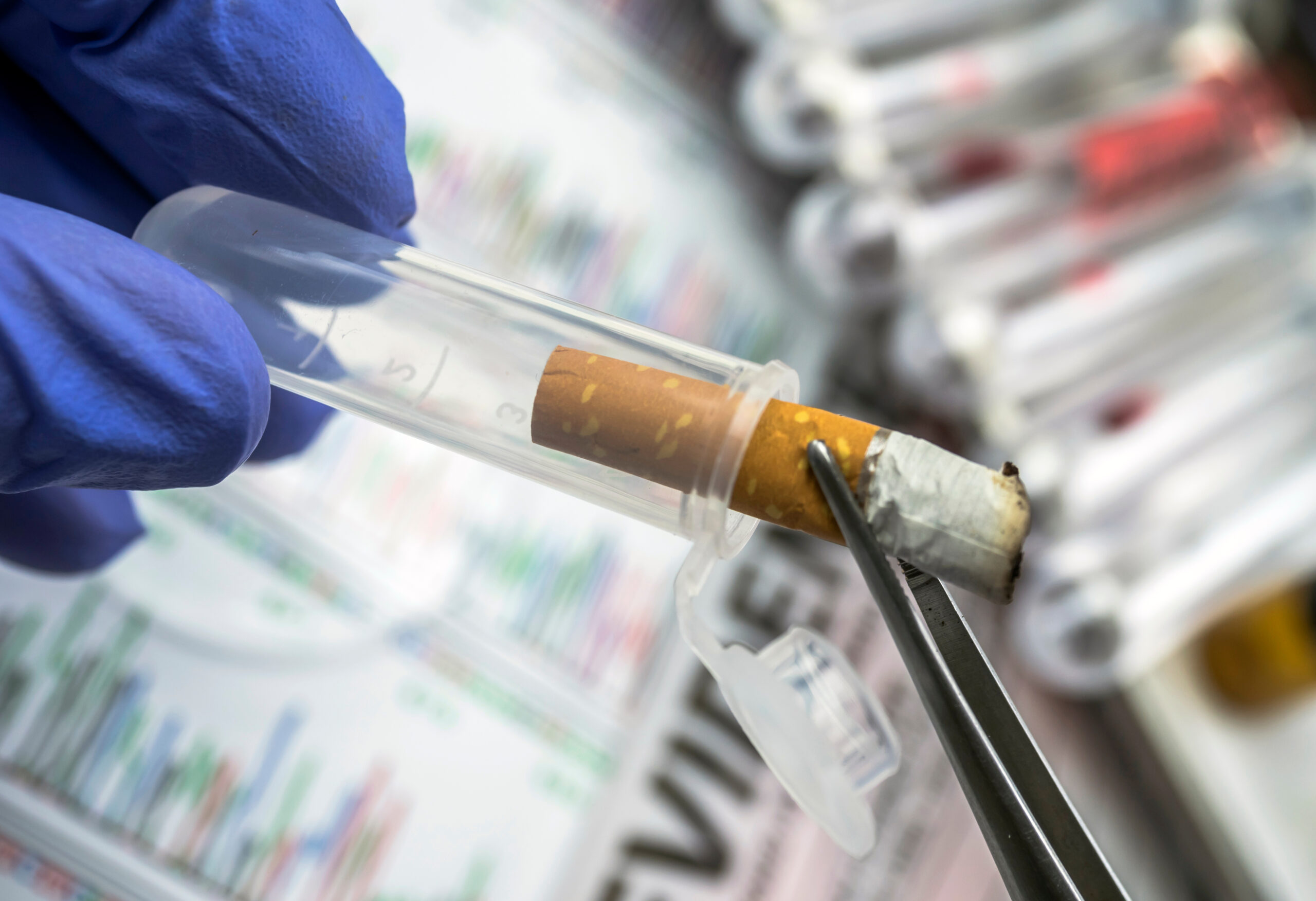
Cigarette butts represent a major biological substrate in forensic casework. Rich in epithelial cells deposited through saliva, they generally yield exploitable genetic profiles. In practice, the discovery of a DNA mixture on a cigarette filter is often interpreted as evidence that two individuals smoked the same cigarette or handled it in close succession. However, with the increasing sensitivity of modern quantification and STR amplification techniques, laboratories are now capable of detecting minute amounts of DNA, including those resulting from indirect transfers. The question is therefore no longer simply “Whose profile is this?”, but rather “How did this DNA get there?”

An experimental protocol based on two realistic scenarios

The authors of this pilot study tested two distinct configurations.

First scenario: kiss, then cigarette.
A couple exchanged a deep kiss involving saliva transfer. Each partner then smoked a cigarette at different intervals: immediately, and then 5, 15, 30, 60, 90, and 120 minutes after contact. The objective was to assess whether the partner’s DNA, retained in the oral cavity, could be secondarily transferred onto the cigarette filter.

Second scenario: shared cigarette.
Both partners alternately smoked the same cigarette, reproducing a case of direct co-consumption. Samples were analyzed either immediately after collection or after a 30-day storage period in order to evaluate the impact of time on DNA quantity and quality.

Detectable persistence for up to two hours

In the “kiss then cigarette” scenario, alleles attributable to the non-smoking partner were detected on cigarette butts up to 120 minutes after contact. The quantity of transferred DNA gradually decreased over time but remained detectable under several experimental conditions. In other words, the presence of a minor DNA profile on a cigarette butt does not, by itself, demonstrate that two individuals smoked the cigarette. A prior intimate contact could be sufficient to explain the mixture. These findings align with previous research showing that salivary DNA can persist in the oral cavity for several tens of minutes, or longer, depending on individual and physiological factors.

The determining effect of processing delay

The study also demonstrated a significant decrease in total DNA quantity after 30 days of storage, accompanied by an increase in the degradation index. This phenomenon particularly affects the minor component of the mixture, which is more fragile and more prone to partial loss (allelic drop-out, imbalance). In practical terms, a cigarette butt analyzed promptly may reveal a detectable mixture, whereas delayed processing could result in an apparently single-source profile.

Such temporal variability complicates interpretation and underscores the importance of carefully documenting storage conditions and processing timelines.

The contribution and limits of Y-STR markers

In cases where the female partner smoked after the kiss, Y-STR analyses allowed specific monitoring of the transferred male component. Complete Y profiles were obtained up to one hour after contact, with alleles still detectable at two hours under certain conditions. However, progressive degradation and low template quantities again require caution and contextual interpretation.

Interpreting at the activity level is essential

These findings clearly illustrate the now central distinction between:

  • Source level: whose DNA is it?
  • Activity level: by what mechanism was it deposited?

When a mixture is detected on a cigarette butt recovered from a crime scene, several scientifically plausible scenarios may exist: co-consumption, successive handling, secondary transfer following prior intimate contact, or even a combination of these hypotheses. An expert cannot therefore limit their assessment to identifying the DNA contributors. They must also evaluate deposition mechanisms consistent with current scientific knowledge, taking into account secondary transfer dynamics and the impact of time.

Conclusion

This experimental study, conducted under controlled conditions, does not claim to establish a universal rule applicable to all judicial situations. It does, however, clearly demonstrate that secondary oral transfer onto a cigarette butt is possible and may remain detectable for up to two hours after a simple kiss. At a time when the sensitivity of genetic analysis techniques continues to increase, these results reaffirm a fundamental principle of forensic science: detecting DNA is not, in itself, proof of a particular scenario. Interpretation must be rigorous, contextualized, and grounded in activity-level reasoning in order to avoid overinterpretation before the courts..

Source :

GIANFREDA, Denise, CORRADINI, Beatrice, FERRI, Gianmarco, FERRARI, Francesca, BORCIANI, Ilaria, CECCHI, Rossana, SANTUNIONE, Anna Laura. Preliminary study of mixed traces on cigarette butts and non-self DNA transfer, persistence, prevalence and recovery in different forensic scenarios. Legal Medicine, 2026, vol. 81, article 102803. DOI: 10.1016/j.legalmed.2026.102803.

Touch DNA: a new approach to better understand the traces left behind

In criminal investigations, DNA analysis plays a central role in identifying the perpetrators of crimes and offenses. However, not all biological traces provide the same type of information. Touch DNA—deposited involuntarily on a surface after simple contact—remains challenging to interpret for forensic experts.

Why do some individuals leave more DNA than others? A recent study conducted by researchers at Flinders University in Australia proposes an innovative method to objectively assess this variability. By examining the individual propensity to shed skin cells, the team opens new perspectives in forensic genetics and the interpretation of biological traces at crime scenes.

A genuine interindividual variability

Some individuals, described as “good shedders,” naturally deposit large quantities of skin cells on objects they handle. Others, by contrast, leave only minimal traces. This difference, long observed by forensic biologists, complicates the interpretation of DNA results, particularly when assessing the likelihood of direct contact between a person and an object.

Until now, reliably and reproducibly quantifying this variability has been difficult. The Australian study specifically addresses this gap, providing a rigorous scientific protocol.

A simple and reproducible measurement protocol

The researchers developed a protocol based on a series of controlled contacts carried out by 100 participants, each asked to touch a standardized surface. The deposited cells were then:

  • Stained with a fluorescent marker,
  • Counted using microscopy,
  • Subjected to genetic analysis to confirm the presence of recoverable DNA.

The results showed that, for 98 out of 100 participants, the level of cell deposition was stable and reproducible over time. This protocol allows individuals to be classified into three categories: high, moderate, or low skin cell shedders.

A tool to better contextualize touch DNA evidence

The value of this method extends beyond biology. It may serve as a tool for judicial contextualization. For instance, a suspect identified as a high shedder could account for the abundant presence of their DNA on an object without having taken part in the offense. Conversely, the absence of DNA from a low shedder does not exclude the possibility of contact.

This information could be incorporated into likelihood ratio calculations used in DNA interpretation, thereby strengthening the robustness of forensic assessments.

Future perspectives for forensic science

The proposed method has several advantages: it is inexpensive, easy to implement in the laboratory, and could be adapted to various objects and realistic conditions (different surfaces, durations of contact, humidity). Further validation studies are still required before widespread adoption. Ultimately, however, this approach could be integrated into routine biological trace analysis, providing valuable support to magistrates and investigators in evaluating the probative value of DNA evidence.

References

  • Petcharoen P., Nolan M., Kirkbride K.P., Linacre A. (2024). Shedding more light on shedders. Forensic Science International: Genetics, 72, 103065, read here.
  • Flinders University. (2024, August 22). Heavy skin shedders revealed: New forensic DNA test could boost crime scene investigations. ScienceDaily, read here.

Cats — reliable witnesses in criminal investigations?

It is well known that our pets love affection and display unwavering loyalty. What has recently been discovered, however, is that they can also hold irrefutable evidence in the context of a criminal investigation.

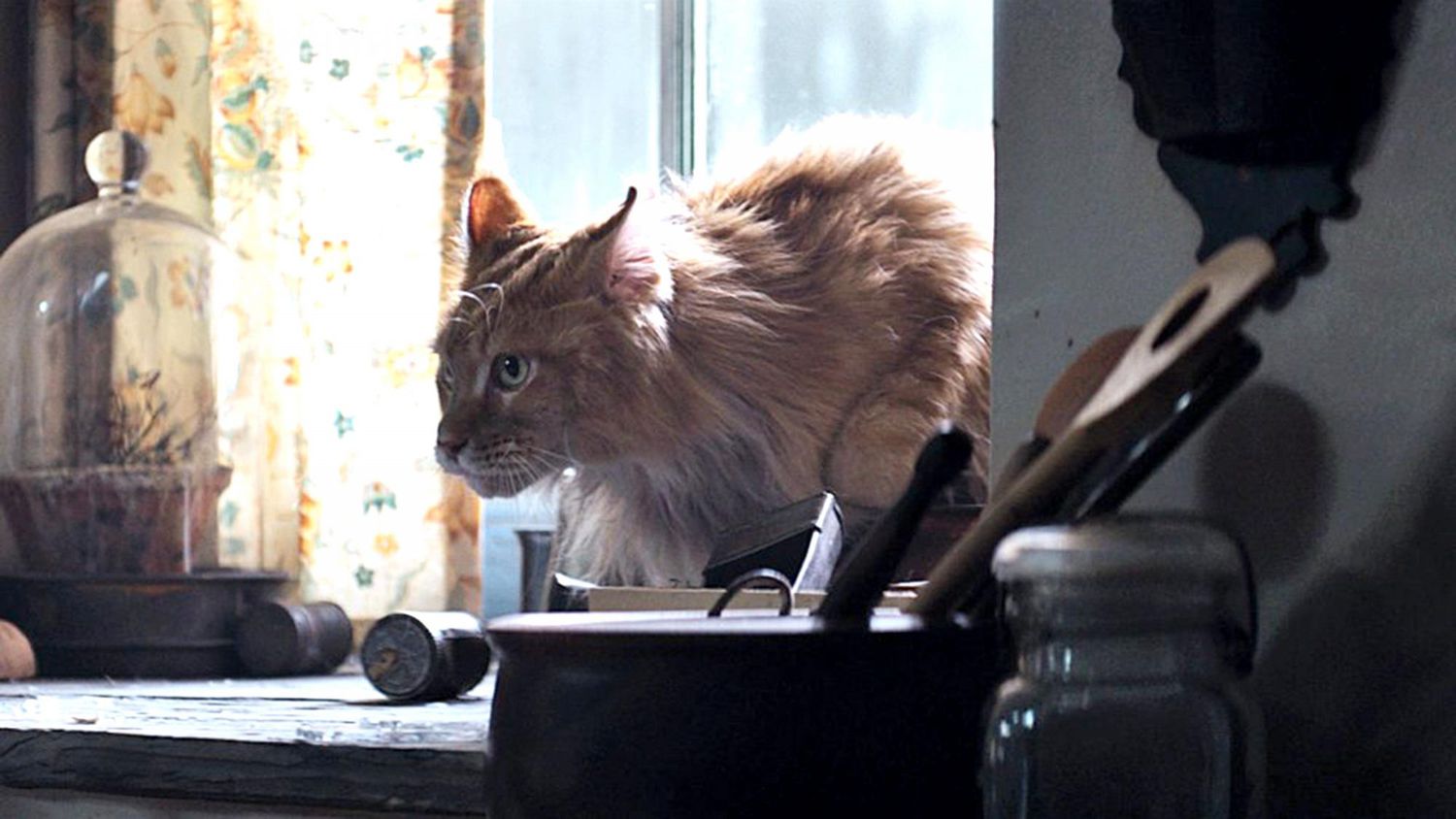
Researchers from Flinders University in Australia took a close interest in the cats that inhabit many Australian households — not to study their habits or charming quirks, but for a much more forensic reason. These experts in criminalistics, genetics and forensic medecine sought to determine to what extent these animals could act as receptacles for human DNA and potentially transfer it onto other surfaces.

A single contact is enough to cause transfer

To test this hypothesis, the scientists conducted a study on twenty cats from fifteen households, collecting samples from four different areas: the fur on the head, back and right side of the body, and the skin located on the left flank of the animals.

A significant amount of DNA was recovered, mostly from the cats’ fur and, to a lesser extent, from their skin. Unsurprisingly, most of this genetic material belonged to the cats’ owners. More surprisingly, however, DNA from individuals outside the household was also detected in 47% of the samples—particularly from cats that regularly roamed their neighborhood. This demonstrates that feline fur readily captures human DNA, not only through petting but also via brief, incidental contact. Moreover, the study showed that DNA transfer can also occur in the opposite direction—from the cat to another person or to an object—simply by tapping or scratching the animal’s fur with a bare or gloved hand. In both cases, the recovered traces proved sufficient to identify an individual.

The cat: a silent but relevant witness

For forensic investigators, the findings of this study open up new perspectives in the way a crime scene is approached. From now on, an animal present at the scene can be considered as potential evidence if it is suspected to have come into contact with the perpetrator of a crime. Since their fur acts as a true reservoir of DNA, collecting samples from the areas identified by the researchers could make it possible to identify offenders—or, conversely, to rule out certain suspects.

It should be noted that this ability to capture human DNA is not unique to cats. Dogs, which are also common household companions across the world, have proven to be excellent collectors of genetic material as well.

Read full article here.

DNA is also tracking down drug traffickers

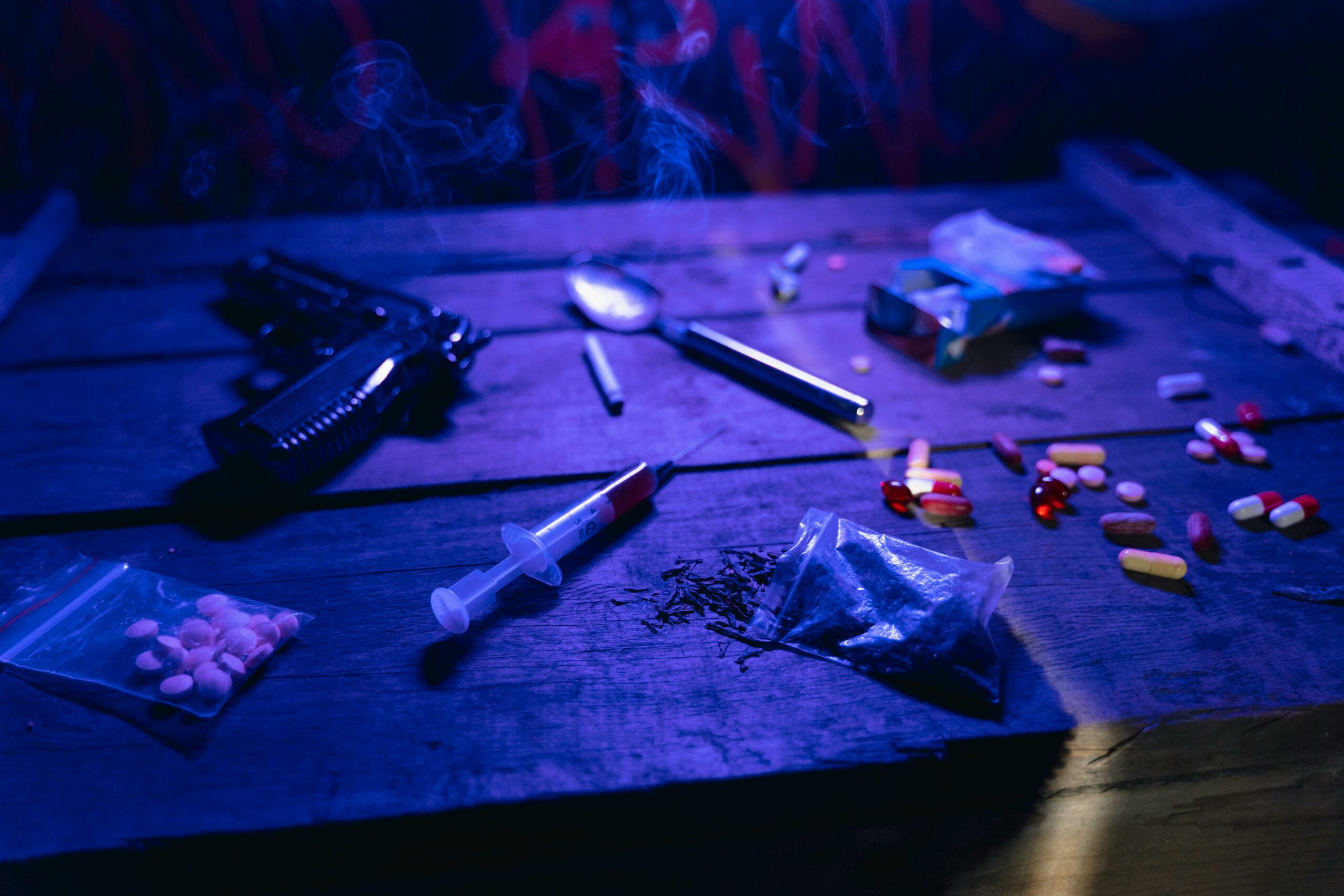
From raw product to the small plastic bag of drugs sold on the street, every stage of handling increases the chances of leaving traces behind. Whether fingerprints or biological residues (DNA), such evidence is invaluable for tracing the network back to the traffickers.

DNA — a key tool in criminal investigations

Depuis quelques années, l’analyse de l’ADN est devenue un outil incontournable pour élucider les Over the past few years, DNA analysis has become an essential tool in solving criminal cases, including long-unsolved cold cases. In a recent study conducted at Flinders University, the research team led by forensic science PhD candidate Madison Nolan and Professor Adrian Linacre proposes to push the boundaries of suspect identification in drug trafficking cases through advanced genetic profiling.

Packaging as a source of evidence

Before reaching the streets, drugs are transformed and packaged in various types of containers — which can become a goldmine of information for forensic investigators. However, repeated handling and exposure to environmental factors can degrade DNA, sometimes rendering it unusable. To support forensic work, the Flinders team focused on identifying the areas of drug packaging most likely to retain exploitable biological traces.

Better DNA transfer within the packaging

According to the study’s findings, DNA presence was particularly significant on capsules containing powdered substances and on the inner surfaces of “Ziploc”-type bags used to store them, especially along the interior edges of the seal. Even brief contact—around 30 seconds—was enough to leave detectable amounts of DNA. Because these traces are located inside the packaging, the risk of external contamination is considerably reduced.

New perspectives for forensic investigations

For forensic police, this research offers new insights for optimizing sampling during drug seizures. By focusing primarily on the outer surfaces of capsules and the inner surfaces of plastic bags, investigators can obtain higher-quality genetic profiles—provided that collection procedures are followed meticulously to avoid any contamination. Nevertheless, as the researchers caution, DNA recovered from seized materials may already be degraded by previous handling or transport conditions, which can limit its reliability.

Sources :

https://www.sciencedirect.com/science/article/pii/S1872497324001789 https://news.flinders.edu.au/blog/2025/02/03/dna-study-targets-drug-making/

cold case bientôt résolu grâce à l'ADN en parentèle Forenseek Police scientifique

Two cold cases solved through familial DNA searching ?

As in the Élodie Kulik case in 2011 and that of the “Prédateur des bois” in 2022, two casefiles reopened by the Cold Case Unit in Nanterre are now close to being solved thanks to familial DNA searching,

“They say you’re only betrayed by your own,” a proverb that takes on its full meaning here. Two murders committed twelve years apart and seemingly unrelated have now been traced back to one and the same suspect—thanks to a genetic link established between members of the same family.

In 1988, fifteen-year-old Valérie Boyer was found with her throat slit along the railway tracks in Saint-Quentin-Fallavier. In 2000, forty-year-old Laïla Afif was shot dead in the head in La Verpillière. The only common factor between the two crimes was geographical proximity, as both occurred in neighboring towns in the Isère department. Lacking solid leads or similarities in the modus operandi, the investigations soon came to a standstill—until March 2024. More than twenty years later, the Cold Case Unit, created in 2022, reopened the Laïla Afif case and ordered new DNA analyses on samples recovered from the crime scene.

Proof through familial DNA 

These forensic analyses, extended through the use of familial DNA searching, led investigators to identify, within the National Automated DNA Database (Fichier National Automatisé des Empreintes Génétiques – FNAEG), an individual previously implicated in another case whose DNA showed a 50% genetic match with the profile obtained in the Afif case. And as the immutable laws of genetics dictate—each person shares half of their genome with their biological parents and children—the investigators logically traced the lead back to the man’s father. Betrayed by his son’s DNA, Mohammed C. has now been indicted not only for the murder of Laïla Afif, but also for that of Valérie Boyer, as the reopened investigation revealed striking connections between the two crimes. The latter case is part of the notorious “Disparus de l’Isère” (the Isère disappearances) series, a string of disappearances that made national headlines in the 1980s and is already under review by the Cold Case Unit.

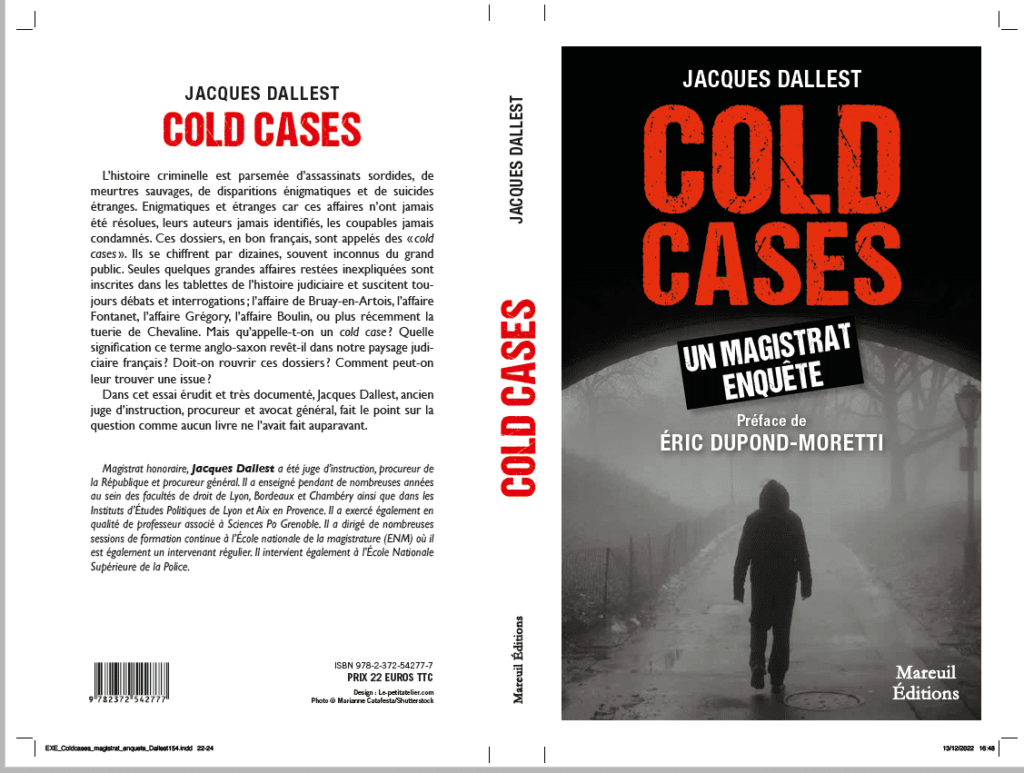
Further reading: COLD CASES UN MAGISTRAT ENQUÊTE (Cold Cases – A Magistrate Investigates), by Jacques Dallest

Criminal history is marked by sordid murders, brutal killings, mysterious disappearances, and puzzling suicides. Mysterious and puzzling because these cases have never been solved—the perpetrators never identified, the culprits never convicted. In proper French, these cases are referred to as “cold cases.” They number in the dozens and are often unknown to the general public. Only a few major unsolved cases have found their place in the annals of judicial history and continue to fuel debate and speculation: the Bruay-en-Artois case, the Fontanet case, the Grégory case, the Boulin case, and, more recently, the Chevaline shootings. But what exactly is a cold case? What does this English term signify within the context of the French judicial system? Should these cases be reopened? And after so many years, how can justice still be served? In this scholarly and meticulously documented essay, Jacques Dallest—former investigating judge, public prosecutor, and Advocate General—offers a comprehensive analysis of the issue as no book has ever done before.

Order online.

Généalogie génétique police scientifique Forenseek

Les « biobanques », source d’info pour la police scientifique ?

En décembre 2023, le site de généalogie génétique 23andme a subi le piratage des données ADN de presque 7 millions de clients. Une cyberattaque qui met en lumière la valeur de ces informations ultrasensibles et pas seulement pour les cybercriminels !

Il suffit désormais d’un test salivaire vendu par des sociétés spécialisées dans la généalogie génétique pour connaître ses origines et identifier ses ancêtres. Un axe ludique revendiqué par les biobanques comme 23andme, MyHeritage ou Ancestry pour ne citer qu’elles. Ces sociétés communiquent en revanche assez peu sur le risque que l’on coure à confier des données aussi confidentielles que son propre ADN, ces informations pouvant être rendue publiques ou faire l’objet d’un trafic très lucratif comme le montre ce dernier hackage informatique.

Construire son arbre généalogique génétique

Les progrès sur les analyses ADN permettent de réaliser des comparaisons de plus en plus fines entre les millions de données génétiques présentes dans ces fichiers informatiques, ces derniers étant régulièrement alimentés par des tests effectués chaque année dans le Monde. Grâce à ces comparaisons, les généalogistes génétiques peuvent retrouver des individus apparentés de façon proche ou lointaine et élaborer ainsi un véritable arbre généalogique avec à la clé, des informations sur des ancêtres souvent totalement inconnus.  Une découverte amusante et parfois déroutante sur ses origines.

L’ADN de parentèle pour résoudre les crimes

Au-delà de son aspect récréatif, la généalogie génétique est une technique qui suscite de plus en plus l’intérêt de la police scientifique. Dans ce cas, les enquêteurs confrontés à une enquête qui se trouve dans l’impasse, ne scrutent pas le passé mais se focalisent plutôt sur les branches plus contemporaines de l’arbre généalogique afin de comparer les ADN présents dans ces bases publiques avec un ADN retrouvé sur une scène de crime mais inconnu au FNAEG (Fichier National Automatisé des Empreintes Génétiques). L’objectif est de trouver une correspondance et, en partant de l’identification d’un parent plus ou moins proche, de remonter jusqu’à l’auteur de la trace biologique. Au Etats-Unis, cette technique a déjà permis d’élucider 621 affaires criminelles et en France, grâce aux recherches du FBI, d’arrêter en 2022 celui qui avait été baptisé le « prédateur des bois » à cause de son mode opératoire pour perpétrer plusieurs viols entre 1998 et 2008.  

La généalogie génétique pourrait devenir un outil d’investigation très utile pour la résolution de certains « cold case ». En revanche, en France, contrairement aux Etats-Unis où cette pratique existe déjà au grand dam de certains spécialistes des questions éthiques, cette recherche ne peut pas s’effectuer en piochant dans les bases de sociétés privées mais uniquement dans les bases génétiques créées à des fins médico-légales. Reste le réel danger du piratage des données pour lequel aucune parade n’a pour l’instant été trouvé.

Sources :

Le “prédateur des bois” mis en examen et placé en détention provisoire (francetvinfo.fr)
IGG Cases (genealogyexplained.com)
Les enjeux éthiques de l’utilisation de l’ADN dans le domaine médico-légal – Sciences et Avenir

Utilisation de l'ADN dans le portrait-robot génétique

L’ADN à l’origine des portraits-robot !

Pour dessiner le portrait-robot d’un suspect, on avait coutume de faire appel à un portraitiste et à des logiciels spécialisés. Désormais, la police scientifique utilise aussi l’ADN récupérée sur la scène de crime pour dresser un profil physique très proche de la réalité.

En 1982, Edward Crabe, un australien de 57 ans, est assassiné dans sa chambre d’hôtel de Gold Coast situé dans l’état du Queensland. Malgré les nombreux témoignages recueillis et le prélèvement d’échantillons de sang sur la scène de crime, les enquêteurs ne réussissent pas à retrouver le coupable. 40 ans plus tard, la police australienne relance ce « cold case » en faisant appel au phénotypage de l’ADN. Cette technique encore récente, pratiquée notamment dans le laboratoire d’hématologie médico-légal de Bordeaux, permet de créer à partir de quelques cellules sanguines, le portrait-robot d’un suspect susceptible d’être identifié par les témoins ou l’entourage. 

Même inconnu, l’ADN parle !

C’est en tout cas ce qu’espèrent les policiers du Queensland qui ont lancé un nouvel appel à témoins le 9 novembre 2022. Ils comptent ainsi résoudre l’assassinat d’Edward Crabe grâce au portrait-robot établi à partir du sang retrouvé dans la chambre de la victime. Un premier profil ADN avait déjà été établi en 2020 mais celui-ci n’étant pas enregistré dans les bases de données nationales, les enquêteurs s’étaient rapidement retrouvés dans une impasse. Or, l’immense avantage du phénotypage, c’est que même lorsqu’un ADN n’est fiché nulle part, il n’en constitue pas moins une mine de renseignements sur la personne correspondante.

En quoi consiste cette technique ? On sait aujourd’hui que le matériel génétique renferme de très nombreuses informations, notamment sur le sexe, l’origine ethnique, la santé et l’apparence physique d’un individu. Les récentes techniques de séquençage de l’ADN permettent désormais d’analyser les séquences génétiques dites « codantes » et d’isoler celles qui renferment les indications morphologiques. Les scientifiques peuvent ainsi déterminer de façon suffisamment précise la forme d’un visage, la couleur de la peau, des yeux et des cheveux, une prédisposition à la calvitie ou encore la présence de taches de rousseur. A partir de ce profil génétique, il est possible d’établir un profil physique qui n’est à l’heure actuelle, ni complet, ni parfait mais qui peut permettre de réveiller les souvenirs de potentiels témoins.

Une technique qui tend à se perfectionner

Il existe aujourd’hui dans le Monde plusieurs équipes de chercheurs qui travaillent à perfectionner l’analyse de ces séquences génétiques liées au phénotype. L’objectif ?  Aller toujours plus loin dans la recherche des caractéristiques physiques des individus en prédisant par exemple la forme du lobe des oreilles ou encore l’âge de la personne étant à l’origine de la trace relevée.

Tous ces renseignements servent ensuite à mettre au point des programmes statistiques capables d’élaborer un portrait-robot génétique le plus proche possible de la réalité. Ces programmes, qui existent déjà aux États Unis, sont nourris par les entreprises proposant aux particuliers des tests ADN pour connaître leur généalogie et qui collaborent également avec les forces de l’ordre.

Dernièrement, une étude sur les sosies réalisée par une équipe de chercheurs du Leukaemia Research Institute à Barcelone (Espagne), est venue renforcer la réalité de ce portrait physique littéralement inscrit dans les gènes. En analysant l’ADN de ces « jumeaux virtuels », les scientifiques ont identifié des caractéristiques génétiques communes qui ne s’arrêtent d’ailleurs pas à  une apparence physique similaire. Elles sont également capables d’influencer certains comportements en matière d’alimentation et même d’éducation. Des résultats qui selon l’auteure principale de l’étude, Manel Esteller  «  auront des implications futures en médecine légale – reconstruire le visage du criminel à partir de l’ADN – et en diagnostic génétique – la photo du visage du patient  donnera déjà des indices sur le génome qu’il possède. Grâce à des efforts de collaboration, le défi ultime serait de prédire la structure du visage d’une personne à partir de son paysage multiomique“ .

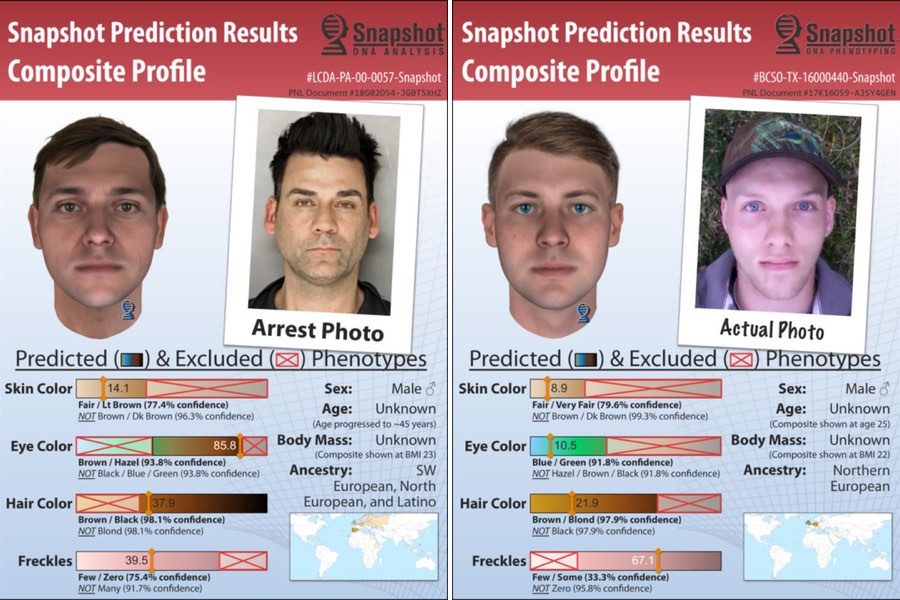
Portraits-robot ADN génétique police scientifique aide dans la résolution des enquêtes judiciaires.
Exemple de portraits-robot génétique édités par Snapshot DNA analysis

Le projet européen VISAGE

L’objectif global du projet européen VISAGE (VISible Attributes Through GEnomics) est d’élargir l’utilisation judiciaire de l’ADN vers la construction de portraits-robot d’auteurs inconnus à partir de traces ADN le plus rapidement possible dans les cadres juridiques actuels et les lignes directrices éthiques.

Le consortium VISAGE est composé de 13 partenaires issus d’institutions universitaires, policières et judiciaires de 8 pays européens, et réunit des chercheurs en génétique légale et des praticiens en ADN judiciaire, des généticiens statistiques et des spécialistes en sciences sociales. Les objectifs sont :

  • d’établir de nouvelles connaissances scientifiques dans le domaine du phénotypage de l’ADN,
  • d’élaborer et valider de nouveaux outils dans l’analyse de l’ADN et l’interprétation statistique,
  • de valider et mettre en œuvre ces outils dans la pratique judiciaire,
  • d’étudier les dimensions éthiques, sociétales et réglementaires,
  • de diffuser largement les résultats et sensibiliser les différents protagonistes concernant la prédiction de l’apparence, de l’âge et de l’ascendance bio-géographique d’une personne à partir de traces d’ADN,
  • d’aider la justice à trouver des auteurs inconnus d’actes criminels au moyen du profilage de l’ADN

Pour aller plus loin :

https://snapshot.parabon-nanolabs.com/

Sources

https://www.newsendip.com/fr/comment-la-police-australienne-espere-resoudre-un-meurtre-de-1982-avec-un-nouveau-portrait-robot-issu-de-ladn-du-suspect/

https://www.francetvinfo.fr/faits-divers/police/enquete-quand-ladn-dessine-des-portraits-robots_4882409.html

https://www.sciencedaily.com/releases/2022/08/220823115609.htm