Tag Archives: identification

Fingerprints: beyond identification

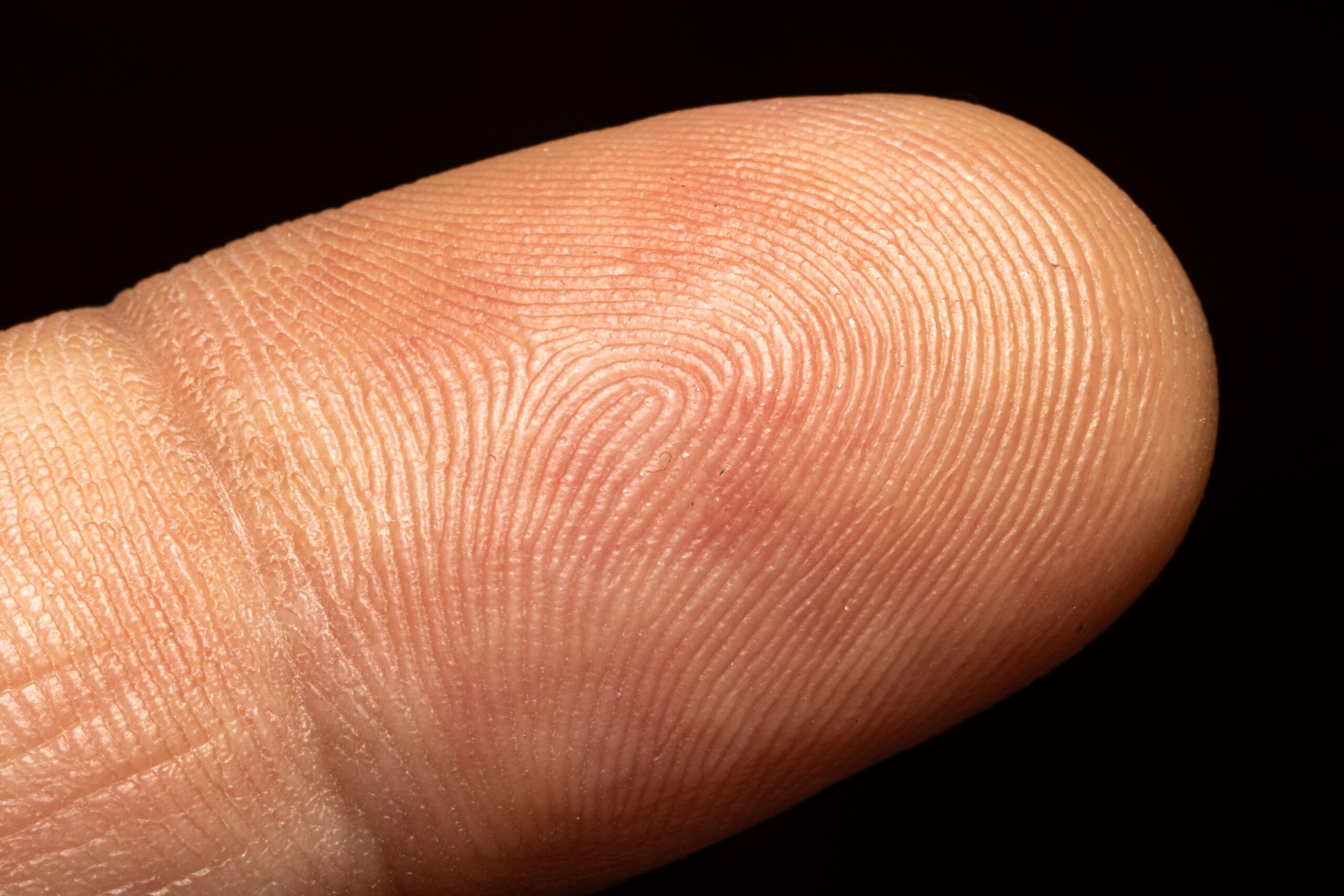
Widely used by law enforcement agencies worldwide for personal identification, fingerprints can also serve as a basis to carry out various screening tests.

Interest in fingerprints has recently been reignited thanks to a new study published on February 1, 2023, by researchers at the Jasmine Breast Unit of Doncaster Royal Infirmary in the United Kingdom. The scientists have developed a digital technique capable of detecting breast cancer with an accuracy of nearly 98%.

Secretions that reveal the disease…

In this case, the focus is not on analyzing fingerprint pattern classes or minutiae—the characteristic points located along the ridge lines that allow for reliable personal identification. Instead, by taking swabs from the fingertips to collect sweat, physicians were able to detect the presence of proteins and peptides identified as biomarkers of potential breast cancer.

This non-invasive, painless technique for patients could make it possible to distinguish between benign, early-stage, or metastatic tumors. If the results are confirmed, it may soon be commercialized in the form of a kit, providing a rapid and reliable diagnostic tool that is significantly less traumatic and less costly than mammography, which remains the current gold standard in breast cancer screening.

…And also detect narcotics!

From medicine to forensic science, there is often only a small step—and in this case, technology has taken it. Sweat sampling from fingerprints is already among the available methods to detect the presence of four classes of narcotics: amphetamines, cannabis, cocaine, and opiates.

Here again, it is the sweat that reveals the presence of these molecules, whether the substance was merely handled or actually ingested. The procedure requires nothing more than pressing the fingertips onto a special piece of paper and then analyzing it using mass spectrometry, which can detect the substance up to 48 hours after contact or ingestion.

Unlike blood tests, which require significant logistics, this analytical method takes only a few minutes and can also be applied to latent fingerprint residues collected at a crime scene. It has also proven effective in the medico-legal context, using post-mortem sweat samples.

Sources :
https://www.nature.com/articles/s41598-023-29036-7

https://www.businesswire.com/news/home/20181008005386/fr/

Empreinte cérébrale une nouvelle méthode d'identification - biométrie et police scientifique Forenseek

Brain fingerprinting: a new identification method?

The Earth is home to eight billion people, and each of them is unique. This individuality has long been harnessed in identification processes—through genetics, fingerprint analysis, and, in the near future, brain fingerprinting.

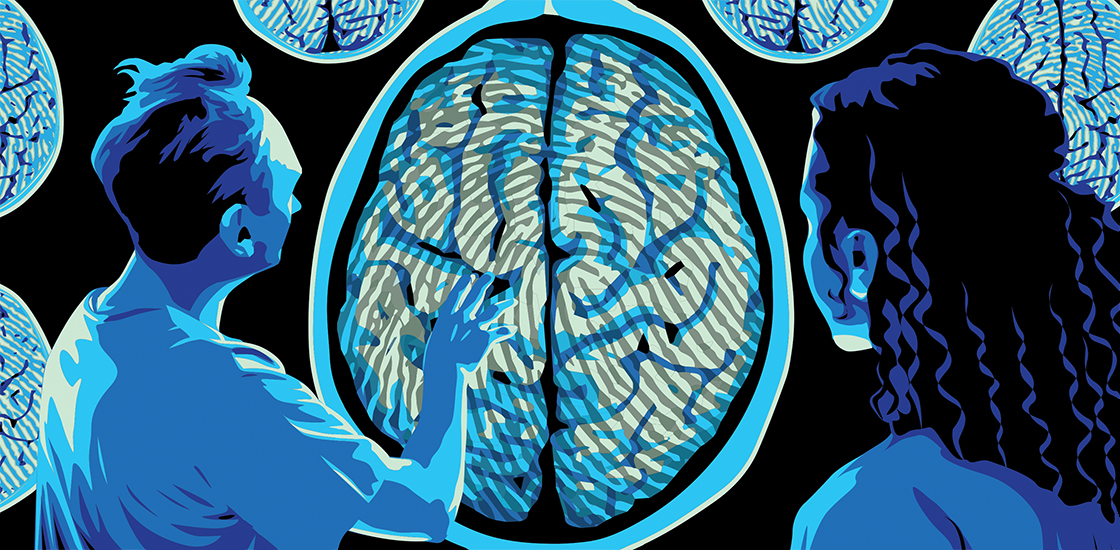
If the 20th century was marked by technological progress, the 21st will undoubtedly be the century of neuroscience. Thanks to new fMRI (functional Magnetic Resonance Imaging) techniques, it is now possible to capture the “fingerprint” of a brain in less than two minutes—an imprint just as unique as those found at the tips of our fingers, enabling the identification of an individual with an accuracy approaching 100%.

A unique brain fingerprint

Beyond overall brain volume and cortical thickness, the research team at the University of Zurich working on this question has identified anatomical features that are specific to each brain, particularly in the organization of gyri and sulci—patterns that strongly resemble fingerprint ridges. This cerebral “architecture” is shaped not only by genetics but also by the practice of certain activities, life events (such as physical trauma), and the wide range of experiences that a person may undergo throughout their lifetime.

However, it is not so much the image of the brain as its neuronal activity that defines this brain fingerprint. The signals captured by fMRI are synthesized to generate a map of neural networks known as the functional brain connectome. By analyzing this connectome, researchers can create a visual summary in the form of a graph that allows them to track brain activity, identify which regions are engaged (whether sensory or cognitive), and—most importantly for identification purposes—distinguish one individual from another.

Brain fingerprinting in biometrics

Since MRI scans are still time-consuming and expensive procedures, it is unlikely that this identification method will replace fingerprint scanners in the near future.

Nevertheless, government institutions and certain private companies operating in sensitive sectors are showing strong interest in developing biometric technologies based on the identification of brain signals, which could provide advanced security for digital identities.

From smartphones to high-security facilities, systems equipped with fingerprint readers are already in widespread use, but experience has shown that such methods can be falsified. Brain fingerprinting, on the other hand, is essentially tamper-proof, as it relies on a technology driven by a specific and complex algorithm. To implement this form of cerebral biometrics, scientists use an EEG headset (electroencephalography) to record brainwaves generated in response to various sensory stimuli—such as infrequent words, black-and-white or colored images. These responses, which differ from one person to another, constitute an inviolable identity encoded within the brain. Moreover, this profile would be disrupted if the individual were subjected to coercion or violence. Thus, brain fingerprinting could emerge as a biometric technique superior to existing methods, even surpassing retinal scanning, often considered one of the most sophisticated techniques, and opening the door to new applications in forensic science..

Sources :

https://www.futura-sciences.com/tech/actualites/technologie-biometrie-empreintes-cerebrales-nous-identifier-62535/

https://www.sciencesetavenir.fr/sante/cerveau-et-psy/neurosciences-chaque-cerveau-possede-sa-propre-empreinte-digitale_158577

https://ici.radio-canada.ca/nouvelle/1832469/cerveau-empreintes-cerebrales-empreintes-digitales