The same skull fracture may be the result of a hammer blow or of a fall down a staircase. A team of 13 researchers has proposed a method under which the forensic anthropologist asked to choose between those two readings sets out each step of the reasoning and states how much weight the observations can bear.
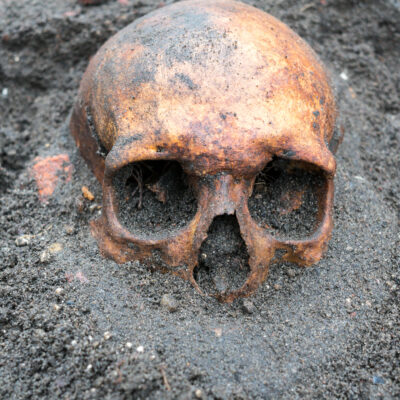
On the autopsy table, a skull shows a stellate fracture over the temple. Investigators have seized a hammer from the home of the victim’s partner. The forensic pathologist asks a forensic anthropologist whether the fracture is consistent with a blow from that tool. The answer looks obvious, and that is exactly where the danger lies. A fall onto the edge of a step can produce a very similar lesion. Changes that bone undergoes after death, which specialists call taphonomic, such as the pressure of the soil on a skeleton buried for years, can also mimic a peri-mortem injury closely enough to mislead.
In the November 2026 issue of Forensic Science International, an international team of 13 researchers sets out a framework for such situations [1]. Its authors include Frank Crispino, professor at the Université du Québec à Trois-Rivières and a former officer of the French Gendarmerie nationale, and the Montpellier forensic pathologists Laurent Martrille and Éric Baccino. The forensic anthropologist first describes what can be seen on the bone without committing to a cause. The observations are then set against two alternative propositions relevant to the case, here the blow and the fall, to assess how far they support one rather than the other. The tool used is the likelihood ratio, long familiar to the courts from DNA evidence. For judges, prosecutors and defence lawyers, the implications reach beyond forensic anthropology. The aim is to make each step of the expert’s reasoning legible, and therefore open to challenge point by point.
The context trap
A forensic anthropologist who examines a skull knowing that a hammer was seized from the victim’s partner no longer looks at the fracture in the same way. The human mind readily retains the details that fit the hypothesis already in view and overlooks those that contradict it. This mechanism, confirmation bias, has been measured experimentally in forensic anthropology. In 2014, Nakhaeizadeh, Dror and Morgan gave practitioners the same skeletal remains accompanied by different contextual information. Assessments of sex, age at death and ancestry, all based on visual, non-metric methods, shifted according to what participants believed they knew about the case [2]. In the same year, a study devoted specifically to the interpretation of skeletal trauma, run online with photographs, reached the same conclusion [13].
Itiel Dror has proposed a response to this problem. Linear Sequential Unmasking (LSU), whose expanded version (LSU-E) was republished on Forenseek in March 2025, manages the order in which the examiner receives information. The examiner starts with the trace itself, here the bone, and documents the observations before seeing the rest of the file. Contextual information follows, sequenced by relevance and by biasing power, and any change of opinion is documented [3]. The point is not to make the expert work blind, which would often be impossible, but to ensure that the initial observations rest on what the expert has personally seen and not on what the investigation expects.
Contextual information is not all of one kind. What the forensic anthropologist collects in the field, the position of the body, the nature of the sediment, the condition of the grave, is necessary to the analysis, if only to tell an injury from post-mortem damage. What comes from the investigation, such as the seizure of a hammer or suspicion falling on a relative, does not describe the bone. It helps to frame the propositions to be compared, but it is also the information most likely to steer the examiner’s eye. The boundary is not watertight, however, since a 2018 study showed that information picked up at the recovery scene went on to influence the examination of the remains in the laboratory [15].
The November 2026 paper belongs squarely to this line of work. In 2024, Roberto Parra, Lucio Condori and Douglas Ubelaker, who are also among its authors, had already proposed applying LSU-E to forensic anthropology, pairing it with the abduction, deduction and induction cycle described below. They illustrated it with two real cases from investigations into human rights violations, combining three lines of evidence, namely bone trauma, depositional context and testimony collected by social anthropologists [4]. The new paper builds on that work. To the sequencing of information it adds a semiotic foundation for separating what is observed from what is inferred, and a quantified assessment of the probative value of the observations.
Describe first, interpret later
The first step of the method is to describe the fracture for what it is, without naming it after its cause. An expert in a hurry will write ‘blunt force injury’. The proposed framework asks instead for the exact location, the shape of the fracture, the appearance of its margins, the presence of radiating or concentric fracture lines, the colour and texture of the bone adjacent to the break, and the features that help to place it before death (ante-mortem), around the time of death (peri-mortem) or after death (post-mortem). The word ‘blow’ does not appear at this stage. The description, supported by photographs, is written so that another forensic anthropologist reading the report without having examined the skull could form a precise picture of the lesion and, where appropriate, offer a different reading.
This requirement is not peculiar to the authors. The Forensic Anthropology Society of Europe (FASE) sets it out in its July 2026 statement on best practice in reporting, which calls for a clear distinction between observations and interpretations and for fracture characteristics to be described before any cause is inferred [14]. What Parra and colleagues add is a theoretical foundation for that good practice. To justify the separation of observation from interpretation, they draw on the semiotics of the American philosopher and logician Charles Sanders Peirce, that is, the study of signs and of how they acquire meaning [1, 5]. In Peirce’s vocabulary the fracture is an index in the strict sense, a sign physically connected to the event that produced it, as a footprint is to the foot that left it. The question is how far the expert may reason back from the lesion to its cause, and at what stage of the work that step is warranted. Peirce distinguishes three moments of reasoning.
- Abduction generates plausible hypotheses about the origin of what has been observed.
- Deduction derives the observable consequences to be expected if each hypothesis is true.
- Induction tests those expectations against the available data in order to discriminate between the hypotheses.
The authors refer to this as the ADI cycle (abduction, deduction, induction), and it is onto this cycle that the probabilistic evaluation described below is grafted [1].
Parra and colleagues did not invent this approach. Frank Crispino, who heads the forensic science research group (Groupe de recherche en science forensique) at the Université du Québec à Trois-Rivières, has made it a line of research in its own right under the name of Peircean forensic semiotics. In a programmatic paper published in the same journal in 2024, he argued that forensic science suffers less from a technical deficit than from a lack of reflection on how a trace becomes a clue and then evidence [5]. Semiotics does not replace probabilistic reasoning in that account. For Crispino, it is a reminder that between observation and conclusion lies a piece of human reasoning that has to be made legible, something that accreditation and procedures do not deliver on their own. Forensic anthropology is one of the first fields in which this programme has been applied from end to end, from the description of the lesions to the likelihood ratio put before the court.
Weighing the observations under two propositions
Once the fracture has been described, the question of its probative value arises. The temptation is to answer with a sentence such as ‘this lesion demonstrates a blow from a blunt object’. Evaluative reasoning rules that wording out, for a reason that readers of our articles on DNA will recognise. Observations made on the bone cannot, on their own, yield the probability of a proposition, because that probability depends on the whole case, on witness statements, phone records, a confession or the lack of one, and its assessment is a matter for the court. What the expert can nevertheless say is how far the observations are to be expected under one proposition rather than the other.
In practice, the forensic anthropologist frames two propositions, labelled H1 and H2, or sometimes Hp and Hd for the prosecution and defence propositions.
H1. The victim was struck on the temple with a hammer.
H2. The victim fell accidentally and struck the temple on the edge of a step.
The next step is to ask, for each proposition, how often a fracture of this type, with this shape and these margins, is observed, first among people who have been struck, then among people who have fallen. The ratio of those two frequencies is the likelihood ratio. Suppose the forensic literature shows that a fracture of this type is seen in 30% of blows from a blunt object and in 3% of falls from standing height. In other words, 30 in every 100 people struck in this way show a comparable fracture, against 3 in every 100 who fall. The expert divides the first frequency by the second, 30 by 3, and obtains a likelihood ratio of 10. The figure means that the observed fracture is 10 times more frequent among those who were struck than among those who fell. It does not rule out the fall, since it also records that 3 falls in 100 produce this very fracture. Had the two frequencies been equal, the likelihood ratio would have been 1 and the fracture would have been of no help in discriminating between the propositions. Had the fracture been more frequent in falls, the ratio would have been below 1 and would have supported the accident.
Everything then turns on how the figure is worded and interpreted in the expert report. The expert may state that the observations are 10 times more probable if the victim was struck than if the victim fell. To write that an assault is 10 times more probable than a fall is to step outside the expert’s role, because it pronounces on a proposition whose probability depends on the whole case and not only on the examination of a bone. The slide from the first wording to the second is common enough in court to have a name, the prosecutor’s fallacy. A likelihood ratio of 10 also provides no more than moderate support. Take a victim who lived alone, with no known conflict, and a staircase bearing bloodstains consistent with a fall. Even before the skull is examined, those facts make a fall far more plausible than an assault. A likelihood ratio of 10 in favour of the blow narrows that gap without necessarily reversing it, and the court may therefore conclude that there was a fall without contradicting the expert. The expert did not say that a blow was probable. The expert said that this fracture, considered on its own, is seen more often after a blow than after a fall.
A likelihood ratio, it should be added, compares only the propositions it is given. If the victim was pushed down the stairs, neither H1 nor H2 describes what happened, and the calculation will not flag it.
None of this is new to forensic science. The reasoning was formalised as early as 1977 by the statistician Dennis Lindley in a paper on glass fragments [6], and it went on to become the norm in forensic genetics, where it produces the very large figures with which the courts are familiar. We examined it in detail in our article on the Hedgepeth trial. It lies at the heart of the guideline on evaluative reporting published in 2015 by the European Network of Forensic Science Institutes (ENFSI) [7] and of ISO 21043-4 on interpretation, published in June 2025 [8]. What is original in the paper by Parra and colleagues is its application to forensic anthropology, a field that had largely stood apart from this movement, and its coupling with the semiotic description that comes first.
One clarification is in order for readers familiar with the hierarchy of propositions, which we have discussed in connection with DNA transfer and the secondary transfer of semen (in French) [9]. In genetics, the source-level question, whose DNA is this, is distinct from the activity-level question, how did this DNA get there. For skeletal trauma the source-level question has no direct equivalent. The fracture belongs to the victim, and nobody disputes it. The whole issue lies at activity level from the outset. What action, what mechanism, what energy produced this break? That is precisely the level at which interpretation is hardest and data are scarcest. A forensic anthropologist asked to choose between a blow and a fall is therefore working from the start where uncertainty is greatest, which makes the formal framework proposed by the authors all the more necessary.
The limits of the available data
To illustrate the method, the authors apply it to three real cases, one of cranial blunt force trauma, one of cervicocephalic injuries from interpersonal violence and one of close-range gunshot wounds [1]. The exercise exposes the main limitation of the method, which the authors themselves acknowledge. Calculating a likelihood ratio requires an estimate of the probability of the observations under each proposition. How many falls down a staircase produce a fracture of this type? How many hammer blows? For a gunshot, the questions multiply. Are these lesions as frequent with the muzzle 3 cm from the skull as with the muzzle at 5 cm, and at an angle of 90 degrees as at an angle of 65 degrees?
In forensic genetics, such frequencies come from purpose-built reference databases that record the distribution of genetic characteristics in defined populations. These should not be confused with national DNA databases such as FNAEG in France or CODIS in the United States. Each holds only a few hundred to a few thousand individuals per population, but all were compiled under dedicated protocols and validated by the scientific community. Nothing comparable exists for bone fractures. The resistance of a bone depends on age, sex, cortical thickness, the person’s state of health, the angle of impact and also the surface that strikes or is struck (a hammer, the corner of a table, the floor, a knuckleduster and so on).
In the study itself, the two probabilities are not obtained in the same way. For the main proposition, the authors consulted 10 forensic anthropologists, each with at least 10 years of experience. Their estimates ranged from 95% to almost 100%, and for all three cases the authors adopted the lowest, a probability of 95% of observing the lesions described if the main proposition is true. For the alternative proposition, they draw their frequencies from published clinical and medico-legal studies, often based on a few dozen cases, in settings that do not always transfer. In the first two cases they multiply 7 of these frequencies together, which assumes that the features observed are independent of one another under the alternative proposition. That assumption remains to be tested, because related features multiplied as though they were unrelated can artificially inflate the likelihood ratio.
For the court and the investigator, two essential points follow. The first is that a likelihood ratio derived from the features of a fracture is not as robust as one derived from a DNA analysis, and it would be a mistake to give it the same credit. The second is that its value depends directly on the publications and estimates the expert has chosen to rely on. The method is therefore not designed to bring experts into agreement. Two forensic anthropologists may still describe a fracture line differently or rely on different studies, and their likelihood ratios will reflect it. Each, however, will have had to set out exactly what the figure rests on, and the gap between them becomes open to discussion point by point.
The difficulty is not confined to bone. Where published data are lacking, the ENFSI guideline allows experts to draw on their experience of comparable cases, provided they justify it in the report. Where even that experience is lacking, no evaluation should be offered [7]. Practitioners have added a safeguard, sensitivity analysis. It consists in repeating the calculation with other plausible frequencies, for example 20% instead of 30% for blows, and checking whether the likelihood ratio changes by an order of magnitude or tips towards the alternative proposition. If a slight change in the data is enough to reverse the conclusion, the conclusion is fragile and the report must say so [12]. In the study, this analysis replaces the 95% estimate with 90, 97 and 99%, which shifts the likelihood ratio by only about 5%. The frequencies used for the alternative proposition are left unchanged, so their uncertainty goes unexplored. Case law has set a limit on the other side. In 2010, in R v T, a case concerning footwear marks, the Court of Appeal of England and Wales warned that a likelihood ratio presented with a precision its underlying data cannot support risks misleading the tribunal of fact [10]. Between these two markers, the course proposed by the authors is to quantify transparently, that is, to disclose the references used and to acknowledge their limits in the report itself.
Finally, the authors go beyond the likelihood ratio. They calculate the probability of the propositions once the observations have been taken into account, assigning the main proposition a prior probability of 75% in all three cases, that is, prior odds of 3 to 1. The posterior probability obtained in this way must not be confused with the likelihood ratio. It depends both on that ratio and on the prior chosen, which reflects a view of the case formed before any examination of the bone. With the likelihood ratio of 10 in our example, a prior of 75% gives a posterior of 97%, whereas a prior of 10% gives only 53%. Under the evaluative reporting advocated by ENFSI, the expert assesses the probability of the observations under each of the competing propositions and reports their ratio. It is for the court to combine that result with the other evidence in the case [7].
Reading a forensic anthropology report differently
The real contribution of the paper is best measured in the expert report itself. A well-written report already sets out the observations, the methods and the discussion that lead to the expert’s opinion, as FASE recommends [14]. Yet when a forensic anthropologist dismisses a fall on the strength of experience, defence counsel has little option but to call another expert who relies on theirs. The proposed framework adds a requirement. For each lesion, the report should contain a description free of interpretation, the list of propositions the expert agreed to compare, the scientific references or estimates from which the probabilities were derived, the resulting likelihood ratio and a statement of its robustness. The weight given to each observation thus becomes part of the report, and something the parties can debate.
For an investigating judge in the French system (juge d’instruction), the benefit is tangible as soon as the expert’s terms of reference are drafted in the appointing order. The judge can ask the court-appointed expert to consider explicitly the propositions advanced by each party and not only the one pursued by the investigation, and can require the sources of the frequencies to appear in the report. For a criminal defence lawyer, the points of challenge become identifiable. Has an alternative proposition been overlooked? Did the study relied on involve subjects comparable to the victim? Has the likelihood ratio been presented as a probability of guilt?
The method does not dispense with the precautions described above. An expert who has read the entire case file before describing the bone remains exposed to confirmation bias, however rigorous the calculation that follows, and the sequencing of information is still a prerequisite. On the data currently available, a figure obtained in forensic anthropology does not carry the weight of a likelihood ratio in forensic genetics. Nor is a French court-appointed expert under any obligation to adopt the method, since ISO 21043-4, to which FASE refers for interpretation [14], is a voluntary standard and experts remain free as to the form of their conclusions [8]. In the United States, the Academy Standards Board published a standard in 2024 on the analysis of skeletal trauma that governs the description of lesions but stops short of probabilistic evaluation [11]. Parra and colleagues take that further step and invite forensic anthropology to join the movement that genetics began 30 years ago, towards expert evidence that quantifies its uncertainty and discloses its sources.
Sources
[1] Parra R.C., Crispino F., Ubelaker D.H., Saravia-Yataco J.A., Aranda C.M., Garizoain G., L’Abbé E.N., Martrille L., Condori L.A., Moraitis K., Baccino E., Castellanos D., Luna L.H., Toward a semiotic-Bayesian epistemology of skeletal trauma interpretation in forensic anthropology, Forensic Science International, 2026, vol. 388, 113089 (en ligne le 3 août 2026).
[2] Nakhaeizadeh S., Dror I.E., Morgan R.M., Cognitive bias in forensic anthropology, visual assessment of skeletal remains is susceptible to confirmation bias, Science & Justice, 2014, 54(3), 208-214.
[3] Dror I.E., Kukucka J., Linear Sequential Unmasking-Expanded (LSU-E), a general approach for improving decision making as well as minimizing noise and bias, Forensic Science International: Synergy, 2021, vol. 3, 100161.
[4] Parra R.C., Condori L.A., Ubelaker D.H., Forensic anthropology and the mitigation of cognitive biases in the investigation of human rights violations, operationalization of a comprehensive theoretical model, Forensic Anthropology, 2024, 7(1), 1-19.
[5] Crispino F., Towards a forensic semiotics, Forensic Science International, 2024, vol. 357, 111968.
[6] Lindley D.V., A problem in forensic science, Biometrika, 1977, 64(2), 207-213.
[8] ISO 21043-4:2025, Criminalistique, Partie 4, Interprétation, Organisation internationale de normalisation, juin 2025.
[9] Cook R., Evett I.W., Jackson G., Jones P.J., Lambert J.A., A hierarchy of propositions, deciding which level to address in casework, Science & Justice, 1998, 38(4), 231-239.
[10] R v T [2010] EWCA Crim 2439, Court of Appeal (Criminal Division), Angleterre et Pays de Galles.
[11] ANSI/ASB Standard 147, Standard for Analyzing Skeletal Trauma in Forensic Anthropology, Academy Standards Board, 2024.
[12] Taylor D., Kokshoorn B., Biedermann A., Evaluation of forensic genetics findings given activity level propositions, a review, Forensic Science International: Genetics, 2018, vol. 36, 34-49.
[13] Nakhaeizadeh S., Hanson I., Dozzi N., The power of contextual effects in forensic anthropology, a study of biasability in the visual interpretations of trauma analysis on skeletal remains, Journal of Forensic Sciences, 2014, 59(5), 1177-1183.
[14] Cunha E., Petaros A., Brits D., Cattaneo C., Kranioti E., Ross A.H., Adalian P., Obertová Z., de Boer H.H., Best practice for forensic anthropology reporting, a statement by the Board of the Forensic Anthropology Society of Europe (FASE), International Journal of Legal Medicine, 2026, 140(6), 4501-4510.
[15] Nakhaeizadeh S., Morgan R.M., Rando C., Dror I.E., Cascading bias of initial exposure to information at the crime scene to the subsequent evaluation of skeletal remains, Journal of Forensic Sciences, 2018, 63(2), 403-411.
Tous droits réservés - © 2026 Forenseek