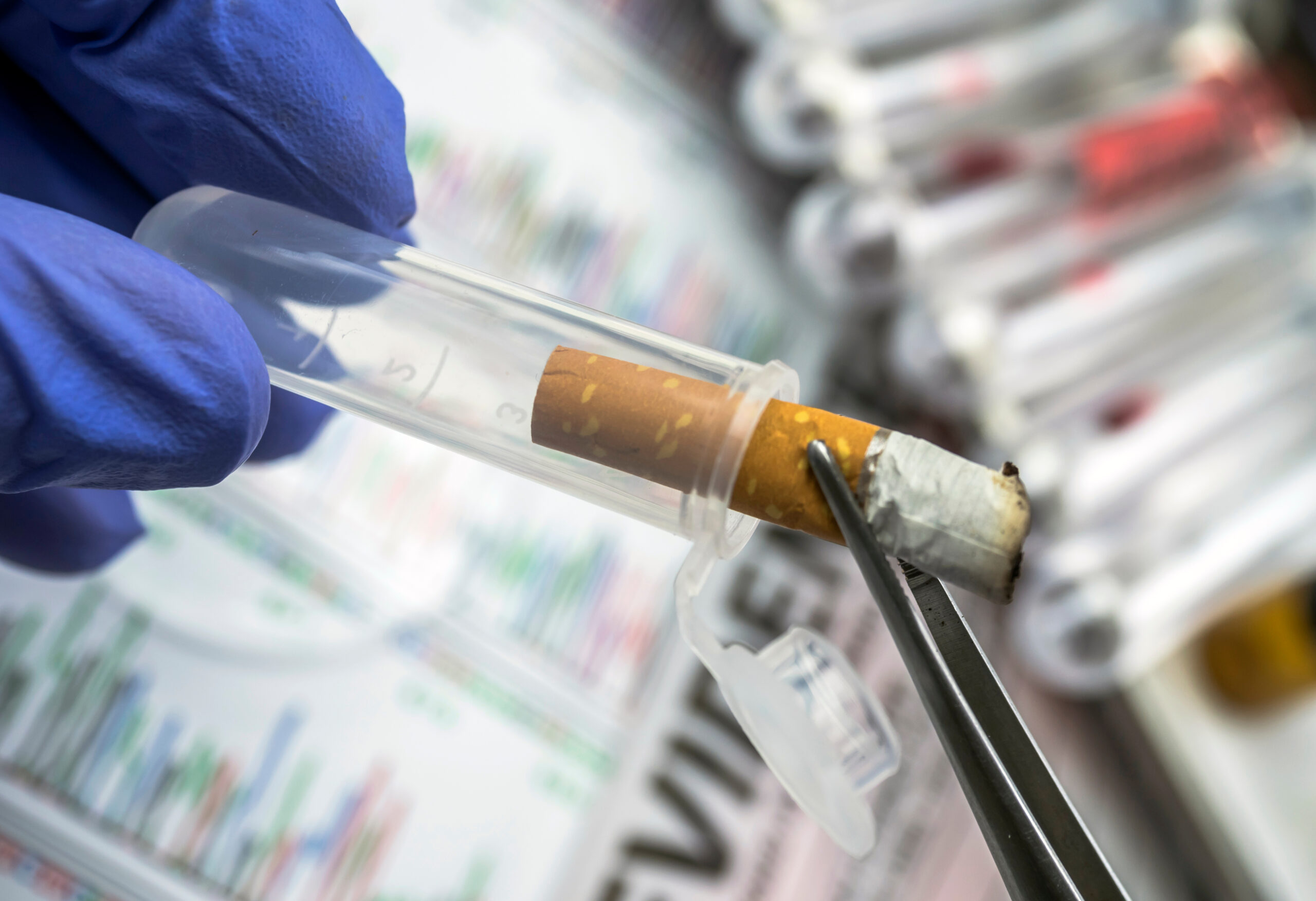
Tag Archives: identification

Analysis hair proteomic forensic Forenseek

Identifying an individual without DNA: Hair shaft proteomic analysis

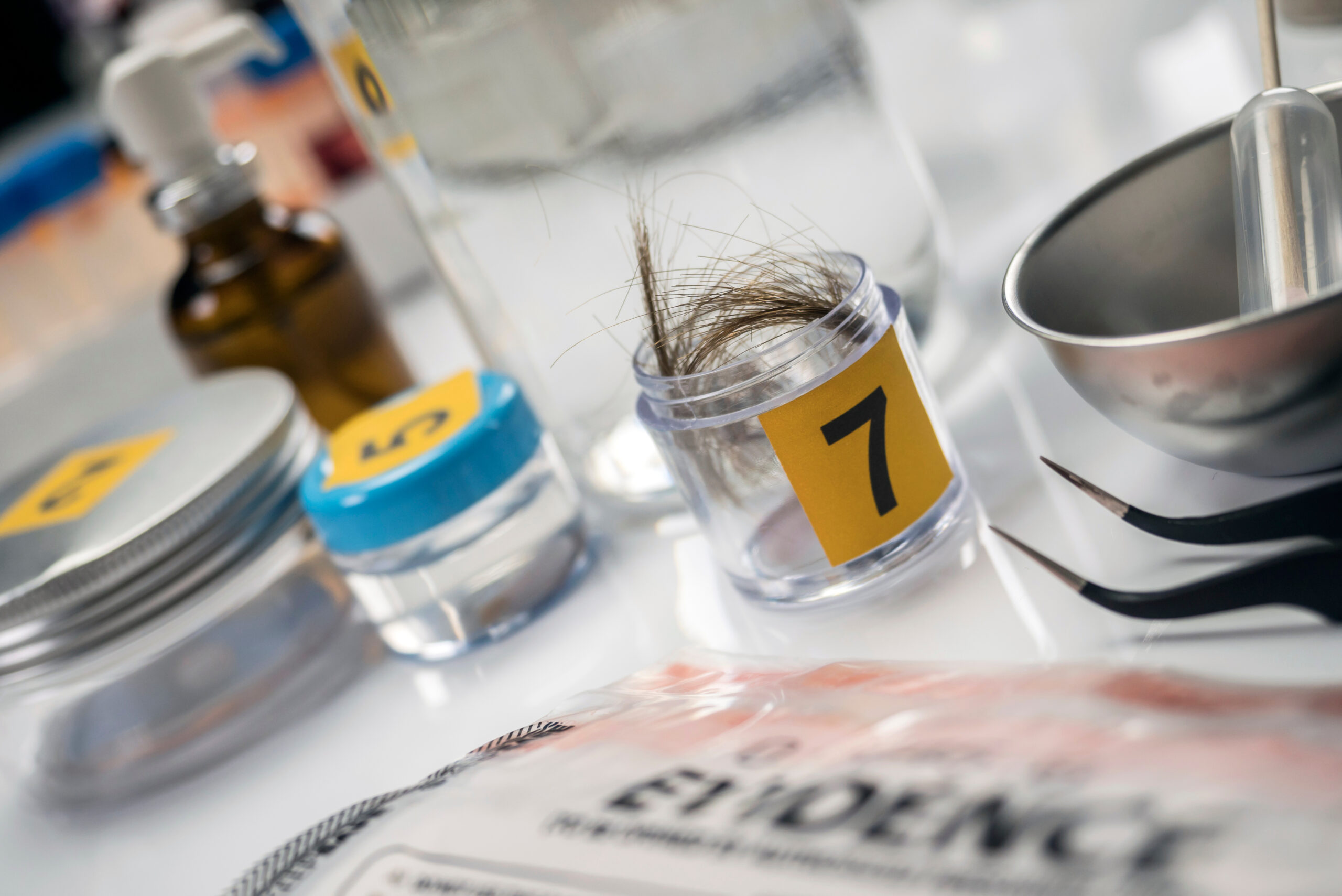
When a hair or body hair is recovered without its root from a crime scene, no conventional genetic analysis can be performed. Lacking nuclear DNA, this biological material has long offered only limited evidentiary value and could neither support the formal identification of an individual nor allow comparison with national DNA databases. Since few years, however, a major shift has occurred: hair proteomics, which exploits the proteins of the hair shaft to reveal individualizing markers. Thanks to advances in mass spectrometry, this approach now provides a new pathway for identification, particularly useful in cold cases or in situations where DNA is absent or unusable.

A biological evidence long underused

Hairs recovered from crime scenes are frequently rootless, preventing any STR (Short Tandem Repeat) analysis. Traditional alternatives (morphological examination or mitochondrial DNA analysis), offer only limited discriminating power [1][9]. In many cases, these items were classified as “weak traces,” with insufficient probative value. Yet a hair is biologically rich. It is composed mainly of keratins and other structural proteins that exhibit remarkable stability and resistance to heat, aging, and environmental degradation [1]. This robustness has led several research teams to explore another avenue: instead of seeking nuclear DNA where it is absent or degraded, why not rely directly on proteins, some of which vary between individuals?

Figure 1: Structure of a hair shaft. Source: cosmeticsdesign.com

From DNA to proteomics

This technological shift relies on high-resolution mass spectrometry (HRMS), combined with bioinformatic analysis of protein polymorphisms. Recent work has confirmed that hundreds of proteins can be identified in a single hair shaft. Among them, certain markers, SAPs (Single Amino acid Polymorphisms), directly reflect individual genetic variation [2]. A major study demonstrated that a single individual presents, on average, more than 600 detectable protein groups and more than 160 polymorphic markers, yielding Random Match Probabilities (RMP) on the order of 10⁻¹⁴ [2]. This protein signature therefore offers strong discriminating power, in some cases comparable to the informational value of mitochondrial DNA, while avoiding several well-known limitations of the latter [10].

Technical obstacles related to protein extraction, made difficult by the highly cross-linked structure of keratin, have also been partially overcome. Protocols combining controlled heat and reducing agents now allow more efficient and reproducible extraction [3]. These advances make the approach more mature and more suitable for forensic practice.

Analyse protéomique du cheveu pour une identification forensique. Article Forenseek.
Figure 2: Hair proteomic analysis workflow. Proteins extracted from the hair shaft are fragmented and then analyzed by mass spectrometry to identify individual peptide variations. Source: [2] Parker, G. et al., Deep Coverage Proteome Analysis of Human Hair Shafts, Journal of Proteome Research, 2022.

Concrete opportunities for investigations

Hair-shaft proteomics significantly enhances the usefulness of hair traces in investigations. In cold cases, hairs preserved for decades can now provide individualizing information, even when nuclear DNA was unusable at the time of the original analysis [5]. In extreme contexts (fire scenes, carbonized remains, or highly degraded traces), proteins often persist where DNA has degraded, making them particularly valuable [5][6].

In recent investigations (sexual assaults, abductions, violent incidents, close-contact events), head or body hairs without roots recovered from clothing, vehicles, or victims can now contribute to establishing associations or excluding individuals. Even when it does not yield a formal identification, the protein signature may narrow the suspect pool, confirm or refute an investigative hypothesis, and support evidential assessments presented to judicial authorities [4]. From a legal standpoint, this method must be understood as a probabilistic approach, similar in principle to mitochondrial DNA analysis but based on more stable markers [7]. When integrated carefully, it may become decisive in investigative orientations, the re-examination of older cases, or situations previously left unresolved due to lack of nuclear DNA or usable fingerprints.

Technical limits and challenges

Despite its potential, hair-shaft proteomics remains a technique still in maturation. The first limitation lies in the protocols themselves: protein extraction remains challenging due to the resistant structure of the hair shaft, and full standardization has not yet been achieved [3]. A second challenge is the creation of sufficiently large population databases to compute robust Random Match Probabilities [4]. Inter-laboratory validation, essential before any use in judicial contexts, requires testing on hairs from individuals of different populations, ages, environments, and storage conditions [4][6].

Legal integration also presents challenges. Judges and attorneys will need clear explanations of this emerging probabilistic evidence. Classical admissibility requirements (reliability, reproducibility, methodological transparency, statistical robustness), apply fully [7]. To date, no international standard formally regulates the procedure, although preliminary work is underway [8].

Towards standardization and operational integration?

The outlook for the coming years is particularly promising. Several centres, notably Murdoch University and ChemCentre near Perth, Australia, are working on protocol standardization and the development of diverse reference databases [5][6]. Advances in mass spectrometry and bioinformatic tools now make possible a partial automation of analyses and more seamless integration into routine forensic laboratory workflows. For investigators, police officers, magistrates and forensic experts, this evolution requires adapting collection and preservation practices. From now on, any rootless hair should be systematically collected and retained. Even very small or very old samples may contain an exploitable protein signature. This shift in perspective could transform the re-evaluation of cold cases, fire-scene examinations, and the most complex investigations.

Conclusion

Hair-shaft proteomics represents one of the most promising advances of the coming years in forensic identification. By restoring value to traces long considered underexploited, it offers a reliable and robust alternative when DNA is absent, degraded or otherwise unusable. Although judicial integration still requires validation, standardization and appropriate communication, early results clearly indicate that this approach could play a decisive role in complex investigations, degraded scenes and unresolved cases.

References :

[1] Adav, S.S., Human Hair Proteomics: An Overview, Science & Justice, 2021.
[2] Parker, G. et al., Deep Coverage Proteome Analysis of Human Hair Shafts, Journal of Proteome Research, 2022.
[3] Liu, Y. et al., Individual-specific proteomic markers from protein amino acid polymorphisms, Proteome Science, 2024.
[4] Smith, R.N. et al., Forensic Proteomics: Potential and Challenges, Proteomics, 2023.
[5] Murdoch University – Western Australia, Hair Protein Identification Project (2024–2025).
[6] ChemCentre (Western Australia Government), World-first Forensic Proteomics Research Program, 2024.
[7] Henry, R. & Stoyan, N., The Admissibility of Proteomic Evidence in Court, SSRN, 2020.
[8] ISO / ASTM – Guidelines on Forensic Biology & Novel Analytical Methods, 2022–2024.
[9] Anslinger, K., Hair Evidence in Forensic Science, Wiley, 2019.
[10] Budowle, B., Mitochondrial DNA in Forensic Identification, Elsevier, 2018.

Cats — reliable witnesses in criminal investigations?

It is well known that our pets love affection and display unwavering loyalty. What has recently been discovered, however, is that they can also hold irrefutable evidence in the context of a criminal investigation.

Researchers from Flinders University in Australia took a close interest in the cats that inhabit many Australian households — not to study their habits or charming quirks, but for a much more forensic reason. These experts in criminalistics, genetics and forensic medecine sought to determine to what extent these animals could act as receptacles for human DNA and potentially transfer it onto other surfaces.

A single contact is enough to cause transfer

To test this hypothesis, the scientists conducted a study on twenty cats from fifteen households, collecting samples from four different areas: the fur on the head, back and right side of the body, and the skin located on the left flank of the animals.

A significant amount of DNA was recovered, mostly from the cats’ fur and, to a lesser extent, from their skin. Unsurprisingly, most of this genetic material belonged to the cats’ owners. More surprisingly, however, DNA from individuals outside the household was also detected in 47% of the samples—particularly from cats that regularly roamed their neighborhood. This demonstrates that feline fur readily captures human DNA, not only through petting but also via brief, incidental contact. Moreover, the study showed that DNA transfer can also occur in the opposite direction—from the cat to another person or to an object—simply by tapping or scratching the animal’s fur with a bare or gloved hand. In both cases, the recovered traces proved sufficient to identify an individual.

The cat: a silent but relevant witness

For forensic investigators, the findings of this study open up new perspectives in the way a crime scene is approached. From now on, an animal present at the scene can be considered as potential evidence if it is suspected to have come into contact with the perpetrator of a crime. Since their fur acts as a true reservoir of DNA, collecting samples from the areas identified by the researchers could make it possible to identify offenders—or, conversely, to rule out certain suspects.

It should be noted that this ability to capture human DNA is not unique to cats. Dogs, which are also common household companions across the world, have proven to be excellent collectors of genetic material as well.

Read full article here.

The sexome: a potential source of evidence in sexual assault cases

Thanks to new sampling and analytical techniques, forensic science now plays an essential role in solving sexual crimes. In cases where the search for semen fails, the sexome—also referred to as the genital microbiome—could take over and become a complementary, or even decisive, investigative tool.

What is the sexome? At a time when the importance of the human microbiota is being recognized in numerous areas of health, researchers are no longer confined to the studying of the bacterial flora colonizing the skin and the intestine. They are also focusing on the microorganisms that inhabit the male and female genital areas—the genital microbiome. Their work primarily addresses health-related questions, such as the prevention of sexually transmitted infections, but its implications extend further.

A unique microbial signature

A study conducted by a team of researchers from Murdoch University in Perth, Australia, on about a dozen heterosexual couples, demonstrated that each individual possesses a distinctive genital microbial flora. This flora, more abundant in women than in men, is transferred from one partner to another during sexual intercourse. According to Brendan Chapman, forensic scientist and co-author of the study, the discovery of these microbial “traces” could offer an effective alternative for identifying perpetrators of sexual offences.

Identification possible even in condom-protected intercourse

According to the scientists behind this discovery, this new technique could play a decisive role when semen DNA analysis proves problematic. The collection of biological material from victims of sexual assault is now highly advanced and, thanks to genetic databases, enables numerous identifications. However, this method faces several challenges, particularly related to time constraints. Beyond 48 hours, the quantity of sperm cells decreases dramatically and may no longer be sufficient for conclusive DNA analysis. Furthermore, in the absence of ejaculation or when a condom has been used, these biological traces are nonexistent.

By contrast, with the help of advanced sequencing techniques, it is possible to detect the sexual microbial signature transferred from one partner to another in samples collected up to five days after sexual contact. Even more remarkably, these transfers can still be detected after washing the genital area, and—though in smaller quantities—even when a condom has been used. In such cases, explains Brendan Chapman, it is mainly components of the female sexual microbiome that are recovered from the male genital area. This approach could help identify more sexual offenders even in the absence of DNA evidence, without requiring additional samples to be taken from already deeply traumatized victims.

The next step for scientists is to refine the technique by determining which factors can influence the sexome—particularly the vaginal microbiome, which fluctuates with the menstrual cycle—since such variations may affect the accuracy of results. This promising line of research opens new perspectives for forensic science.

Read the full study here.

Fichier FAED empreintes Forenseek police scientifique

The Automated Fingerprint Identification System (FAED) shares its data.

Created in 1987, the Automated Fingerprint Identification System (FAED, France) stores various types of data collected during judicial investigations. Its use, strictly regulated by law, was recently modified by a decree issued on April 23, 2024.


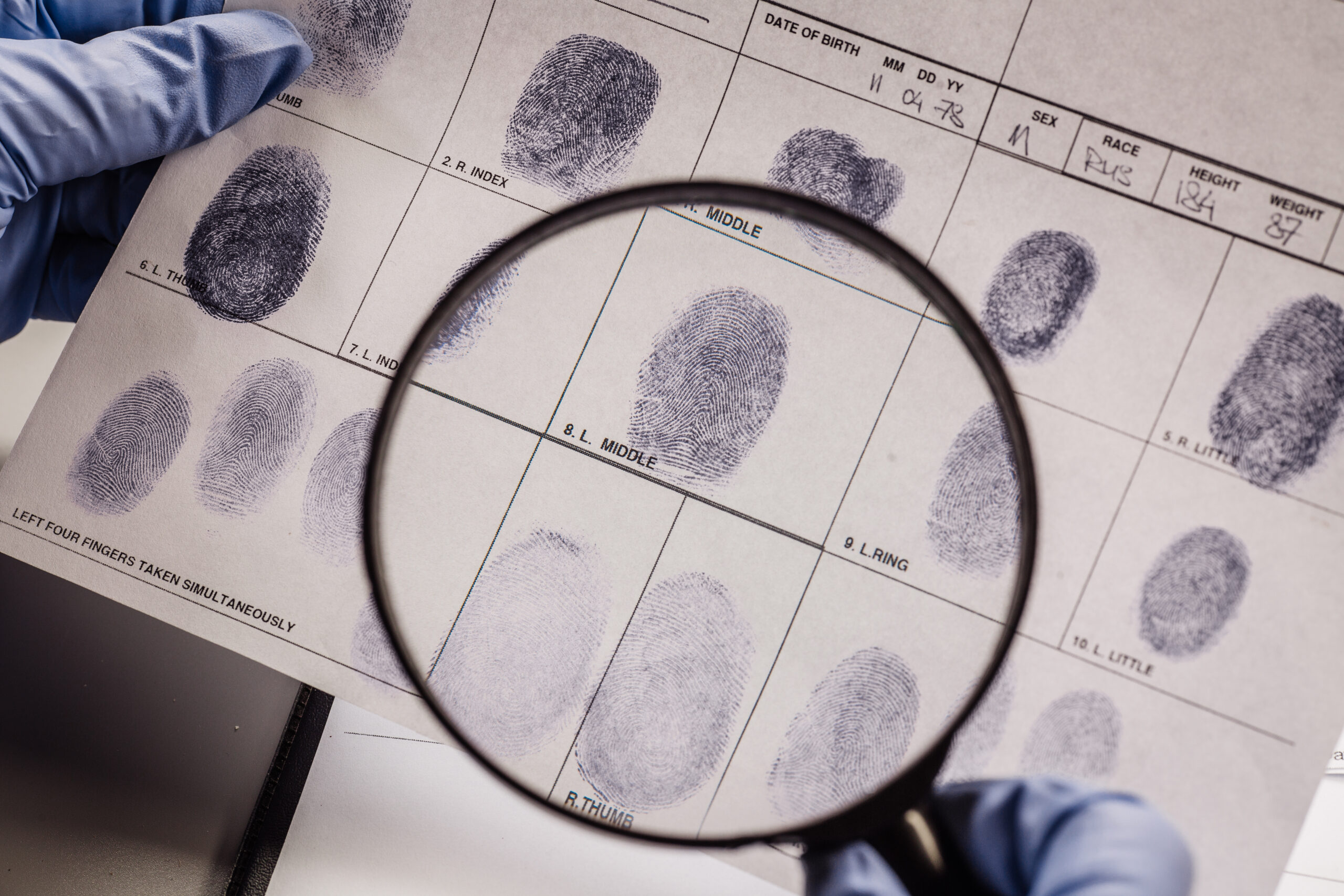
As of January 2024, the FAED contained the fingerprints and palm prints of more than 6.7 million individuals, as well as nearly 300,000 unidentified latent prints (CNIL data). Each year, over one million new records are added. This vast amount of information makes the database a valuable tool in criminal investigations, as its consultation allows investigators to establish links between cases or to identify missing persons.

More interconnections for greater efficiency.

The FAED is far from being the only existing database. France operates several others, including the TAJ (Traitement des Antécédents Judiciaires – Criminal Records Processing System), the CJN (Casier Judiciaire National – National Criminal Record), the DPN (Dossier Pénal Numérique – Digital Criminal File), and the FPR (Fichier des Personnes Recherchées – Wanted Persons File), each of which contains millions of data entries. Added to these are the police and gendarmerie procedural software systems, LRPPN and LRPGN, which enable the automated processing of personal data.

The decree, which came into force on April 24, 2024, aims to establish interoperability among these different databases, with the clear objective of facilitating cross-references and improving overall efficiency.

Enhanced European cooperation.

The project does not solely focus on the national level; it also aims to link these national databases with European systems, allowing access to their data repositories. This will notably be the case for the Second Generation Schengen Information System (SIS II), which includes a central unit based in Strasbourg, connected to national databases in each Schengen member state. This system centralizes information on individuals or objects reported by administrative and judicial authorities across the participating countries. Another beneficiary will be the Entry/Exit System (EES), which automatically records and monitors data relating to nationals of non-EU countries traveling within the Schengen area.

In both cases, this data sharing aims to facilitate information exchange, strengthen controls, and consequently enhance security within the European area, now free of internal borders.

Des données suffisamment sécurisées ?

The decree also modifies the retention period for data stored in the FAED. It is now set at twenty-five years for crimes and certain offenses, and may extend up to forty years for specific criminal procedures.

Given the vast volume of data processed and the new interconnections among databases, concerns naturally arise regarding the protection of personal information. Following a warning issued by the CNIL (Commission Nationale de l’Informatique et des Libertés – French Data Protection Authority), which had expressed concerns to the Ministry of the Interior, measures have been implemented to safeguard data confidentiality and to ensure the automated updating and deletion of records once their retention period expires. Whether these measures will prove sufficient remains to be seen…

Source :
Décret n° 2024-374 du 23 avril 2024 modifiant le code de procédure pénale et relatif au fichier automatisé des empreintes digitales – Légifrance (legifrance.gouv.fr)
Chapitre Ier : Système d’information Schengen de deuxième génération (SIS II) (Articles R231-1 à R231-16) – Légifrance (legifrance.gouv.fr)
L’entrée dans l’espace Schengen : la future mise en place des systèmes EES et ETIAS – Ministère de l’Europe et des Affaires étrangères (diplomatie.gouv.fr)
FAED : la CNIL clôt l’injonction prononcée à l’encontre du ministère de l’Intérieur 01 février 2024 – Global Security Mag Online

Learn more: Levitra

Des experts de la police scientifique s'inspirent de méduses pour une nouvelle technique de révélation d'empreintes digitales. Forenseek

Révélation d’empreintes en 10sec chrono grâce aux méduses !

Finies les poudres dactyloscopiques ou les réactifs chimiques pour relever les empreintes digitales ? C’est en tout cas ce qu’espèrent des scientifiques en proposant cette alternative qui pourrait révolutionner les méthodes de police scientifique.

Utilisé depuis le XIXème siècle sur les scènes de crime, le relevé d’empreintes papillaires a déjà connu quelques évolutions techniques depuis sa mise en place. A côté des poudres dactyloscopiques classiques, les agents de la police scientifique disposent aujourd’hui de réactifs chimiques, notamment la ninhydrine, l’indanedione, le DFO ou encore le Lumicyano, une technique luminescente mise au point en 2013 par des experts français, qui utilise du cyanoacrylate fluorescent par fumigation.

Ces différentes techniques présentent toutefois quelques inconvénients : Certaines formulations contiennent des composants qui peuvent se révéler toxiques à fortes doses, elles peuvent dégrader l’ADN présent dans les empreintes (sueur, cellules épithéliales) et nécessitent par ailleurs plusieurs minutes pour révéler une trace.   

Inspirantes méduses …

Afin d’améliorer les capacités opérationnelles des équipes présentes sur les scènes de crime, des scientifiques basés en Chine et au Royaume Uni ont mis au point une alternative en s’inspirant … Des méduses ! Ces organismes marins que l’on connaît plus pour leurs piqures urticantes que pour leurs aspects positifs, produisent en effet la GFP (Green Fluorescent Protéin) une protéine fluorescente soluble dans l’eau et compatible avec les systèmes biologiques. Elle a donné naissance à deux colorants, le LFP jaune et le LFP rouge, dont la particularité est d’interagir avec les acides gras et les acides aminés présents dans le sébum et la sueur qui imprègnent les empreintes digitales et dont la formulation est compatible avec les analyses ADN ultérieures.

Un spray actif en 10 sec

Le nébulisateur ultrasonique imaginé par les scientifiques offre l’avantage de vaporiser une brume très fine qui se dépose sans altérer les empreintes. Une fois au contact de la surface à traiter, les molécules des colorants se lient aux sécrétions sébacées et eccrines des empreintes. Il suffit ensuite d’exposer la zone à la lumière U.V pour qu’apparaisse une empreinte claire et contrastée en seulement dix secondes, prête à être photographiée.

Ce gain de temps se double d’une capacité à révéler des traces papillaires anciennes déposées plusieurs jours auparavant et d’une véritable efficacité sur des surfaces réputées difficiles comme la céramique, le plastique, le papier aluminium ou plus rugueuses comme la brique. Des performances qui ont encore besoin d’être optimisées avant que cette nouvelle technique ne soit intégrée dans l’arsenal forensique mais qui ouvre de nouvelles perspectives pour la police technique et scientifique.

Sources :
Une nouvelle technique inspirée des méduses pour relever les empreintes digitales (fredzone.org)
De nouveaux colorants en spray peuvent révéler instantanément les empreintes digitales sur les scènes de crime – Oxtero

Identification des victimes de catastrophes en Israel - Police scientifique - Forenseek

L’IVC, une approche pluridisciplinaire d’identification des victimes

Les événements tragiques qui viennent de se dérouler en Israël mais également en Ukraine remettent en lumière la difficulté extrême d’identifier les victimes de catastrophes de masse. Pour faciliter ces procédures complexes mais nécessaires, INTERPOL a mis en place le protocole IVC, aujourd’hui internationalement reconnu.

Répondre le plus rapidement possible aux proches plongés dans une attente insoutenable tout en gardant une stricte approche scientifique est une gageure à laquelle sont confrontées toutes les équipes dépêchées sur les lieux d’une catastrophe ! Rédigé pour la première fois en 1984 et remis à jour tous les cinq ans, le guide IVC d’Interpol (Identification des Victimes de Catastrophes, DVI ou Disaster Victim Identification dans sa version anglaise) propose aux unités sur le terrain une procédure qui permet une identification formelle.

Un protocole en 4 étapes

Mis en pratique en 2004 lors du tsunami en Thaïlande puis de façon systématique lors de chaque catastrophe, qu’il s’agisse d’un événement naturel, d’un accident ou d’un attentat comme celui perpétré par le Hamas en Israël ces derniers jours, le protocole comprend quatre étapes complémentaires afin de ne laisser aucune place à l’erreur :

L’examen des lieux de la catastrophe afin de procéder au relevage des corps mais également de tous les objets personnels,

Le recueil de preuves médico-légales ou données post-mortem: relevé d’empreintes digitales et examen dentaire lorsque l’état de la dépouille le permet, prélèvements ADN (superficiels ou profonds), recherche de particularités physiques (tatouages, cicatrices, taches de naissance…), examen radiologique (recherche de prothèse, implants, broches, etc.).

La consultation de données ante-mortem : il s’agit des dossiers médicaux existants ou de données recueillies par les équipes à l’issue de l’ouverture d’une fiche “Interpol – Personne disparue”. Dans ce cas, il va s’agir de récupérer l’ADN de la personne disparue via un object qu’elle a l’habitude de manipuler (brosse à dents, à cheveux, rasoirs) ou de le déterminer à l’aide de probabilités en récupérant l’ADN de personnes apparentées (parents, enfants, cousins, grands-parents, etc). Enfin, les experts de la gendarmerie nationale ou de la police nationale pourront également récupérer les empreintes digitales de la personne disparue soit dans un fichier soit sur un objet dont elle est la seule à manipuler.

-La confrontation des différentes données post-mortem et ante-mortem afin de pouvoir réaliser des rapprochements et grâce à une analyse approfondie par les experts, de procéder à une identification formelle d’une victime. Dès lors que l’identification est établie, le certificat de décès est délivré et les familles peuvent désormais récupérer le corps de leur proche et entamer ce long et douloureux processus de deuil.

Une expertise de pointe au chevet des morts

L’efficacité de cette intervention est intimement liée à la conjugaison de plusieurs expertises. En dehors de la police scientifique spécialisée dans les scènes de crime et des unités d’enquête, des experts en médecine légale, odontologie médico-légale, des anthropologues, des biologistes et des experts en empreintes digitales travaillent en concertation avant de rendre leurs conclusions.

La France qui a été régulièrement confrontée à ces situations dramatiques ces dernières décennies, s’est dotée d’unités de pointe : l’UPIVC (Unité de Police d’Identification des Victimes de catastrophes) qui est intervenue notamment lors des attentats du 13 novembre 2015 et dont la mise en œuvre est confiée au Service National de Police Scientifique (SNPS) et l’UGIVC (Unité de Gendarmerie d’identification des Victimes de Catastrophes) dont la mise en oeuvre est confiée à l’Institut de Recherche Criminelle de la Gendarmerie Nationale (IRCGN). Ces services spécifiques se déploient rapidement sur les lieux d’une catastrophe majeure, qui est dite « fermée « (lorsqu’elle concerne un groupe de personnes précis et identifiable comme lors d’un crash d’avion) ou «ouverte» (lorsqu’il est difficile de connaître le nombre de victimes comme lors de l’attentat de Nice en 2016).

Lorsque l’intervention d’une seule unité ne suffit pas, l’Unité Nationale d’Identification des Victimes de Catastrophes (UNIVC) prend temporairement le relais en activant conjointement les deux unités précédentes.

Sources :

Identification des victimes de catastrophes (IVC) (interpol.int)
L’Unité Gendarmerie d’Identification des Victimes de Catastrophe (UGIVC) – PJGN (interieur.gouv.fr)
ATTENTATS : UPIVC, l’unité de police d’identification des victimes de catastrophe en action –  

Vidéosurveillance intelligent lors des jeux olympiques de Paris 2024

Quand la vidéosurveillance devient “intelligente”

Le 23 mars dernier, l’Assemblée Nationale a adopté l’article 7 du projet de loi relative aux jeux olympiques, autorisant l’utilisation de la vidéosurveillance algorithmique. Une décision prise pour renforcer la sécurité de l’événement qui ne fait pas l’unanimité.

Avec des milliers d’athlètes et des millions de visiteurs venus du Monde entier, les Jeux Olympiques qui se dérouleront en France du 24 juillet au 8 septembre 2024 constituent un véritable casse-tête sécuritaire.

Pour y faire face, le gouvernement a souhaité mettre en place des capacités de surveillance supplémentaires dont ces caméras d’un nouveau type qui fonctionnent avec l’Intelligence Artificielle.

Vous avez dit intelligente ?

Déjà bien implantée dans les rues, les zones commerciales et les lieux de forte fréquentation, la vidéosurveillance fait désormais partie de notre panorama quotidien. Mais jusqu’à présent, il s’agissait d’une technologie classique fonctionnant avec des caméras analogiques placées sous le contrôle d’opérateurs humains formés à leur exploitation.

Les dispositifs mis en œuvre pour 2024 font quant à eux appel à des caméras dites « augmentées »qui analysent automatiquement les situations grâce à des algorithmes spécifiques et peuvent signaler rapidement des colis, des comportements suspects ou des mouvements de foule. Cette nouvelle vidéosurveillance, plus économe en ressources humaines (un seul agent peut gérer des dizaines, voire des centaines de caméras) permet en outre aux forces de sécurité de gagner un temps précieux entre l’identification d’une anomalie et l’intervention, notamment dans des lieux aussi animés que les transport en commun et les manifestations sportives ou culturelles. Un sérieux atout dans une période où le risque terroriste reste particulièrement élevé.

La surveillance, oui mais jusqu’où ?

Même si l’utilisation de cette technologie entre dans un cadre juridique spécifique « expérimental et temporaire » qui la limite théoriquement dans le temps (à priori jusqu’au 31 décembre 2024), elle ne suscite pas moins des inquiétudes, notamment chez certains élus et du côté de la CNIL (Commission Nationale de l’Informatique et des Libertés) .Ils craignent que le déploiement de ces technologies puisse dériver vers une surveillance de masse permanente et l’ identification biométrique des individus par reconnaissance faciale. Face à un système algorithmique entièrement automatisé, on peut aussi redouter des interprétations erronées de gestes ou d’attitudes émanant d’un individu ou d’un groupe d’individus. En clair, quelles seraient les conséquences si la machine se trompait ?

A l’heure ou l’IA et l’apparition d’algorithmes de plus en plus sophistiqués comme Chat GPT font l’objet de nombreux débats pour en assurer l’encadrement à la fois déontologique et législatif dans le respect des droits fondamentaux, les interrogations sur l’emploi de la vidéosurveillance augmentée risquent fort de se multiplier.

Empreintes digitales pour détecter le cancer du sein - police scientifique

Fingerprints: beyond identification

Widely used by law enforcement agencies worldwide for personal identification, fingerprints can also serve as a basis to carry out various screening tests.

Interest in fingerprints has recently been reignited thanks to a new study published on February 1, 2023, by researchers at the Jasmine Breast Unit of Doncaster Royal Infirmary in the United Kingdom. The scientists have developed a digital technique capable of detecting breast cancer with an accuracy of nearly 98%.

Secretions that reveal the disease…

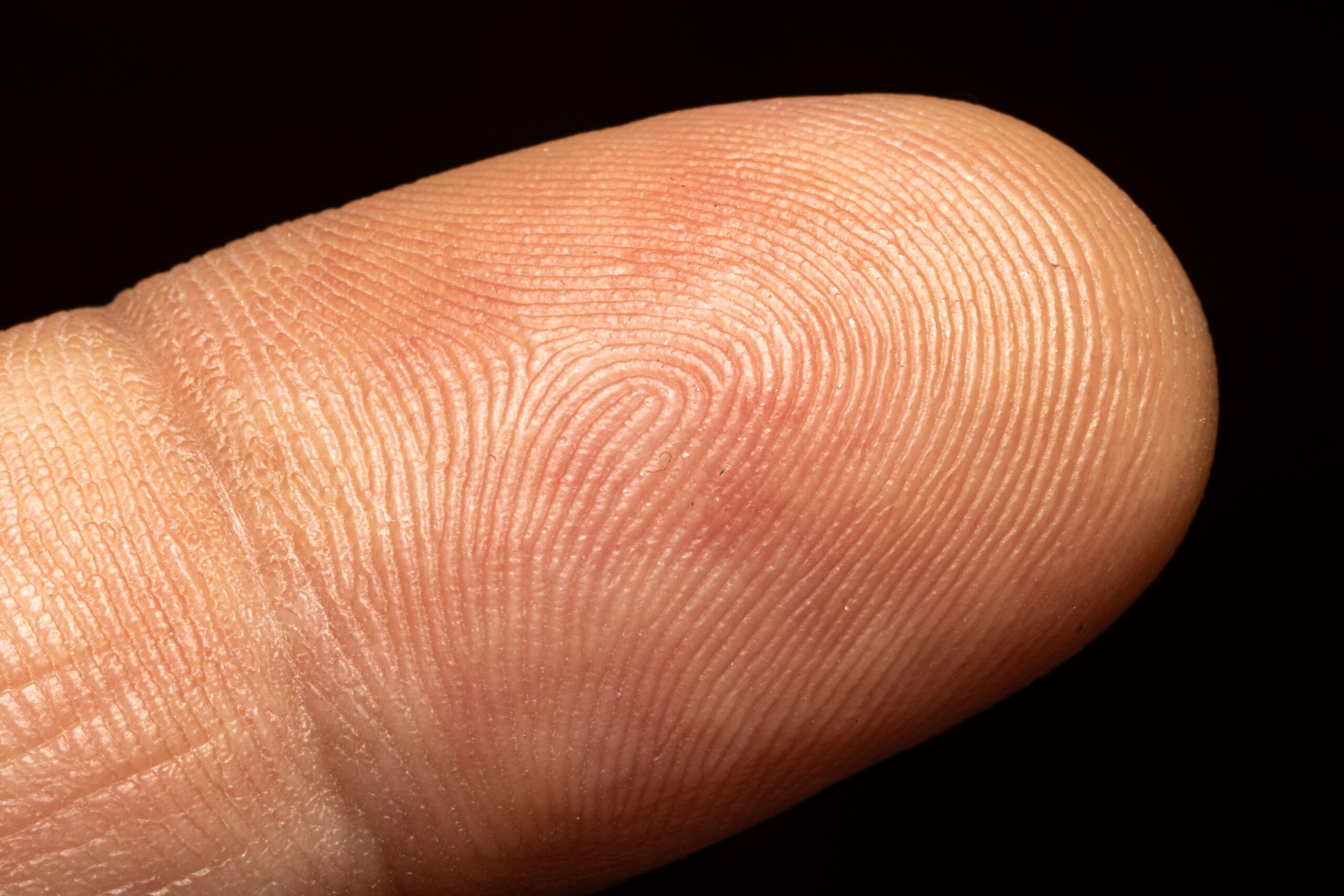
In this case, the focus is not on analyzing fingerprint pattern classes or minutiae—the characteristic points located along the ridge lines that allow for reliable personal identification. Instead, by taking swabs from the fingertips to collect sweat, physicians were able to detect the presence of proteins and peptides identified as biomarkers of potential breast cancer.

This non-invasive, painless technique for patients could make it possible to distinguish between benign, early-stage, or metastatic tumors. If the results are confirmed, it may soon be commercialized in the form of a kit, providing a rapid and reliable diagnostic tool that is significantly less traumatic and less costly than mammography, which remains the current gold standard in breast cancer screening.

…And also detect narcotics!

From medicine to forensic science, there is often only a small step—and in this case, technology has taken it. Sweat sampling from fingerprints is already among the available methods to detect the presence of four classes of narcotics: amphetamines, cannabis, cocaine, and opiates.

Here again, it is the sweat that reveals the presence of these molecules, whether the substance was merely handled or actually ingested. The procedure requires nothing more than pressing the fingertips onto a special piece of paper and then analyzing it using mass spectrometry, which can detect the substance up to 48 hours after contact or ingestion.

Unlike blood tests, which require significant logistics, this analytical method takes only a few minutes and can also be applied to latent fingerprint residues collected at a crime scene. It has also proven effective in the medico-legal context, using post-mortem sweat samples.

Sources :

https://www.nature.com/articles/s41598-023-29036-7

https://www.businesswire.com/news/home/20181008005386/fr/

Empreinte cérébrale une nouvelle méthode d'identification - biométrie et police scientifique Forenseek

Brain fingerprinting: a new identification method?

The Earth is home to eight billion people, and each of them is unique. This individuality has long been harnessed in identification processes—through genetics, fingerprint analysis, and, in the near future, brain fingerprinting.

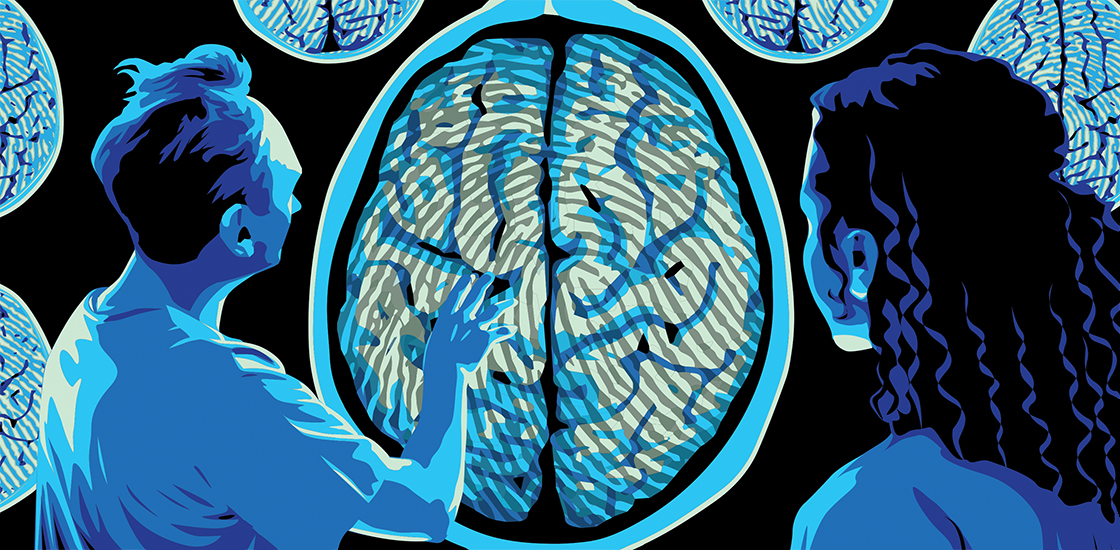
If the 20th century was marked by technological progress, the 21st will undoubtedly be the century of neuroscience. Thanks to new fMRI (functional Magnetic Resonance Imaging) techniques, it is now possible to capture the “fingerprint” of a brain in less than two minutes—an imprint just as unique as those found at the tips of our fingers, enabling the identification of an individual with an accuracy approaching 100%.

A unique brain fingerprint

Beyond overall brain volume and cortical thickness, the research team at the University of Zurich working on this question has identified anatomical features that are specific to each brain, particularly in the organization of gyri and sulci—patterns that strongly resemble fingerprint ridges. This cerebral “architecture” is shaped not only by genetics but also by the practice of certain activities, life events (such as physical trauma), and the wide range of experiences that a person may undergo throughout their lifetime.

However, it is not so much the image of the brain as its neuronal activity that defines this brain fingerprint. The signals captured by fMRI are synthesized to generate a map of neural networks known as the functional brain connectome. By analyzing this connectome, researchers can create a visual summary in the form of a graph that allows them to track brain activity, identify which regions are engaged (whether sensory or cognitive), and—most importantly for identification purposes—distinguish one individual from another.

Brain fingerprinting in biometrics

Since MRI scans are still time-consuming and expensive procedures, it is unlikely that this identification method will replace fingerprint scanners in the near future.

Nevertheless, government institutions and certain private companies operating in sensitive sectors are showing strong interest in developing biometric technologies based on the identification of brain signals, which could provide advanced security for digital identities.

From smartphones to high-security facilities, systems equipped with fingerprint readers are already in widespread use, but experience has shown that such methods can be falsified. Brain fingerprinting, on the other hand, is essentially tamper-proof, as it relies on a technology driven by a specific and complex algorithm. To implement this form of cerebral biometrics, scientists use an EEG headset (electroencephalography) to record brainwaves generated in response to various sensory stimuli—such as infrequent words, black-and-white or colored images. These responses, which differ from one person to another, constitute an inviolable identity encoded within the brain. Moreover, this profile would be disrupted if the individual were subjected to coercion or violence. Thus, brain fingerprinting could emerge as a biometric technique superior to existing methods, even surpassing retinal scanning, often considered one of the most sophisticated techniques, and opening the door to new applications in forensic science..

Sources :

https://www.futura-sciences.com/tech/actualites/technologie-biometrie-empreintes-cerebrales-nous-identifier-62535/

https://www.sciencesetavenir.fr/sante/cerveau-et-psy/neurosciences-chaque-cerveau-possede-sa-propre-empreinte-digitale_158577

https://ici.radio-canada.ca/nouvelle/1832469/cerveau-empreintes-cerebrales-empreintes-digitales