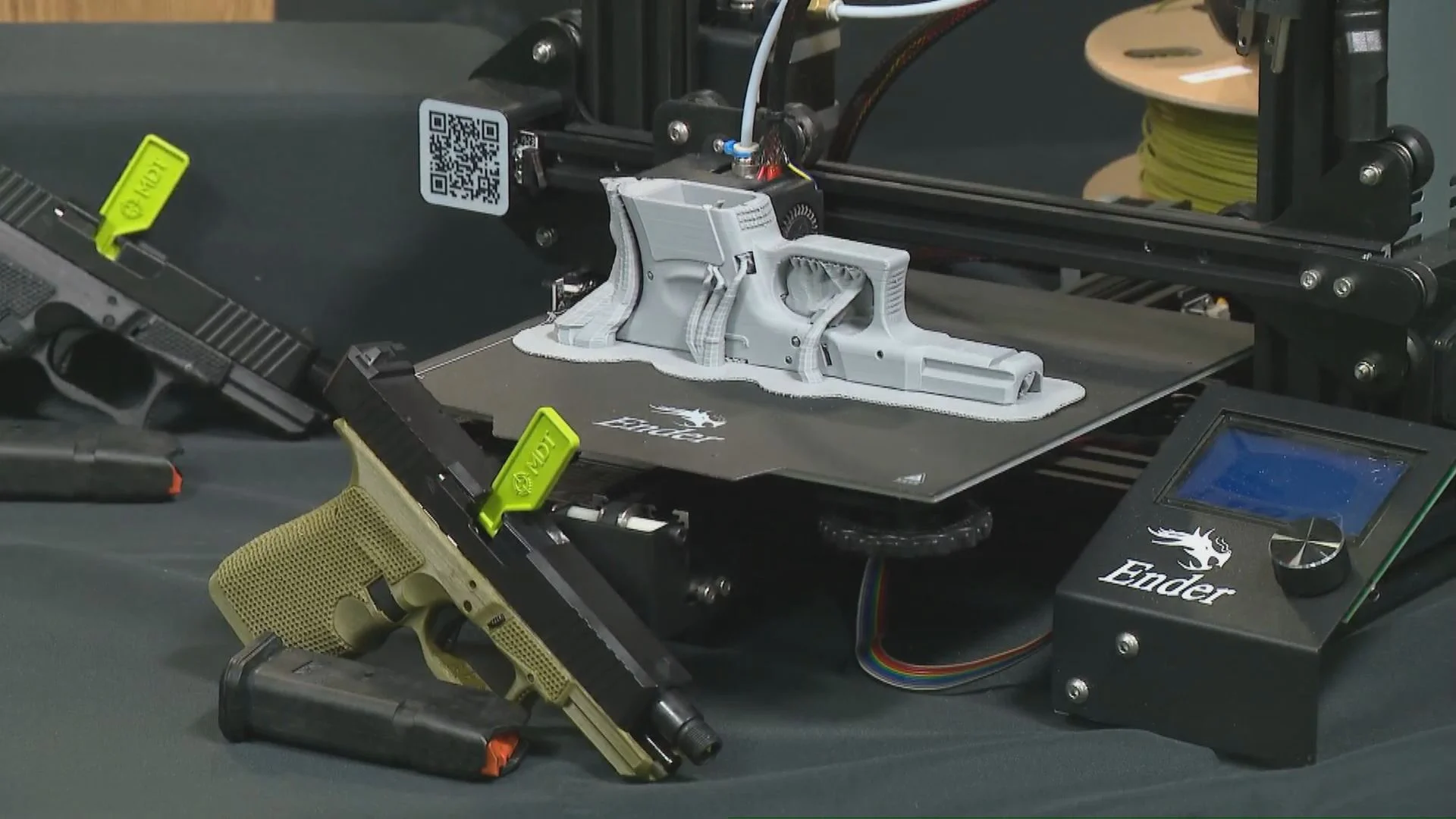
All firearms are traceable by police forces around the world thanks to their manufacturing characteristics and their serial numbers. All of them—except for weapons manufactured with a 3D printer, which have appeared in several European countries in recent years.
In 2013, Cody Wilson, a law student at the University of Texas, founded the company Defense Distributed with the aim of developing and distributing 3D-printed firearms. When he published his first free CAD (computer-aided design) file to manufacture a plastic pistol called the Liberator, the response was immediate: no fewer than 100,000 downloads in just two days.
The event did not go unnoticed by the U.S. government, which demanded the file to be removed. That marked the start of a legal battle that culminated in 2018 with the Trump administration’s move effectively legalizing 3D-printed firearms. That decision, blocked in 2019 by a federal judge, was promptly countered by the pro-gun activist network Deterrence Dispensed, which continued to distribute firearm design files invoking the Second Amendment to the U.S. Constitution, which states: “A well regulated Militia, being necessary to the security of a free State, the right of the people to keep and bear Arms, shall not be infringed.” These ghost guns now proliferate in American cities, raising growing concern throughout North America.
UNIDENTIFIABLE AND UNTRACEABLE
Although completely illegal in Europe, these manufacturing files nonetheless circulate on the internet. According to the European police agency EUROPOL, seizures of 3D-printed weapons in the course of investigations on European territory have steadily increased in recent years. Evidence of this includes the dismantling of a workshop dedicated to their production in Spain and the arrest in the United Kingdom of individuals linked to far-right circles who were in possession of components for 3D-printed weapons.
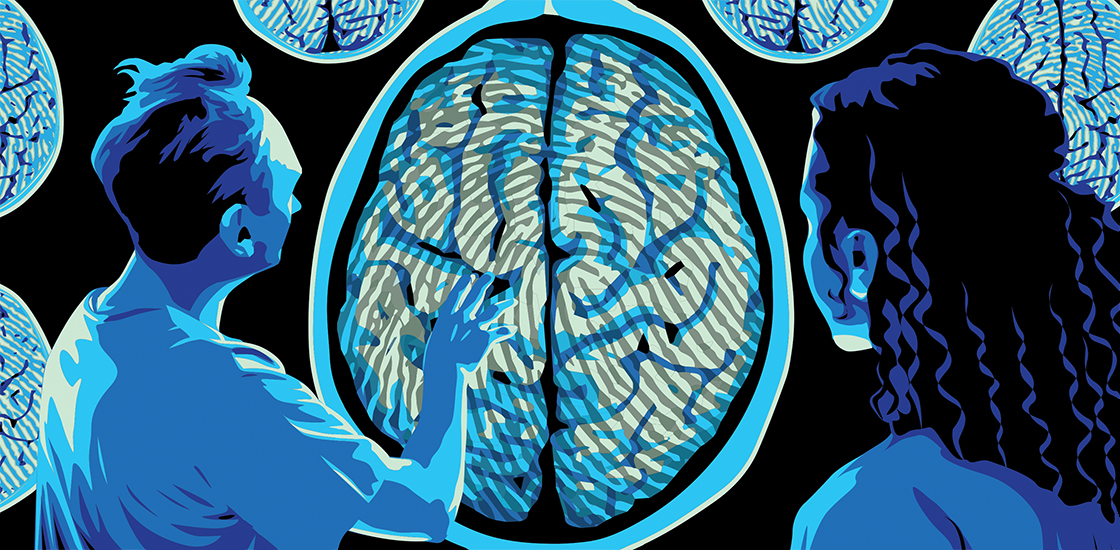
If ghost guns worry authorities on both sides of the Atlantic, it is primarily because they evade any possibility of identification. Every firearm manufactured through an industrial process bears characteristic marks left on its various components (firing pin, ejector, barrel, etc.), as well as on cartridge cases and projectiles, producing a kind of fingerprint unique in the same way as a fingerprint. In most cases, current investigative techniques are also able to recover a serial number even when it has been deliberately obliterated. By contrast, a weapon produced by a 3D printer lacks all of these elements that would allow investigators to trace its origin or to count how many are in circulation.
Another cause for concern is the materials that make up this new generation of weapons. They are generally thermoplastics such as PLA (polylactic acid), derived from renewable resources, or ABS (acrylonitrile-butadiene-styrene), a thermoplastic polymer widely used in household appliances. In both cases, the pistol will not trigger walk-through metal detectors, rendering security measures in public places ineffective—particularly against terrorist attempts. It is all the more undetectable because it can be disassembled piece by piece and then reassembled by hand in a few minutes.
A MAJOR CHALLENGE POSED BY TECHNOLOGY
The only reassuring point in the face of this new threat is the many fragilities of these ghost guns. The manufacturing process with current printers is complex, and the thermoplastics used tend either to deform, crack or break. Confronted with the explosive force of a gunshot, the structure does not hold: tests have shown that the user can usually fire only a single round before one of the weapon’s components fails catastrophically. There are 3D-printed metal gun models, but they are very expensive and thereby lose their “invisibility.”
For experts, however, it is the next development that should be kept in mind. With 3D technologies evolving constantly and very rapidly, one should expect a new generation of printers and higher-performance materials to emerge in the near future, which could then make producing a weapon as simple as child’s play.
While dental analysis has become an established technique in forensic identification, the reliability of bite mark analysis is now under scrutinity due to the lack of sufficient scientific grounding.
Like DNA or fingerprints, teeth and jaws constitute a unique “identity card” for each individual. This observation gave rise to a distinct branch of forensic medicine—forensic odontology—which found one of its earliest applications in 1897, during the Bazar de la Charité fire in Paris. Faced with completely charred and unrecognizable bodies, the authorities decided to call upon the victims’ dentists.
When teeth leave their marks
Since then, this method of identification has been systematically employed whenever human remains must be identified, whether individually or in mass disaster situations, regardless of the circumstances of death. Dental structures are highly resistant to nearly all destructive factors, including burial, cremation, immersion, and even physico-chemical assaults.
In the absence of other data, a forensic odontologist’s examination of teeth—considering pathologies and tooth wear patterns in particular—can provide valuable information on sex, age, ethnicity, and dietary habits. By comparison with ante-mortem dental records, such analyses can formally establish an individual’s identity.
Another area of forensic odontology involves the interpretation of bite marks found on victims—whether living or deceased—as well as on perpetrators or even on certain objects. Today, experts conduct these analyses using digital technologies such as 3D laser scanning, which may lead either to the identification or, conversely, to the exclusion of a potential assailant. However, since there is no standardized or automated methodology and interpretation must take into account numerous factors beyond dental patterns, some specialists argue that this forensic technique lacks sufficient scientific grounding and cannot be considered conclusive evidence.
Reliability under scrutiny
The controversy, which began in the United States in 2009 with a study published by the National Academies of Sciences, Engineering, and Medicine, has recently resurfaced following a draft report issued by the National Institute of Standards and Technology (NIST), questioning the scientific rigor of such analyses.
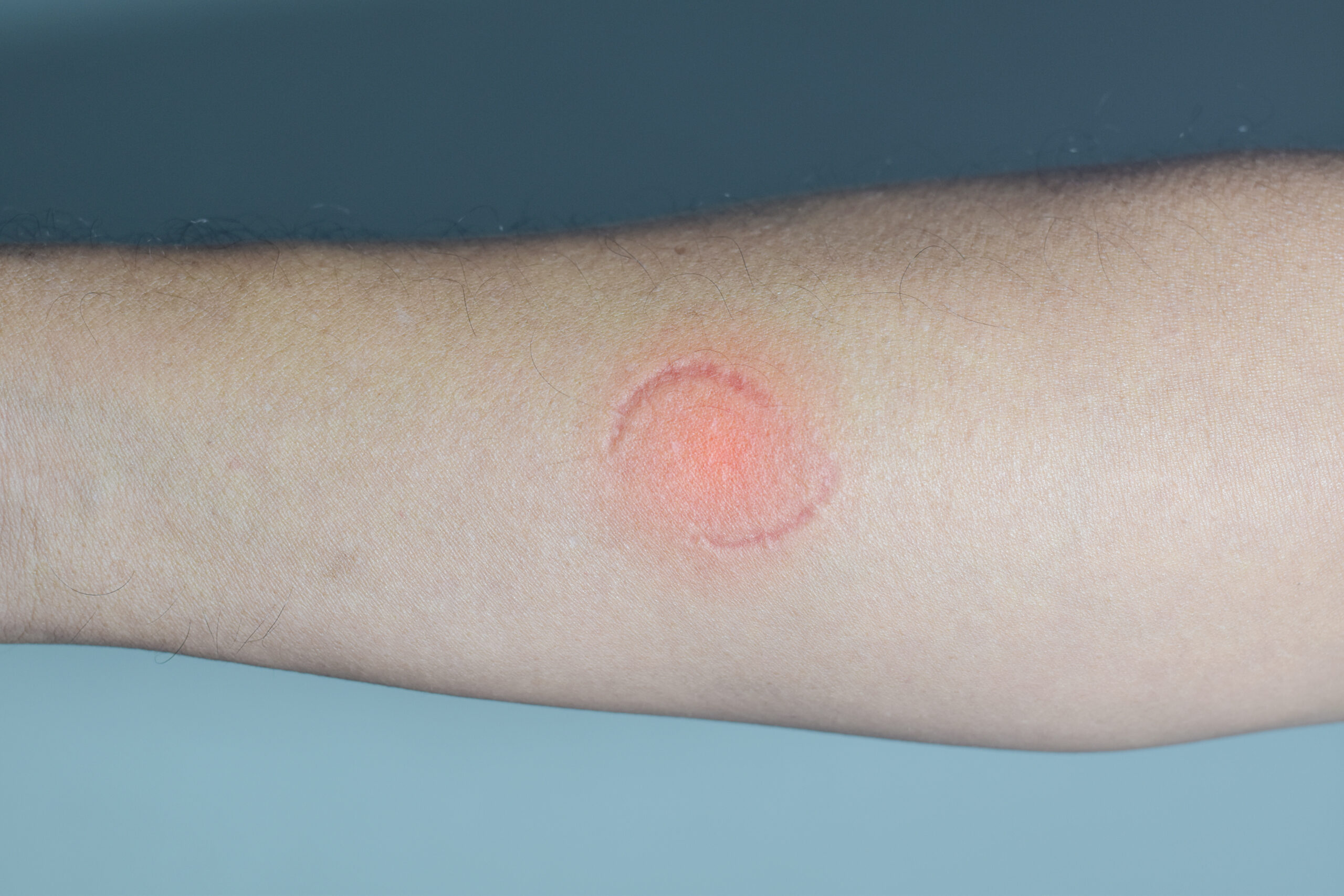
According to NIST, the interpretation of bite marks relies on two fundamental assumptions: first, that dental impressions are unique; second, that bite marks remain perfectly preserved regardless of the medium. In reality, they often involve only part of the dentition (primarily the anterior teeth). Moreover, human skin—the most common substrate for such marks—is by nature a pliable tissue, subject to distortion depending on its elasticity, the victim’s movements, the development of bruising, and the degree of healing at the site. All these factors, experts argue, undermine the reliability of bite mark comparison as a means of incriminating a suspect.Although this federal agency’s report is still in draft form, its preliminary findings are already stirring significant debate within the scientific community and among advocacy organizations working to prove the innocence of individuals wrongfully convicted. One such organization, the Innocence Project, based in the United States, has highlighted that 26 people were wrongfully convicted on the basis of bite mark evidence—an alarming fact that foreshadows numerous legal battles to come
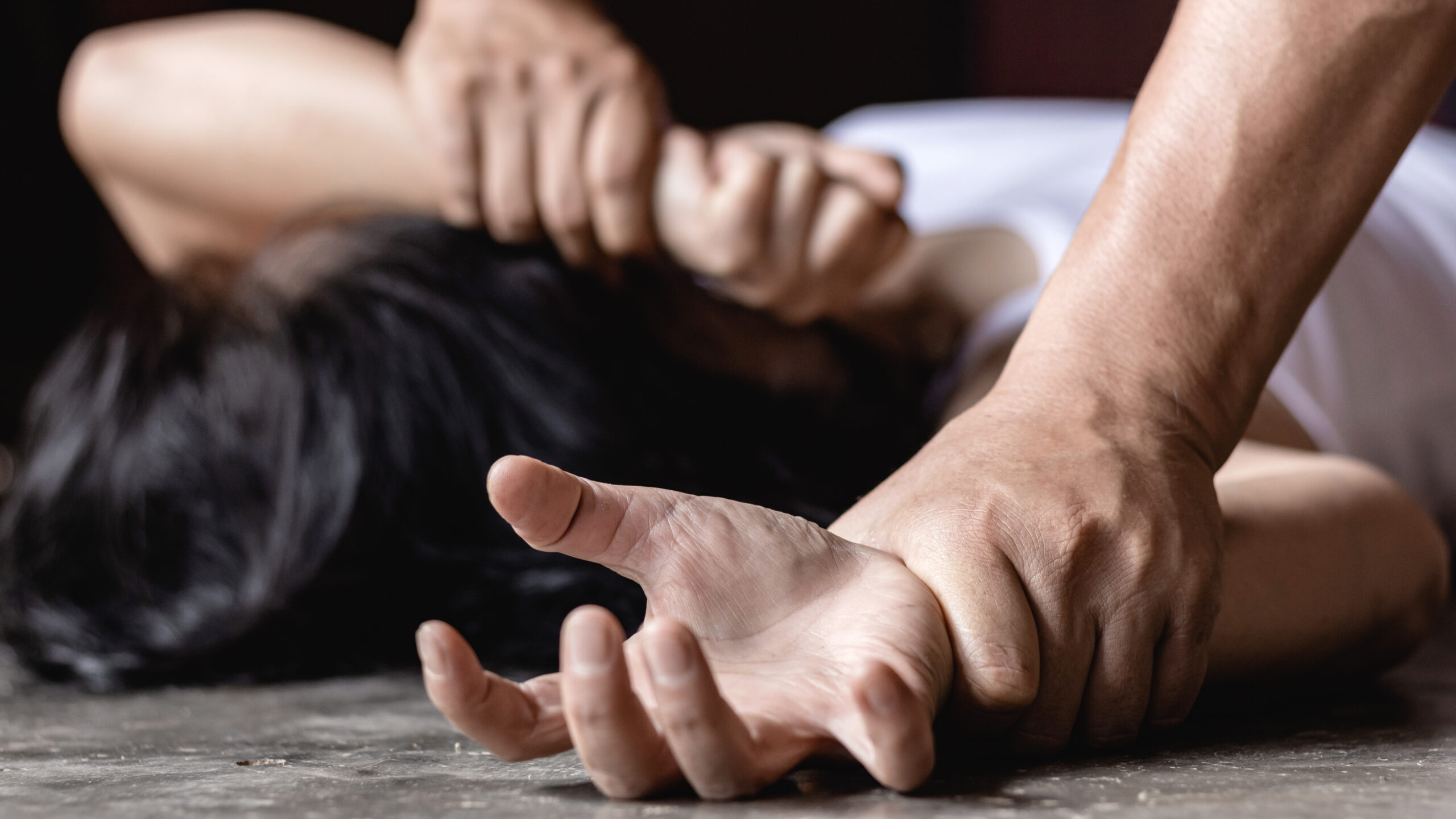
The fight against all forms of sexual violence and assault is a constant concern of the Gendarmerie units, which work daily in the field in partnership with all institutional and non-governmental stakeholders involved in addressing this phenomenon.
While improving the training of military personnel and strengthening prevention of such cases are essential approaches to optimizing the current system, the judicial phase remains crucial to identify perpetrators and bring them before the courts.
Victims of sexual assault may either report to an investigative unit, go to a hospital (Emergency Department or Sexual Violence Unit), or contact an association whose mission is to support victims of such offenses.
In the first case, this results in the filing of a formal complaint. In hospital settings or through an association, at the very least an official report is made. If the assault occurred within the previous five days, the victim enters a pathway that includes reception and support, anamnesis, forensic sampling, and traceability. Beyond five days, the victim is directed to information and medico-social support.
When a formal complaint is filed, the victim then follows a pathway sometimes experienced as burdensome or constraining, requiring multiple appointments where she must repeatedly recount what happened, undergo forensic examinations, and allow the seizure of items and objects for the purposes of a procedure, with sealed evidence forwarded to a forensic or hospital laboratory for medico-legal analysis. Otherwise, it is at least essential to ensure the preservation of the samples in the event of a later complaint or judicial referral.
Additional obstacles may include inadequate reception conditions or delays in the process. This causes stress for victims and their families, and some abandon their initial steps.
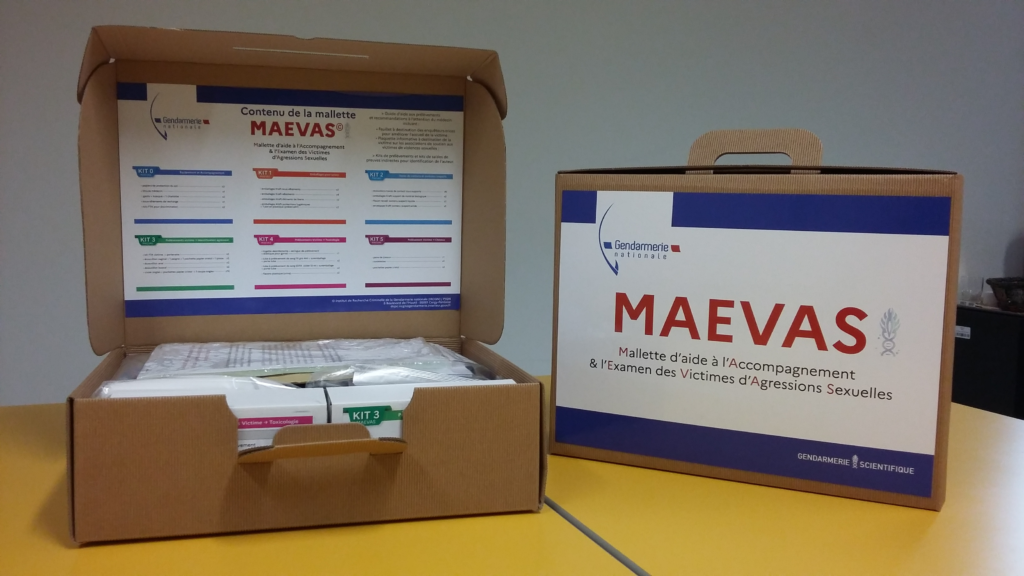
In this context, beginning in 2018, the National Gendarmerie developed the “MAEVAS” Program—Support and Examination Kit for Sexual Assault Victims—under the supervision of the National Gendarmerie’s Criminal Research Institute (IRCGN) in Pontoise (95).
Better supporting victims of sexual assault
“MAEVAS” offers an innovative, comprehensive approach designed to support victims of the most serious sexual offenses, regardless of age or gender, while providing collaborative methodological and forensic tools that enable all necessary investigations. These tools are grouped in a single kit, to facilitate the resolution of this category of offenses—from the reception of the victim filing a complaint, to the collection of forensic samples—aiming for optimum judicial processing while ensuring continuous support for the victim and her or his relatives throughout the investigation.
The aim is to avoid subjecting the victim to repeated interviews or subsequent supplementary procedures, which could be traumatizing. The body of a victim is not a crime scene like any other!
Indeed, the Medico-Judicial Units (Unité Médico-Judiciaire, UMJ)—where medical staff work in cooperation with the judicial authority, performing medical procedures at the request of investigators or the courts—are the structures best suited to respond effectively to this need. However, half of France is not provided with UMJs, which are often, if not exclusively, located in National Police jurisdictions where hospital emergency services are also available. The situation is very different in areas under the jurisdiction of the National Gendarmerie, particularly in overseas departments and territories.
Initially deployed within Gendarmerie units located far from an UMJ, “MAEVAS” will help reduce territorial inequalities and can be especially implemented in overseas territories.
Its availability in reception units should make it possible—where timely treatment in an UMJ is not feasible (due to distance, accessibility, etc.)—for a physician working in private practice, specifically requisitioned, to carry out the necessary forensic examinations in his or her office. This ensures that no victim is left without an appropriate response, which would otherwise undermine the recognition of the assault. The project is therefore based on close collaboration among all stakeholders, centered on the condition and support needs of every victim of such aggression.
In the future, “MAEVAS” may also be deployed in prisons or universities (hazing), and even in the sports environment. The concept could also be adapted for use within the Armed Forces (sexual assaults during overseas operations, aboard Navy vessels, on military bases, etc.) through the involvement of military physicians.
A complete forensic kit for investigators and physicians
The kit includes a summary document gathering multiple recommendations—from advice on how to welcome a victim, to forensic sampling procedures, and including aspects relating to interviews and victim support. In its initial version, a simplified content focusing primarily on suspect identification is proposed, allowing for faster initial deployment.
It also contains: – The necessary consumables, provided as pre-packaged kits, dedicated to various screenings and preliminary sampling (DNA, toxicology, trace evidence, hygiene kit, etc.), with the objective of identifying the perpetrator; – Guideline sheets to assist with sampling, as well as recommendations (health and forensic considerations, evidence location and preservation, etc.), for doctors and investigators, ensuring continuity of procedures and communication among all stakeholders.
“MAEVAS” can thus be deployed in units located far from Medico-Judicial Units (UMJ) and hospital services. It is the responsibility of these units to ensure that any victim reporting to their premises is supported with a “MAEVAS” kit.
Furthermore, given that Medico-Judicial Units (UMJs) and hospital emergency services wish to strengthen their contacts with investigators in order to improve coordination and operational actions, it may be envisaged in the future, in cooperation with the Ministry of Solidarity and Health, to provide them with “MAEVAS” kits.
The resolution of such cases requires complementary actions among stakeholders addressing both the condition and support needs of every victim of this type of assault. These actors often intervene one after the other, whereas a global, complementary, harmonized, and systematic approach would be less traumatic for the victim and allow investigators to make better use of the evidence. It is with this aim that on 13 March 2019 in Pontoise (95), a Gend’Lab(*) was organized on the theme: “Violence against women: the strengths of MAEVAS (Support and Examination Kit for Sexual Assault Victims).” The purpose of this Gend’Lab was to bring together all stakeholders able to contribute to the design and support of the kit, both upstream and downstream of its use (victim support associations, Ministry of Justice, Ministry of Health, the Medical Council, etc.).
* : Événement ouvert au public organisé par la Gendarmerie Nationale qui a pour objet d’exposer ses travaux ou projets scientifiques et techniques en présence des partenaires du projet et des organisations intéressées par le thème.
With “MAEVAS,” each actor involved completes their share of the case file, resulting in a coherent judicial file that can be easily used by a magistrate.
A pilot project launched in the first half of 2022
The “MAEVAS” kit, combining both the forensic dimension (support for investigators) and the victim-assistance dimension (references to victim-support associations), has been the subject of a field trial since mid-2022 in the departments of Charente-Maritime (17), Cher (18), and Val-d’Oise (95), which have different medico-legal environments.
As for overseas specificities, the Overseas Gendarmerie Command and the Ministry of Overseas France proposed piloting the kit in Réunion, due to its insular nature and the significant volume of cases potentially concerned by “MAEVAS,” and in French Polynesia, due to its multiple insularities, relative isolation, and the difficulties that may arise in accessing appropriate medical and forensic care.
Improving the response to victims
Each kit is intended for a specific actor and action, accompanied by an adapted form. This will help automate and standardize forensic and investigative procedures. The kit’s composition must be standardized and traceable (e.g., expiration dates), with careful consideration given to the preservation of collected samples.
This initiative demonstrates that specialists can combine their efforts and share experiences, clarify roles and responsibilities, and avoid wasting time and expertise, all for the benefit of addressing victims’ situations. A fine-grained understanding of the phenomenon is indispensable, enabling the system to be adapted over time.
Victims must be able to trust the State’s response, as they fear for themselves or their relatives. They need to know that support is available to mitigate the family trauma. This is especially true since victims often fear not being listened to or believed when reporting the facts.
Dead bodies are a highly contested resource: some insects do not hesitate to travel kilometers to lay their eggs there. This necrophagous entomofauna is usually discreet but omnipresent: the slightest dead animal is immediately colonized. Even though human bodies are rare compared to other animals, they do not escape this fatal attraction.
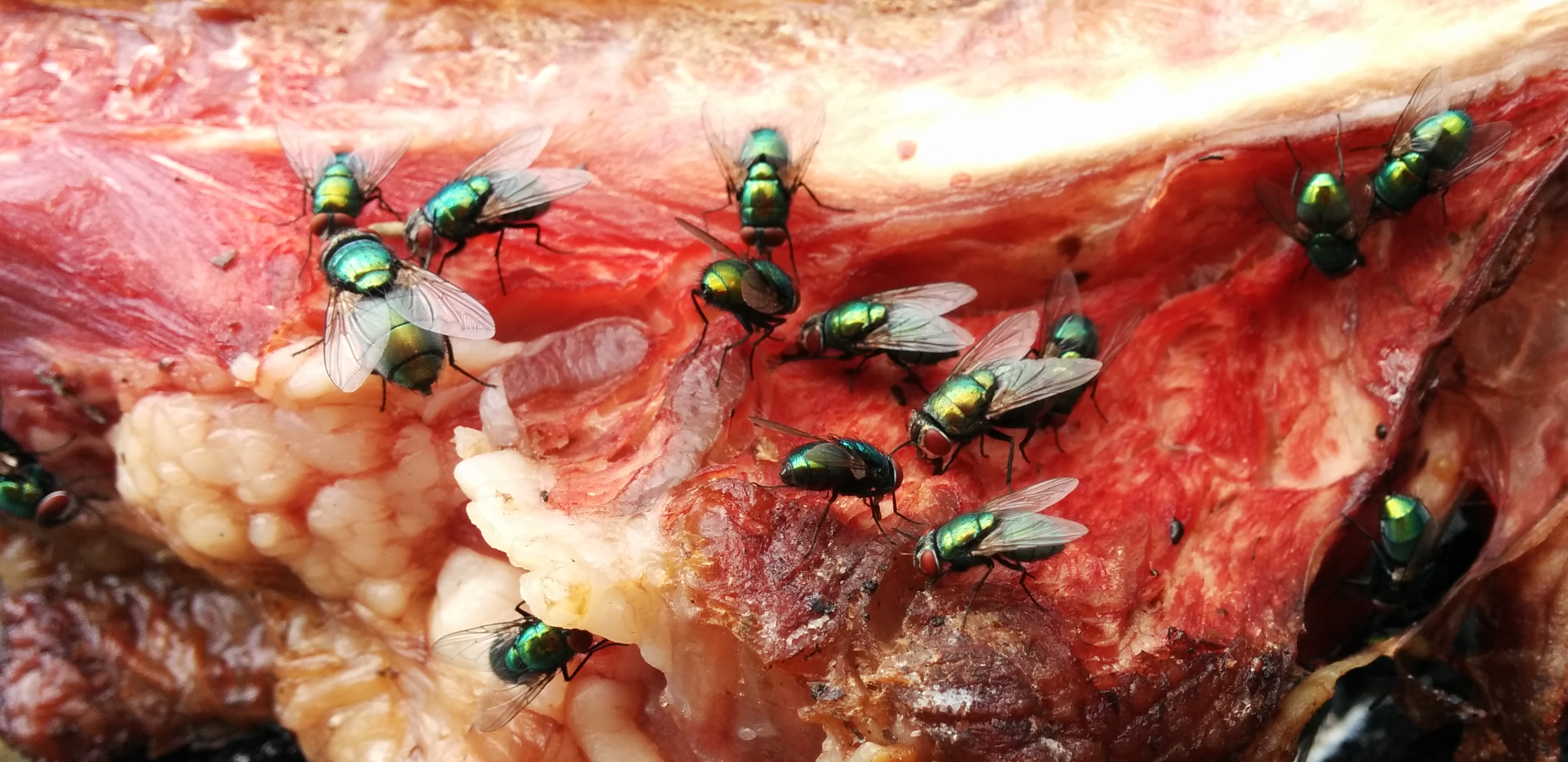
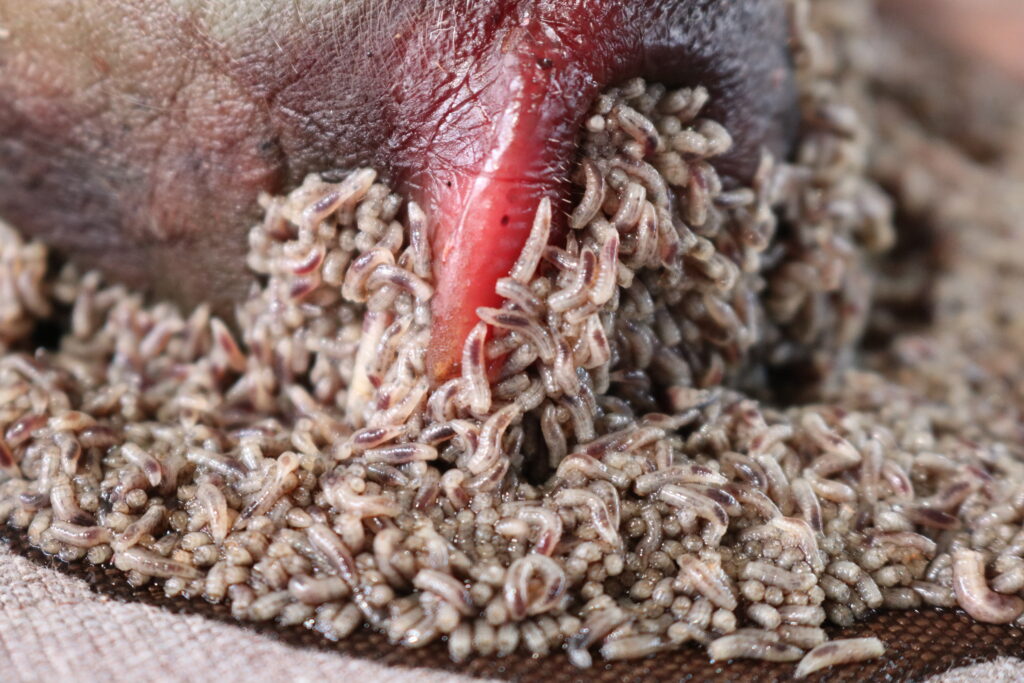
As soon as death occurs, a body attracts new occupants: if the weather is good, flies arrive in just a few minutes. They lay hundreds of eggs, which hatch into just as many maggots. Under the effect of this rapid and massive colonization, the corpse becomes a true ecosystem. Forensic entomology analyzes the insects within this ecosystem in order to estimate the time and sometimes the circumstances of death. This type of expertise has deep roots (the first written records date back to the 13th century), but the methods have evolved considerably in recent years. At the end of the 19th century, a French veterinarian, J.P. Mégnin, proposed a chronology based on the succession of insects. This principle, known as the “theory of squads of carrion insects”, long served as a reference for dating corpses. It was gradually abandoned, however, because of its lack of precision and reliability. The squad method is therefore no longer used for judicial dating, which now relies instead on calculating the age of larvae.
Which insects colonize a corpse?
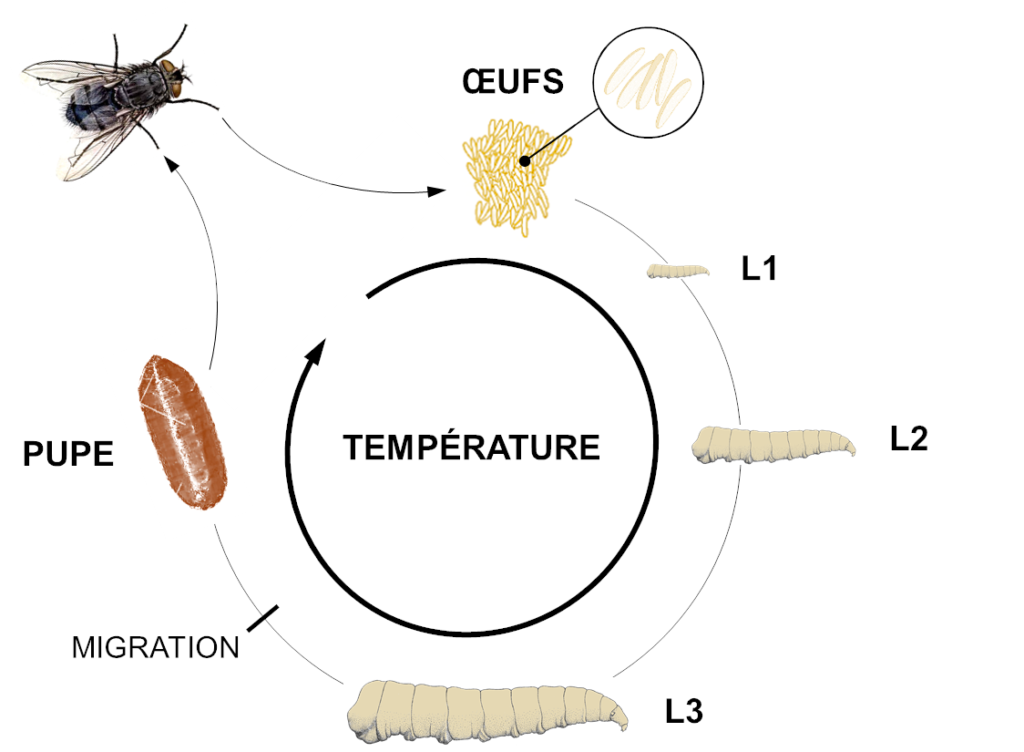
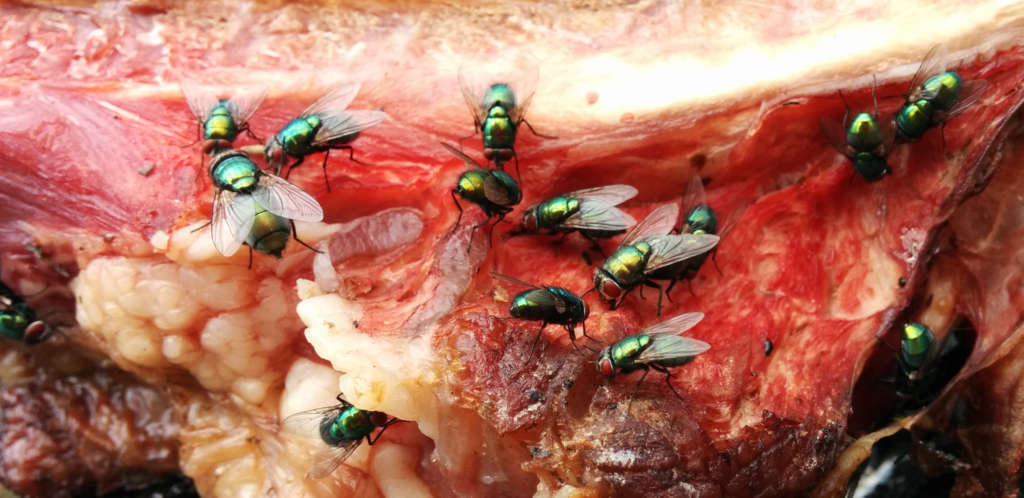
The most common and abundant species are flies from the family Calliphoridae. Females can detect a body from kilometers away and even enter houses. Each female lays a cluster of about 200 eggs, which hatch into small maggots. Despite their small size, these eggs and young larvae are relatively easy to spot: they are generally found around the face (eyes, nostrils, eyebrows), the scalp, at the interface with the ground, or in moist and protected areas (clothing). These blowfly larvae feed on the flesh for several days, then move away from the corpse to find a shelter where they transform into pupae (cocoons) inside which they metamorphose into adult flies. In addition to Calliphoridae, flies from the families Muscidae, Faniidae and Sarcophagidae also colonize corpses, though at a later stage. Their biology allows them to develop and reproduce on the same corpse for several generations. Some species can even penetrate confined spaces such as coffins, where they are observed in abundance during exhumations.
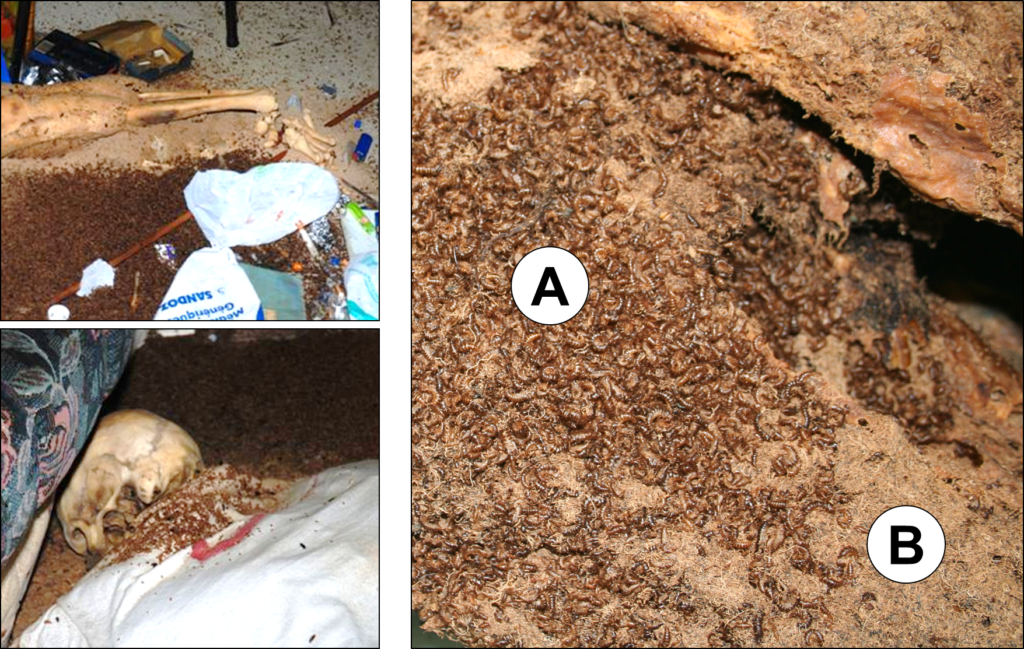
Throughout decomposition, beetles from the families Necrophoridae, Histeridae and Staphylinidae may also be found. Apart from some common species such as Necrodes littoralis or Creophilus maxilosus, these insects are relatively poorly understood and therefore provide little information for dating death. One exception are dermestid beetles (literally “skin eaters”), small beetles that feed on dried flesh. Dermestids are common in warm and dry climates as well as in corpses found indoors, where they can quickly proliferate and lead to rapid skeletonization. Their molts and droppings are then found in abundance, forming a kind of fibrous soil (called “frass”). Such traces can provide a reliable estimate of the post-mortem interval, even several months after death.
Finally, there is also a multitude of opportunistic or occasional species that take advantage of the presence of a corpse in their environment to feed or hunt. These include moths, wasps, ants, spiders, dung beetles, and other more or less accidental species. While they should not be ruled out in principle, they often provide little information. In fact, the vast majority of forensic entomology expertise is based on the analysis of fly larvae, mainly Calliphoridae.
The Role of Forensic Entomology Expertise
The use of insects becomes essential when classical forensic dating techniques are no longer effective—that is, 48 to 72 hours after death. The first step in entomological expertise consists of collecting the insects found on and around the body, and then identifying them. Sampling must be performed by a properly trained individual, most often a crime scene technician (forensic police) or a forensic pathologist. Recommendations have been published by the European Association for Forensic Entomology (EAFE), and many reference works provide sampling protocols. Some laboratories or equipment suppliers also distribute kits containing the necessary material along with a protocol. Below are some basic principles:
• Samples must be collected at the site where the body was discovered. All insects on or in the immediate vicinity of the body should be collected: larvae, worms, beetles, dead flies, etc. The goal is to obtain a representative sample. It is not necessary to capture flies flying around the corpse. Additional samples can be collected during the autopsy if needed.
• Remember to look for pupae (cocoons), which are generally located at some distance from the corpse. If the body is outdoors, collect soil around the body (1–2 meters away, a few centimeters deep). If indoors, check under objects in the room and in adjacent rooms.
• Place living insects in vials with small perforations (ensuring they cannot escape). Preserve half of the collected specimens by immersing them in a fixative solution (formalin or alcohol) or by freezing them. Label each vial with the date and time, and briefly describe its contents (e.g., “2 larvae” or “1 empty pupa”).
• Store samples in a cool environmentas quickly as possible and submit them for analysis without delay (within a few days at most). Record the thermal history (e.g., “sampled on 25/07 at 16:00, refrigerated at 7 °C at 17:00, transported on 27/07 at 10:00”).• Any information not appearing in the body discovery report or the photographic documentation should be communicated to the forensic entomologist.
Estimating the age of larvae colonizing human remains
The fundamental principle of forensic entomology is to calculate the age of larvae or pupae in order to determine the timing of oviposition. Since necrophagous insects are involved, their presence indicates that the victim was already deceased at the time of colonization. For instance, if a body is discovered on May 28 and necrophagous insects aged 10 days are found on the remains, this means the victim had already been dead for 10 days prior to discovery, i.e., since May 18. This is referred to as the minimum postmortem interval.
To estimate larval age, it is necessary to identify the species and determine the temperature. The most widely used method is known as degree-days. To illustrate how it works, let us consider an example. Assume that the species collected from the body has a developmental threshold temperature, denoted Ts, of 10°C. This Ts value may be regarded as a fixed tax: only the degrees above this threshold contribute to larval development. At a constant temperature of 20°C, each day provides this species with 20°C – Ts = 10 degree-days for development. At 30°C, the larva accumulates 30 – Ts = 20 degree-days. The developmental target to reach is referred to as ADD (Accumulated Degree Days). In our example, let us suppose that 150 ADD are required for an egg of this species to reach the adult stage. At a constant temperature of 20°C, each day provides 10 degree-days, meaning that 15 days are needed to accumulate 150 ADD and obtain an adult fly. The same reasoning applies when temperature fluctuates: one day at 20°C followed by a day at 30°C provides 10 + 20 = 30 degree-days for the maggot.
This method has the advantage of being straightforward and applicable in both directions: one can observe a larva and determine when it will reach adulthood, or conversely start from the adult stage to reconstruct the duration of its larval development. This is precisely what is done in forensic investigations: the larvae found on the cadaver are identified, ambient temperatures are reconstructed, and from this the length of time the larvae have been developing on the remains is established, corresponding to the minimum postmortem interval.
How to estimate the colonization interval ?
Calculating the minimum postmortem interval is generally not sufficient. Returning to our previous example: in a case where a victim has been missing since December, stating that they had been dead for 10 days before the discovery of the body, i.e., since May 18, would not be of much practical use. The forensic entomologist’s task is therefore not only to determine the age of the larvae, but also to estimate the delay between death and the arrival of insects. When developing larvae of Calliphoridae flies are recovered, interpretation is relatively straightforward: under favorable conditions, these flies oviposit very shortly after death. The date of initial oviposition can thus be considered concomitant with the time of death.
By contrast, when colonization conditions are not optimal (adverse weather conditions, body located indoors) or in the case of so-called late-arriving species, it becomes more challenging, and sometimes impossible, to calculate the time elapsed between death and oviposition. In such situations, dating is therefore limited to establishing a minimum postmortem interval, sometimes supplemented with a qualitative estimate of the colonization delay.
Other contributions and limitations of forensic entomology
Beyond estimating the time of death, the study of the entomofauna associated with a corpse can shed light on events that occurred peri- or postmortem. The absence of a set of very common species on a body may indicate a temporary inaccessibility of the remains. This may result from confinement (e.g., sequestration of the body in a closed room), wrapping of the body, or unfavorable weather conditions. Conversely, it is often suggested that the presence of certain species could indicate the relocation of a body. This notion is largely unrealistic: the main necrophagous species are found throughout Central Europe and in almost all environments. It is therefore exceptional to encounter a species that serves as a specific geographic indicator. Two particular cases should nonetheless be mentioned: buried bodies, which are generally only minimally colonized, and submerged bodies, which are associated with a distinct fauna. Finally, necrophagous insects may sometimes colonize necrotic wounds in living individuals, a phenomenon referred to as myiasis. In such cases, larval analysis can provide information on the timing of the last medical care and help demonstrate potential neglect or abuse of a dependent person.
References :
Amendt J, Campobasso CP, Gaudry E, Reiter C, LeBlanc HN, Hall M. 2007 Best practice in forensic entomology—standards and guidelines. International Journal of Legal Medicine 121, 90–104.
Beauthier J-P. 2022 Traité de médecine légale et criminalistique. 3e édition. Louvain-la-Neuve: De Boeck Supérieur.
Byrd JH, Tomberlin JK, editors. 2019 Forensic Entomology: The Utility of Arthropods in Legal Investigations. 3rd edn. Boca Raton: CRC Press.
Charabidze D. 2021 Ils peuplent les morts: approche entomologique médico-légale. Lyon: Fage éditions.
Charabidze D, Gosselin M, Collectif, Beauthier J-P. Insectes, Cadavres Scènes de Crime Principes et Applications de l’Entomologie Medico-Legale. Louvain-la-Neuve: De Boeck; 2014. 261 p.
Erzinçlioglu Z. Blowflies. Slough: The Richmond Publishing Co. Ltd; 1996. (Naturalist’s Handbooks; vol. 23).
Marchenko MI. Medicolegal relevance of cadaver entomofauna for the determination of the time of death. Forensic Science International. 15 août 2001;120(1–2):89‑109.
Smith KGV. 1986 A manual of forensic entomology. London: Trustees of the British Museum (Natural history).
What if the police could know in advance where a crime was going to occur? This possibility is becoming real with a new artificial intelligence tool developed by a team of American researchers.
Washington, D.C., 2054: mutant humans foresee crimes and enable the arrest of future perpetrators thanks to their gift of precognition. Such is the premise of Minority Report, released in 2002, a film that constantly oscillates between utopia and the ultimate nightmare of a society under total control.
Chicago, 2022: Ishanu Chattopadhyay and his team of researchers have developed an algorithm capable of predicting, one week in advance, the level of criminal activity likely to emerge in a given area—with an accuracy rate of nearly 90%.
Artificial intelligence, a new prophet?
To achieve this astonishing level of precision, the urban area was first divided into 300-meter-wide grids. The researchers then trained their algorithm on crime data from the city covering the years 2014 to 2016. The system successfully forecasted the level of crime for the following weeks. These results were consistently replicated in the seven other major U.S. cities included in the study.
Given such results, the key question now is how this type of modeling should be used. While it could serve as a preventive tool to ensure the safety of people and property, could it not also become a relentless instrument of social control, particularly by targeting certain populations?
This is the main criticism raised in the United States, where a previous algorithm had already been tested by the Chicago Police Department. Designed to identify individuals most at risk of being involved in a shooting, it produced a list in which 56% of those flagged were African Americans between the ages of 20 and 29—creating, according to some, a genuine risk of racial discrimination.
Focus on places rather than suspects.
For researcher Ishanu Chattopadhyay, however, his algorithm presents a crucial difference: its predictions concern only geographic areas, not potential suspects. Its use could therefore contribute to the implementation of a genuine security policy in certain regions, going far beyond merely assisting police officers on the ground.
The studies conducted by this Chicago-based team further highlighted that arrest rates were higher in wealthier neighborhoods, indicating more intensive police activity. This, in turn, raises the question of whether another form of discrimination might be at play.
Installed in commercial aircraft since 1960, the black box made its debut on July 6, 2022, in newly manufactured vehicles across the European Union. While some perceive it as a veritable “spy device,” this system is above all a valuable source of information in cases of accidents, as well as in criminal or delinquent acts.
Driver drowsiness alerts, reverse detection systems, intelligent speed adaptation… In just a few years, cars have become technological jewels generally welcomed by drivers. The introduction of this so-called black box, however—reminiscent of the flight recorders in aircraft cockpits—has generated far less enthusiasm, with critics judging the device overly intrusive.
Recording limited to a few data points.
Such concerns are unfounded, as this equipment is not intended to monitor the every move of drivers and passengers during a trip. Unlike the recorders installed in aircraft, it does not capture any sound or conversation. Nor can the data be used to identify the individuals on board or to assess driving behavior—for example, by tracking the frequency of acceleration or braking.
Its purpose? Quite simply, to analyze what happened in the event of an accident. To that end, the device records purely objective data such as speed, collision force, accelerator or brake pressure, the activation of safety systems (ABS), and seat belt usage. The electronic chip responsible for recording these data stores only the 30 seconds prior to the accident and the 15 seconds following it.
Access strictly reserved for authorities
There is no question of sharing these data with insurance companies, as some users fear. Only judicial authorities or research institutes will be authorized to access them in order to clarify the circumstances of accidents that often have tragic consequences, as illustrated by a case that occurred on the Paris ring road.
On February 21, 2013, following a 150 km/h police chase, Malamine Traoré, then 22 years old, crashed his Range Rover SUV into a marked BAC police vehicle, instantly killing two police officers and seriously injuring a third.
Beyond his numerous prior convictions for traffic offenses, his lack of a driver’s license, and a blood alcohol level of 1.4 g/L, the analysis of the black box installed in the vehicle demonstrated that the driver never lifted his foot from the accelerator nor attempted any evasive maneuver, even though he consistently denied deliberately crashing into the police car. He was tried for “intentional violence against public officials resulting in death without intent to kill” and was sentenced on appeal to 15 years of criminal imprisonment.There is little doubt that in the future, these automotive data recorders, along with other material evidence related to vehicles, will contribute to solving numerous criminal and delinquent cases.
Ukraine and numerous NGOs are building a case to bring Russia before the International Criminal Court for war crimes. On April 11, 2022, a team of 18 gendarmes from the Institut de Recherche Criminelle de la Gendarmerie Nationale (IRCGN, the French National Gendarmerie’s Forensic Science Institute) traveled to Ukraine to assist their counterparts in the difficult task of disaster victim identification. AFP interviewed Major General Patrick Touron, head of the National Gendarmerie’s Judicial Division.
The French gendarmes deployed to Ukraine on Monday have as their primary mission the identification of victims and the determination of their causes of death, explained Major General Patrick Touron, commander of the Gendarmerie’s Judicial Division, to AFP. “This team of eighteen gendarmes from the IRCGN is mainly composed of victim identification specialists, supported by two ballistics experts and an explosives specialist,” the general specified. Their mission has no fixed end date, although rotations have already been planned. “As of Tuesday, they will be in Kyiv, which for now is the location of their mission,” the general added.
The IRCGN is one of the few technical units in Europe capable of deploying to an operational theater within two hours.
Major General Patrick Touron
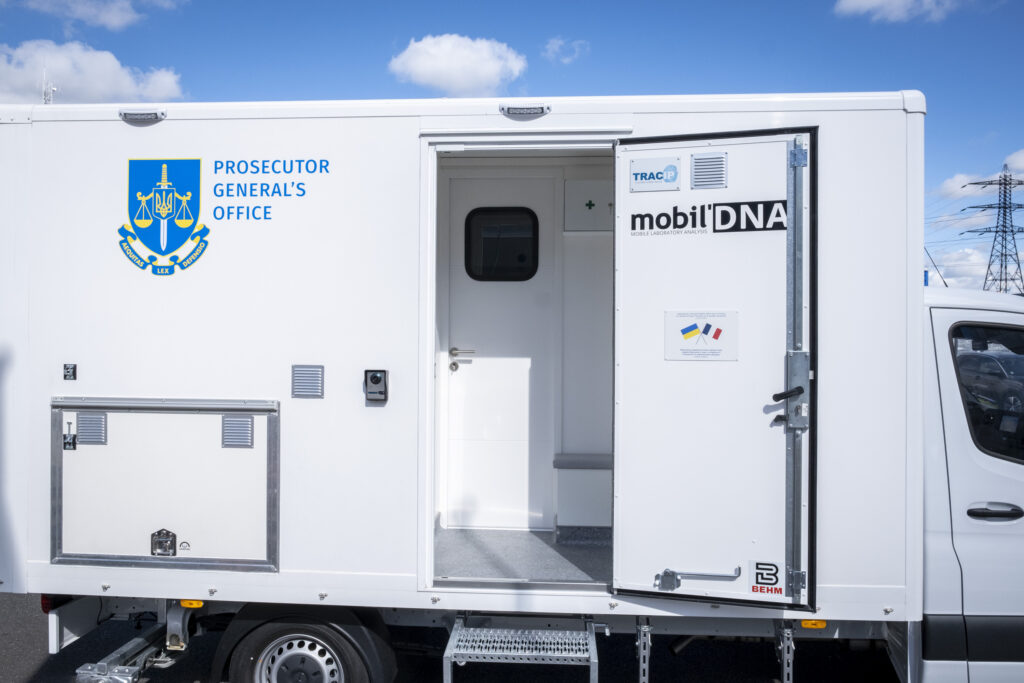
They will be “supervised by Ukrainian security forces” and will work alongside their Ukrainian counterparts. “The IRCGN is one of the few technical units in Europe capable of deploying within two hours to an operational theater, whether it be a theater of war (as in Mali, for example) or a natural disaster (such as the December 2004 tsunami),” General Touron emphasized. In addition to a mobile laboratory dedicated to DNA analysis, the team traveled with seven vehicles, including a truck carrying twelve refrigerated mortuary chambers to preserve autopsied bodies. The unit is fully autonomous, equipped with the means to generate its own electricity, among other logistical capacities.
We are there for the victims—to help families find their loved ones, to examine the bodies, and to determine the causes of death, – insisted the General, stressing that this was a joint effort between France and Ukraine.
Subsequently, he added, “an international structure will be established as other countries send teams on-site” to take part in the identifications and in the International Criminal Court’s (ICC) investigation into the “war crimes” committed in Ukraine. On Sunday, Ukrainian judicial authorities reported that 1,222 people had been killed in the Kyiv region since the beginning of the invasion, without specifying whether they were all civilians. Images of twenty bodies in civilian clothing lying in a street in Bucha, northwest of Kyiv, have circulated worldwide. Ukrainian authorities denounced this as a “war crime” committed by the Russian army, a charge immediately denied by Moscow. On Friday, President Emmanuel Macron declared that France was in the process of “gathering evidence” of “Russian war crimes” in Ukraine and announced the deployment of French gendarmes and magistrates to the country.
DNA is everywhere—in water, soil, and even in the air. Today, scientists have at their disposal analytical methods capable of capturing and sequencing this environmental DNA (eDNA).
Thanks to major advances in PCR (Polymerase Chain Reaction) and sequencing technologies, the use of environmental DNA, or eDNA, has gained considerable momentum. The most recent breakthrough in this ever-evolving field: the collection and sequencing of DNA present in the atmosphere.
Environmental DNA: a reliable and non-invasive technique.
The principle of eDNA is based on the fact that all living organisms shed DNA fragments as they move through their environment—through urine, feces, hair, scales, secretions, and more. These genetic traces accumulate in the environment: in the ocean, rivers, lakes, soil, sediments, and, as demonstrated by two studies conducted in zoological parks, even in ambient air. Such traces provide valuable information for detecting the presence or passage of species—from microorganisms such as bacteria and viruses to elusive or rare species that are difficult, if not impossible, to monitor using conventional methods. Another key advantage of eDNA is its non-invasive nature. Only a small sample of the medium inhabited by the target species is required, without any direct intervention on the organisms themselves.
From simple traces to DNA barcoding.
Once collected, water or soil samples are sent to the laboratory for analysis. The protocol, consisting of no fewer than four steps, requires the utmost rigor on the part of scientists in order to avoid the risk of contamination.
The first step involves isolating DNA molecules using molecular biology techniques (such as precipitation and centrifugation), which are now well mastered and largely automated, thereby reducing costs. In a second step, this DNA is amplified through PCR to obtain sufficient quantities for sequencing.
DNA sequencing makes it possible to determine the sequence corresponding to a given species—that is, the specific fragment of nucleotides that characterizes and differentiates it from others. These sequences are then catalogued in international databases according to the concept of molecular barcoding, developed in 2003 by Canadian zoologist and ecologist Paul Hebert. Stored in the form of barcodes and integrated into computerized systems, DNA fragments can thus be easily compared and identified in record time.
A vast field of applications.
Within just a few years, environmental DNA (eDNA) has become a particularly valued tool for biodiversity studies. By analyzing environmental samples, researchers can identify and quantify organisms present in natural habitats, monitor rare or endangered species, or, conversely, track the emergence of invasive alien species that may disrupt ecosystems. Even more striking, the analysis of a single honey sample can reveal all the plant species visited by bees, while DNA trapped in just a few grams of sediment can provide insights into which species inhabited specific regions thousands of years ago.
Most recently, this technique has made a significant contribution to the fight against the Covid-19 pandemic. In this case, viral RNA was detected in wastewater, allowing researchers to quantify the presence of the virus and, consequently, to better anticipate the progression of the epidemic. In the future, this tool could also be used to identify the emergence of new variants at an early stage—pending further applications, equally fascinating, in many other fields.
The path that leads from the criminal act to its perpetrator is what we call evidence. In various forms, it is the daily concern of investigators, prosecutors, and judges. Its essentially retrospective nature makes it difficult, unpredictable, and uncertain. One cannot simply turn back time. Years of experience at the Assize Court have taught me that the path separating the most spectacular piece of evidence from a declaration of guilt is a mysterious one: just when you think you have it, it slips away; it may seem obscure, then suddenly becomes compelling. “You who enter here, beware: absolute proof does not exist” could well be the warning engraved above the doors of forensic laboratories. And rightly so.
When it’s too good to be true
He had just killed the elderly lover who had refused to comply with his financial demands when, seized by remorse, he alerted the police in the hope that they might provide the medical care which, he thought, could save him. Without revealing his identity, he fled before the emergency services arrived. Arrested shortly thereafter and confronted with the recording of his call, he admitted to the facts. However, part of the procedure containing his confession was annulled. When the investigation resumed, he chose to change his line of defense and denied the facts, a position he maintained until trial. The presiding judge allowed him ample time during his personality examination so that everyone could become familiar with the sound of his voice. Then came the review of the facts and the playing of his recorded message by the police.
During the adjournment—which is a time for relaxation and informal exchanges—all the judges and jurors recognized the accused’s voice without hesitation. The case seemed settled. Except that…
When the session resumed, and to drive the point home, the prosecution requested that the incriminating message be played again, which was done. At the next adjournment, however, one of the jurors began to have doubts. At the request of the civil party, the message was played again, but after the following recess, three jurors were questioning it. Needless to say, when asked one last time to order the message to be replayed, the presiding judge, now wise with experience, refused. The accused, whose retracted confession was known only to the professionals, might well have been acquitted if the playback of his call continued indefinitely.
The more conclusive a piece of evidence appears, the more cautious one should be
His very distinctive haircut at the time made him recognizable among a thousand: shaved all around the head, leaving only an oval brush of thick black hair on his high, slender forehead. None of these details escaped the video surveillance cameras in the underground car park he had entered barefaced to commit his crime. He was acquitted.
What better proof than to see the victim herself designate her killer with her own blood—moreover, by making a spelling mistake she habitually committed? And yet, the conviction of the accused did not prevent the movement which, invoking a miscarriage of justice, ultimately led to his pardon.
“What are the chances of a mistake in the identification of this DNA profile?” experts are frequently asked. “About one in a billion,” they reply. Until the day it becomes apparent—as I once witnessed—that a material error in an expertise hastily dictated had falsely designated the accused.
Examples of this kind abound, and one may draw a first lesson from them: the more conclusive a piece of evidence appears, the more cautious one should be.
To make progress over and over again
None of this should discourage technicians and experts from constantly striving to refine investigative techniques, and it must be acknowledged that since the discovery of dactyloscopy, the progress made in identifying criminals or exonerating suspects has been remarkable.
Scientific research is continuous, and we can hardly imagine what future advances will further shed light on the truth.
Yet, however far progress may take us, there remains a discontinuity that will always separate the administration of evidence from the declaration of guilt, and which will sometimes frustrate even the finest investigators: that of the work of reason.
Without reproducing in full the address that the presiding judge delivers to the jurors at the end of the trial, before the court withdraws to the deliberation chamber, it is worth quoting a passage contained in what is arguably the most beautiful article of the French Penal Code—Article 353, which establishes the freedom of evidence and the principle of intimate conviction: “The law requires the judges to seek in their conscience what impression the evidence presented against the accused and the arguments for his defense have made upon their reason.” However perfect the evidence may be, its demonstration will always demand an exercise of reason, without which no finding of guilt can be pronounced. And there is nothing more uncertain than reason, even if collegiality greatly reduces its unpredictability.
The challenges of deliberation
It is, for example, particularly difficult to rule on homicidal intent. What does it mean to “intentionally cause death”? Must one probe the exact thoughts of the accused at the precise moment of an act to which he may not even have given a thought an instant earlier, and which he would regret as soon as it was committed? Did he truly intend to cause death? Quite clearly, that is impossible. It must therefore be determined whether death was the logically foreseeable material consequence of an act committed by a conscious and lucid individual.
Similarly, DNA traces found on the complainant’s underwear in a rape case, however categorical they may be, will never dispense with the need to question consent; nor will defense injuries observed on her wrists relieve the court from inquiring into the origins and circumstances of the struggle.
Not to forget—and this may be the essential point—that a trial, where doubt benefits the accused, is the singular exercise that requires judges to determine what they are certain of, in relation to facts to which they were not witnesses.
Back to the basics
Investigators and experts are, of course, fully aware of all this. But to this retrospective approach, which is their daily lot, there succeeds another—this time prospective—which is precisely the mission of that interface known as the Public Prosecutor’s Office. Its role is to assess, with all possible caution given the uncertainty that characterizes the judges’ task, and to guarantee the quality of the evidence that the prosecuting authority will submit to them.
In this uncertain—and, to be truthful, rather vertiginous—procedural chain which, beginning with the initial finding of the crime, must lead with sufficient certainty to the identification of the criminal and the punishment of the offense, it is essential that each actor be fully conscious of his or her own role and of the place he or she occupies.
Conflict zones often provide an opportunity to test and deploy new technologies. Such is the case with facial recognition, which Ukraine is set to use for identification purposes. For better or for worse?
In his novel 1984, George Orwell imagined the character “Big Brother,” whose watchful eye constantly surveils the population. In 2022, Big Brother has taken the form of facial recognition, which is gradually spreading within our societies, despite its controversial reputation.
In the context of the war between Russia and Ukraine, this technology—made available to Ukrainian authorities by the start-up Clearview AI—is intended to identify refugees at checkpoints, to recognize individuals killed in combat, and to detect Russian agents attempting to infiltrate. Clearview AI’s search engine relies on a database of more than ten billion images, sourced in particular from social media.
Between biometrics and Artificial Intelligence.
Facial recognition analyzes the distinct characteristics of a face by combining several technologies: biometrics, Artificial Intelligence, and 2D or 3D mapping. In practice, a face is first isolated from a photograph or video and its specific features examined (such as the distance between the eyes, the size and position of the ears, or the shape of the lips). Facial recognition software can process up to 80 of these characteristics, also known as nodal points. These data are then used to generate a numerical code or “facial imprint” unique to each individual, much like fingerprints. This imprint can subsequently be compared against a database containing millions of other similarly mapped faces. Thanks to artificial neural networks modeled on the human brain, deep learning has enabled algorithms to acquire the ability to recognize human faces and, in principle, to match a proposed imprint with the corresponding photograph without error.
An exceptional tool in the field of security.
Even if it is not always apparent, the use of facial recognition technology is steadily expanding. Authorities are increasingly employing it, particularly for surveillance in airports and at border crossings.
In the United States, where no law regulates the collection and storage of personal data, the FBI already maintains a database of 650 million images, sourced from airports and social media. In many U.S. cities, law enforcement officers are also equipped with body cameras capable of real-time facial recognition. A simple photograph of a driver or a suspect can be cross-checked against available databases to determine whether that individual is on record.
In France, police forces have access to a database incorporating facial recognition known as TAJ (Traitement des Antécédents Judiciaires). It consolidates information drawn from investigative and intervention reports and currently contains more than 8 million photographs. Access to this database is legally regulated and restricted to criminal investigations, inquiries into misdemeanors, and the search for missing persons. In addition, the PARAFE facial recognition system has been deployed in a number of strategically sensitive train stations and airports.This technology is undeniably a valuable tool for securing major events, tracking fugitives, or identifying dangerous individuals. However, France remains cautious about its use. While the CNIL (Commission Nationale de l’Informatique et des Libertés) authorized an experimental trial in 2019 during the Nice Carnival, the organizers of the 2024 Olympic Games appear to have definitively ruled out its use as a security measure.
Privacy under surveillance?
Such caution is far from whimsical. Beyond the obvious difficulties in regulating its use and preventing abuses in conflict zones, facial recognition immediately raises a fundamental question: how can individuals protect their privacy and personal data if their faces risk being incorporated into such software without their knowledge?
Indeed, many companies and online platforms have already integrated facial recognition into their technologies. Apple, for instance, uses it to unlock smartphones, while Twitter, Facebook, and Google have also implemented similar systems. This has already enabled Clearview AI—the very company now equipping Ukraine—to harvest several billion photographs, videos, and personal data. The consequences of such practices remain difficult to fully assess.