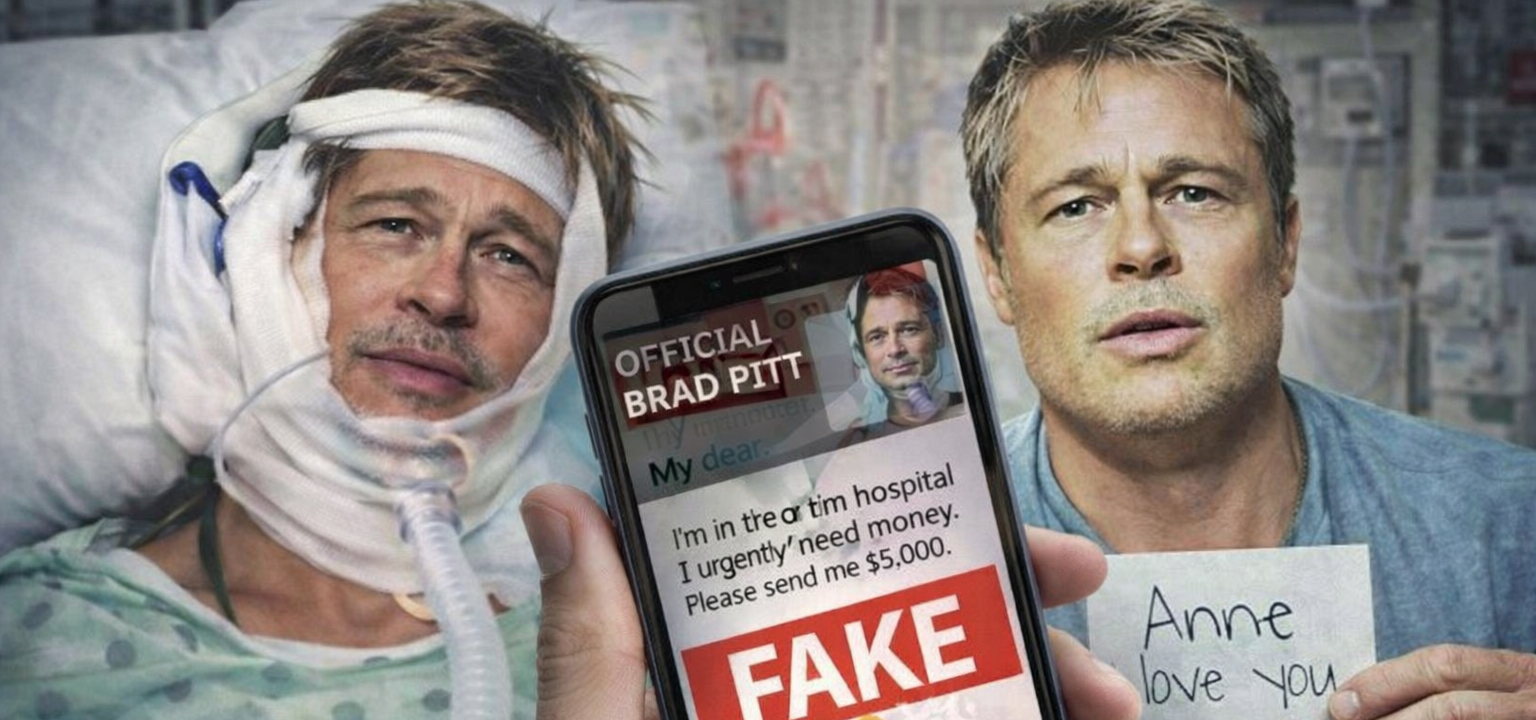
A recent case involving a French woman defrauded of several hundred thousand euros by an individual impersonating Brad Pitt has received widespread media attention. The perpetrator relied on prolonged exchanges, personalized content, and manipulated visual materials to sustain a credible relationship over several months. While this case has drawn public attention, it reflects a well-documented broader trend. According to the Federal Trade Commission, losses related to romance scams exceeded 1.1 billion dollars in 2023, with a steady increase in recent years. Research by Whitty and Buchanan (2022), published in Crime Science, further shows that these frauds affect an increasingly diverse range of victims, far beyond common stereotypes.
Understanding the effectiveness of romance scams
Romance scams rely on robust psychological mechanisms that have been widely studied in criminology and social psychology. Their effectiveness does not stem from individual vulnerability, but from a gradual construction process. The interaction often begins in a mundane way before evolving into a personalized and coherent relationship. The offender adapts their discourse, adjusts response timing, introduces credible biographical elements, and progressively establishes a climate of trust.
This process is based on a gradual commitment of the victim to the relationship, a narrative coherence that reduces the perception of inconsistencies, the mobilization of emotions such as attachment, concern, and urgency, and the emergence of cognitive dissonance when initial doubts arise.
The turning point: cognitive dissonance
Cognitive dissonance represents a critical stage, and likely one of the most decisive mechanisms in the persistence of the fraud. It reflects an internal tension between two incompatible realities: on one side, an emotionally invested relationship, and on the other, the possibility of deception. Acknowledging the scam involves far more than a rational reassessment. It means admitting an error, often financially costly, but above all emotionally significant.
At this stage, several barriers emerge. Feelings of guilt, the realization of having been manipulated, fear of judgment or misunderstanding from relatives, and the perception of having reached a point of no return all contribute to maintaining the relationship. This is compounded by a form of abrupt disillusionment that can be psychologically difficult to process.
In this context, continuing the interaction may paradoxically serve as a way to preserve internal consistency and avoid a significant emotional shock. It is precisely at this moment that disengagement becomes the most difficult, even though warning signs are the most evident. As the relationship progresses, decisions are no longer evaluated purely on a rational basis. They are embedded in an already invested relational framework, which explains why informed and socially integrated individuals can also become victims.
From interaction to trace
From a forensic perspective, these cases generate specific types of traces. Unlike traditional material evidence, the available elements consist primarily of digital interactions.
Written messages, audio recordings, images, and videos form a dataset that documents not only events but also an interaction. These elements allow for the analysis of the offender’s discourse structure, the rhythm of solicitations, the turning points leading to financial requests, and the strategies used to adapt to the victim’s reactions. The introduction of manipulated content, particularly through deepfake techniques, further complicates this analysis. Such materials enhance perceived credibility without constituting direct proof of identity. In practice, meaning does not emerge from isolated elements, but from how they connect and unfold over time.
Objectives and constraints of the investigation
Investigations into romance scams pursue several simultaneous objectives.
- The first concerns financial flows, with the aim of tracing transactions, identifying intermediary accounts, and, where possible, initiating asset recovery procedures.
- The second focuses on identifying the perpetrators. In many cases, these scams involve organized networks, with a division of roles between profile creators, conversation operators, and financial intermediaries.
- The third objective is to understand the modus operandi in order to support prevention efforts and improve detection capabilities.
These investigations are made particularly complex by several factors, including geographical fragmentation, the use of multiple identities, and reliance on dispersed technical infrastructures.
The central challenge of interpretation
One of the main challenges lies in interpreting the exchanges. Like any trace, digital communications only make sense within their context. A message cannot be understood independently of the relationship in which it occurs. It reflects not only the offender’s actions but also how the victim responds under the influence of manipulation. This requires a particularly rigorous analytical approach. The analysis must account for the chronology of interactions, the emotional context, identifiable manipulation strategies, and corroborating external elements. Without this contextualization, the risk of misinterpretation remains significant.
Towards a forensic science of interaction ?
These cases illustrate a broader evolution in the types of traces used in forensic science. Alongside traditional material and digital evidence, interactional traces are emerging, generated through technology-mediated relationships. Deepfakes, fake profiles, and scripted conversations do not represent a fundamental rupture. They extend existing manipulation strategies while increasing their credibility and scalability. The challenge for forensic science lies in integrating these new forms of traces into robust methodological frameworks capable of combining technical data with behavioral analysis.
Judicial challenges and perspectives
For legal practitioners, these cases raise specific issues. The legal qualification of the facts, the assessment of victim consent, and the evidentiary value of exchanges require a nuanced approach.
A first obstacle lies in underreporting. Victims still rarely file complaints, often due to shame, guilt, or fear of judgment. Data from the Federal Bureau of Investigation indicate that reported losses represent only a fraction of the actual phenomenon. Even when cases are reported, proceedings rarely lead to successful prosecutions. The transnational nature of these crimes, the use of fictitious identities, and the complexity of financial flows significantly limit both prosecutions and convictions.
Although data are abundant, their interpretation requires particular rigor. The objective is not to accumulate evidence, but to produce a coherent and scientifically grounded analysis. These developments call for stronger collaboration between investigators, analysts, and behavioral science experts in order to better address offences where evidence lies as much in interaction as in technical data.
Sources
Federal Trade Commission (2024). Consumer Sentinel Network Data Book 2023 – Romance scam losses. Available online:https://www.ftc.gov/reports/consumer-sentinel-network-data-book-2023
Whitty, M. T., & Buchanan, T. (2022). The online romance scam: Causes and consequences. Crime Science. Available online: https://crimesciencejournal.biomedcentral.com/articles/10.1186/s40163-022-00166-2
France Bleu (2025). Retour sur l’arnaque au faux Brad Pitt qui a coûté 830 000 euros à une internaute française. Available online: https://www.francebleu.fr/infos/faits-divers-justice/retour-sur-l-arnaque-au-faux-brad-pitt-qui-a-coute-830-000-euros-a-une-internaute-francaise-9633205
Le Monde (2025). Qui se cache derrière les arnaques sentimentales qui se multiplient en France ?
Available online: https://www.lemonde.fr
Federal Bureau of Investigation (2024). Internet Crime Report – Romance scams.
Available online: https://www.ic3.gov/Media/PDF/AnnualReport/2023_IC3Report.pdf