Archives

Analysis hair proteomic forensic Forenseek

Identifying an individual without DNA: Hair shaft proteomic analysis

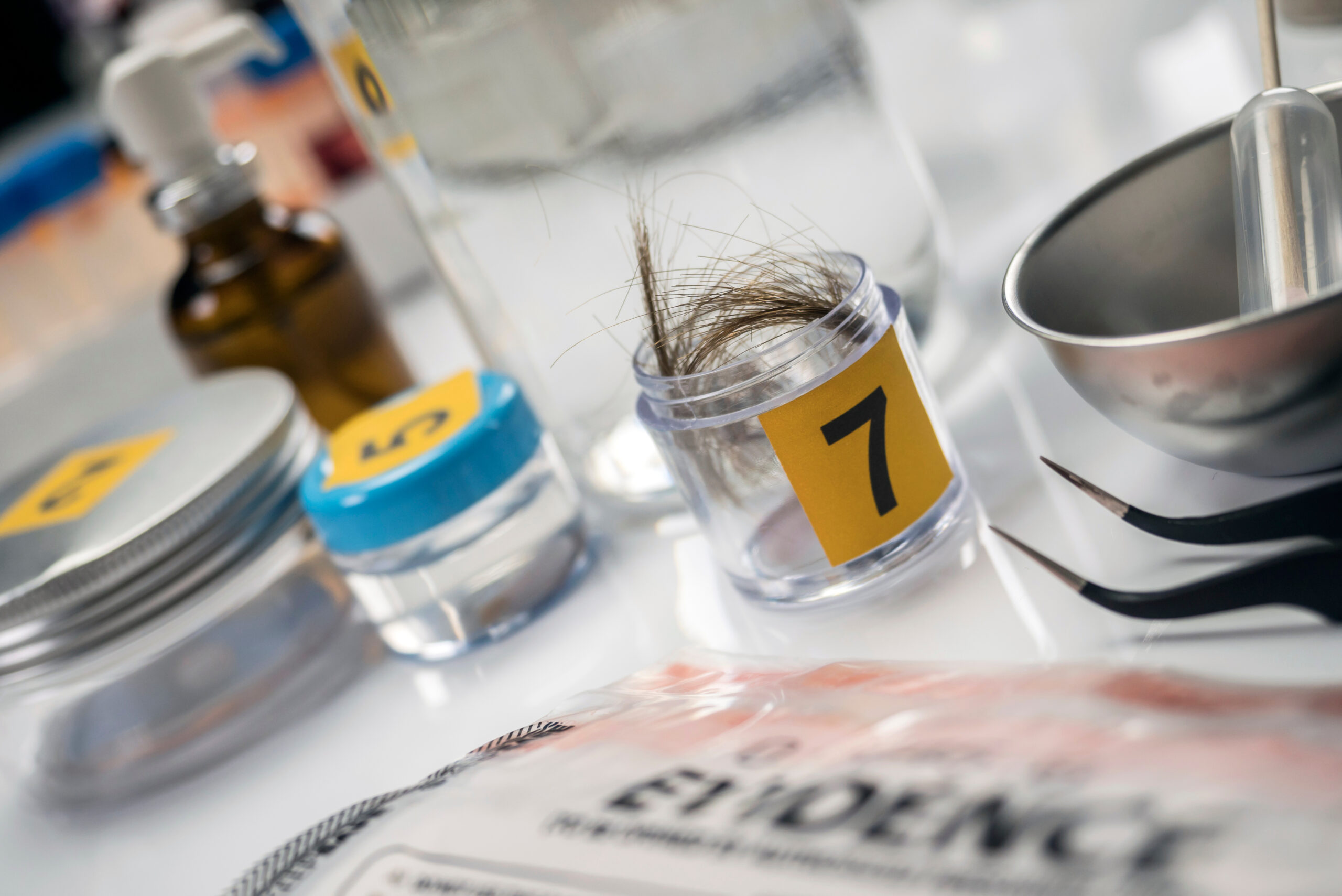
When a hair or body hair is recovered without its root from a crime scene, no conventional genetic analysis can be performed. Lacking nuclear DNA, this biological material has long offered only limited evidentiary value and could neither support the formal identification of an individual nor allow comparison with national DNA databases. Since few years, however, a major shift has occurred: hair proteomics, which exploits the proteins of the hair shaft to reveal individualizing markers. Thanks to advances in mass spectrometry, this approach now provides a new pathway for identification, particularly useful in cold cases or in situations where DNA is absent or unusable.

A biological evidence long underused

Hairs recovered from crime scenes are frequently rootless, preventing any STR (Short Tandem Repeat) analysis. Traditional alternatives (morphological examination or mitochondrial DNA analysis), offer only limited discriminating power [1][9]. In many cases, these items were classified as “weak traces,” with insufficient probative value. Yet a hair is biologically rich. It is composed mainly of keratins and other structural proteins that exhibit remarkable stability and resistance to heat, aging, and environmental degradation [1]. This robustness has led several research teams to explore another avenue: instead of seeking nuclear DNA where it is absent or degraded, why not rely directly on proteins, some of which vary between individuals?

Figure 1: Structure of a hair shaft. Source: cosmeticsdesign.com

From DNA to proteomics

This technological shift relies on high-resolution mass spectrometry (HRMS), combined with bioinformatic analysis of protein polymorphisms. Recent work has confirmed that hundreds of proteins can be identified in a single hair shaft. Among them, certain markers, SAPs (Single Amino acid Polymorphisms), directly reflect individual genetic variation [2]. A major study demonstrated that a single individual presents, on average, more than 600 detectable protein groups and more than 160 polymorphic markers, yielding Random Match Probabilities (RMP) on the order of 10⁻¹⁴ [2]. This protein signature therefore offers strong discriminating power, in some cases comparable to the informational value of mitochondrial DNA, while avoiding several well-known limitations of the latter [10].

Technical obstacles related to protein extraction, made difficult by the highly cross-linked structure of keratin, have also been partially overcome. Protocols combining controlled heat and reducing agents now allow more efficient and reproducible extraction [3]. These advances make the approach more mature and more suitable for forensic practice.

Analyse protéomique du cheveu pour une identification forensique. Article Forenseek.
Figure 2: Hair proteomic analysis workflow. Proteins extracted from the hair shaft are fragmented and then analyzed by mass spectrometry to identify individual peptide variations. Source: [2] Parker, G. et al., Deep Coverage Proteome Analysis of Human Hair Shafts, Journal of Proteome Research, 2022.

Concrete opportunities for investigations

Hair-shaft proteomics significantly enhances the usefulness of hair traces in investigations. In cold cases, hairs preserved for decades can now provide individualizing information, even when nuclear DNA was unusable at the time of the original analysis [5]. In extreme contexts (fire scenes, carbonized remains, or highly degraded traces), proteins often persist where DNA has degraded, making them particularly valuable [5][6].

In recent investigations (sexual assaults, abductions, violent incidents, close-contact events), head or body hairs without roots recovered from clothing, vehicles, or victims can now contribute to establishing associations or excluding individuals. Even when it does not yield a formal identification, the protein signature may narrow the suspect pool, confirm or refute an investigative hypothesis, and support evidential assessments presented to judicial authorities [4]. From a legal standpoint, this method must be understood as a probabilistic approach, similar in principle to mitochondrial DNA analysis but based on more stable markers [7]. When integrated carefully, it may become decisive in investigative orientations, the re-examination of older cases, or situations previously left unresolved due to lack of nuclear DNA or usable fingerprints.

Technical limits and challenges

Despite its potential, hair-shaft proteomics remains a technique still in maturation. The first limitation lies in the protocols themselves: protein extraction remains challenging due to the resistant structure of the hair shaft, and full standardization has not yet been achieved [3]. A second challenge is the creation of sufficiently large population databases to compute robust Random Match Probabilities [4]. Inter-laboratory validation, essential before any use in judicial contexts, requires testing on hairs from individuals of different populations, ages, environments, and storage conditions [4][6].

Legal integration also presents challenges. Judges and attorneys will need clear explanations of this emerging probabilistic evidence. Classical admissibility requirements (reliability, reproducibility, methodological transparency, statistical robustness), apply fully [7]. To date, no international standard formally regulates the procedure, although preliminary work is underway [8].

Towards standardization and operational integration?

The outlook for the coming years is particularly promising. Several centres, notably Murdoch University and ChemCentre near Perth, Australia, are working on protocol standardization and the development of diverse reference databases [5][6]. Advances in mass spectrometry and bioinformatic tools now make possible a partial automation of analyses and more seamless integration into routine forensic laboratory workflows. For investigators, police officers, magistrates and forensic experts, this evolution requires adapting collection and preservation practices. From now on, any rootless hair should be systematically collected and retained. Even very small or very old samples may contain an exploitable protein signature. This shift in perspective could transform the re-evaluation of cold cases, fire-scene examinations, and the most complex investigations.

Conclusion

Hair-shaft proteomics represents one of the most promising advances of the coming years in forensic identification. By restoring value to traces long considered underexploited, it offers a reliable and robust alternative when DNA is absent, degraded or otherwise unusable. Although judicial integration still requires validation, standardization and appropriate communication, early results clearly indicate that this approach could play a decisive role in complex investigations, degraded scenes and unresolved cases.

References :

[1] Adav, S.S., Human Hair Proteomics: An Overview, Science & Justice, 2021.
[2] Parker, G. et al., Deep Coverage Proteome Analysis of Human Hair Shafts, Journal of Proteome Research, 2022.
[3] Liu, Y. et al., Individual-specific proteomic markers from protein amino acid polymorphisms, Proteome Science, 2024.
[4] Smith, R.N. et al., Forensic Proteomics: Potential and Challenges, Proteomics, 2023.
[5] Murdoch University – Western Australia, Hair Protein Identification Project (2024–2025).
[6] ChemCentre (Western Australia Government), World-first Forensic Proteomics Research Program, 2024.
[7] Henry, R. & Stoyan, N., The Admissibility of Proteomic Evidence in Court, SSRN, 2020.
[8] ISO / ASTM – Guidelines on Forensic Biology & Novel Analytical Methods, 2022–2024.
[9] Anslinger, K., Hair Evidence in Forensic Science, Wiley, 2019.
[10] Budowle, B., Mitochondrial DNA in Forensic Identification, Elsevier, 2018.

Towards a revolution in post-mortem forensic imaging

How can an internal lesion go unnoticed during autopsy yet may have potentially caused death? In forensic medicine, understanding internal trauma is essential to reconstructing the sequence of a violent event. Among such injuries, those involving the vertebral artery present a major challenge. Subtle and often concealed by bone structures, they frequently escape traditional examination methods. A recent technological breakthrough in forensic imaging offers a promising approach: combining fluoroscopy and micro-computed tomography (micro-CT) to analyze post-mortem vascular injuries with unprecedented precision.

Key artery, difficult access

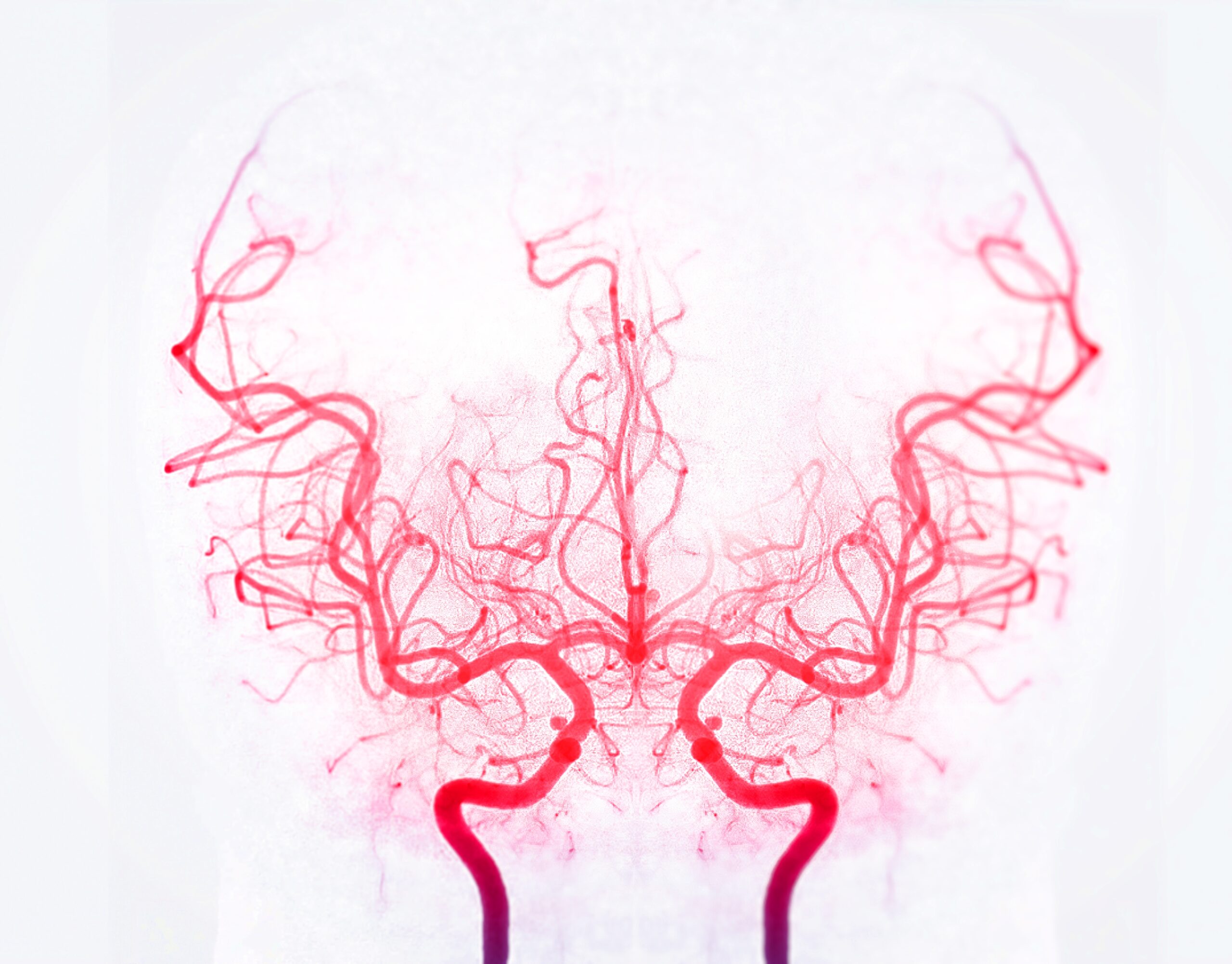
The vertebral artery supplies vital regions of the nervous system, including the brainstem, cerebellum, and posterior areas of the brain. Even a minor injury can trigger a stroke, a rapid neurological collapse, or sudden death. Its anatomical pathway, deeply embedded within the cervical spine, makes it particularly difficult to explore. In a forensic context, a lesion affecting this artery represents a critical clue when analyzing a penetrating neck wound, often revealing a potentially lethal intent.

Forensic imaging to observe real-time blood flow

The vertebral artery supplies vital regions of the nervous system, including the brainstem, cerebellum, and posterior areas of the brain. Even a minor injury can trigger a stroke, a rapid neurological collapse, or sudden death. Its anatomical pathway, deeply embedded within the cervical spine, makes it particularly difficult to explore. In a forensic context, a lesion affecting this artery represents a critical clue when analyzing a penetrating neck wound, often revealing a potentially lethal intent.

Micro-CT: diving into the heart of the lesion

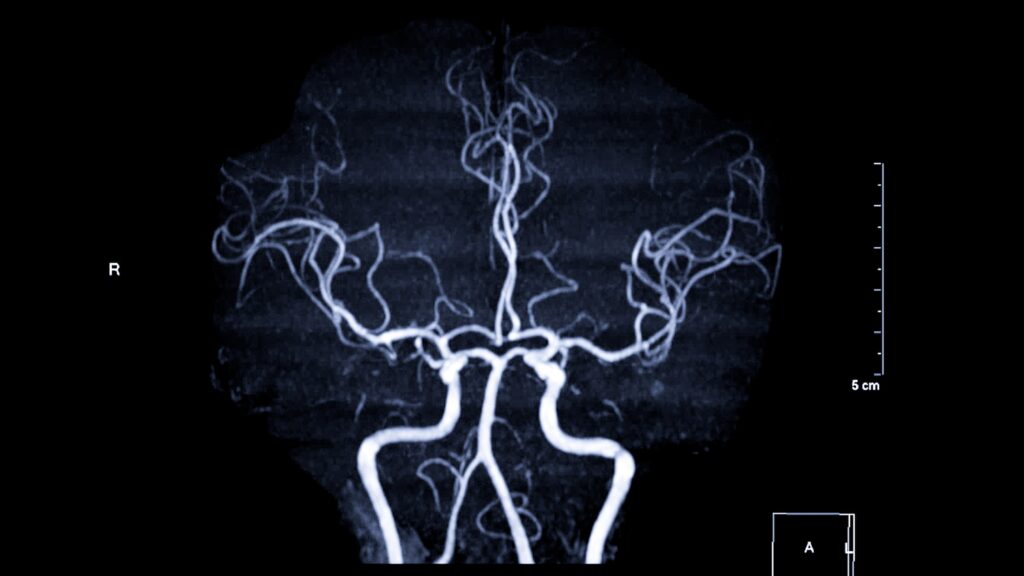
To overcome this limitation, researchers have turned to micro-computed tomography (micro-CT), a very high-resolution imaging technique. The sample is rotated during the acquisition of thousands of radiographic images, which are then reconstructed into a digital 3D model. This process reveals otherwise invisible details such as arterial wall tears, thrombi, dissections, or partial ruptures. These reconstructions allow for virtual dissections from multiple angles without altering the body, ensuring a high level of reproducibility, an invaluable feature in forensic investigations.

A standardized method serving both justice and medicine

The protocol developed by Secco and colleagues relies on ex situ imaging, meaning that the examination is performed on an artery extracted from the body. This approach overcomes several obstacles, such as advanced decomposition, previous surgery, complex trauma, or movement artifacts. With the injection of a contrast agent, the vascular network becomes clearly visualized, allowing for precise and stable documentation. These high-quality images serve as robust evidence admissible in court and represent a valuable resource for medical teams involved in planning neurosurgical or trauma-related procedures.

An educational and scientific tool

Beyond their diagnostic value, 3D reconstructions and fluoroscopic videos serve as outstanding educational tools. They allow for a strikingly realistic visualization of injury mechanisms and a deeper understanding of the biomechanics of penetrating trauma. This refined comprehension of the forces at play helps not only researchers characterize vascular lesions, but also engineers design more effective protective equipment and forensic experts accurately reconstruct the circumstances surrounding a violent act.

Towards a new standard in forensic medicine

Born from close collaboration between radiologists, pathologists, engineers, and chemists, this imaging protocol represents a major step forward in forensic practice. The growing accessibility of micro-CT equipment suggests its forthcoming integration into routine autopsies. With the continuous improvement of imaging technologies in terms of resolution, speed, and multi-contrast capacity, the prospect of non-invasive post-mortem vascular examinations is becoming increasingly realistic. In the long term, this method could be extended to other arterial regions (carotid, subclavian, intracranial), thereby deepening our overall understanding of vascular trauma.

Conclusion

At the crossroads of technology and forensic science, this approach combines precision, rigor, and innovation. By providing a three-dimensional and reproducible reading of internal injuries, it transforms the way stab wounds involving the vertebral artery are analyzed. This is a major advancement, serving both judicial truth and scientific knowledge, and it paves the way for a new generation of autopsies that are finer, more reliable, and better documented.

References  :

Bioengineer.org. (2024). Detecting Vertebral Artery Stab Wounds with Imaging. Read here.

Secco, L., Franchetti, G., Viel, G. et al. Ex-situ identification of vertebral artery injuries from stab wounds through contrast-enhanced fluoroscopy and micro-CT. Int J Legal Med (2025). Read here.

Medscape. (2024). Vertebral Artery Anatomy. Read here.

Post-traumatic symptoms in individuals who were victims of childhood sexual abuse

The clinical and judicial assessment of children who are victims of sexual abuse requires an in-depth understanding of child development and of the manifestations of post-traumatic symptoms that are typical of childhood and adolescence. Recognizing the specific symptom patterns in children makes it possible to distinguish traumatic manifestations from normal developmental variations, within an approach that must necessarily respect the child’s world.

Respecting and building upon the child’s world

Working with children involves using mediating tools that correspond to their developmental world, employing language and tone appropriate to their age, and exploring their personal interests. Beyond the therapeutic alliance that this fosters, a child’s interests also serve as indicators of their developmental level, environment, and daily organization. These are valuable cues for forensic evaluation.

For instance, consider an 8-year-old child in second grade who, when simply asked about his favorite activities, mentions playing a Paddington game on a tablet. When gently questioned about the tablet and the game, through prompts such as “What do you like about this game?” or “Can you tell me more about this tablet?”, the child explains that the tablet belongs to his father, that he does not have one of his own, and that he is allowed to play on it on Wednesdays and weekends for 30 minutes in the family living room. He says he likes the little bear for his adventures, and is then asked to describe one of his favorite moments.

Respecting the child’s world means striving to avoid the risk of retraumatization during the forensic examination.

The child’s responses allow the evaluator to assess several aspects: an interest and activity consistent with their developmental age, a family framework appropriate for their age regarding screen use, and the child’s ability to construct a narrative (use of pronouns and tenses, spatial and chronological structuring, distinction between imagination and reality, etc.). The interpretation will naturally differ if the child plays a game such as Call of Duty, a war-themed game, rated 16+ or 18+ depending on the version, if the 8-year-old has a screen in their bedroom, or if the subject is instead a 15-year-old adolescent.

Finally, and in my view, most importantly, respecting the child’s world means striving to prevent the risk of retraumatization during the forensic examination. Creating an environment that signals to children they are welcome is essential: children’s books in the waiting area, toys, comfortable seating, and the freedom to move around. Advising caregivers to bring a comfort object or soft toy (doudou) is also important. Returning to the question of post-traumatic symptomatology in children, this issue takes on a particular resonance in light of recent cases such as that of Joël Le Scouarnec, in which 299 identified victims exhibited significant post-traumatic symptoms despite an apparent absence of conscious memories of the assaults committed under anesthesia.

The theoretical framework of sexual psychotrauma

The psyche refers to the entirety of conscious and unconscious mental phenomena: cognitive processes (thought, memory, perception), affective processes (emotions, feelings), psychological defense mechanisms, fantasy and imaginative activity, and personality structures. A traumatic event represents a violent intrusion into the psyche, exceeding the mental apparatus’s capacity for processing and integration what is referred to as traumatic breach (effraction traumatique).

A child who has been sexually abused often remains in denial for a long time

Traumatic breach in a child who has been sexually assaulted presents particular characteristics. Louis Crocq (1999) defines psychotrauma as “a phenomenon involving a breach of the psyche and the overwhelming of its defenses by violent stimuli linked to the occurrence of an event that is aggressive or threatening to the life or integrity (physical or psychological) of an individual who is exposed to it as a victim, witness, or actor.” In cases of sexual assault, this breach takes on a dimension that is beyond the child’s psychological comprehension. As Tardy (2015) points out, “A child who has been abused often remains in denial for a long time, a defense mechanism aimed at avoiding the realization that the adults supposed to protect them were, in fact, the aggressors, which would be too distressing to acknowledge.”

The repetition syndrome, as described by Crocq (2004), is defined as “a set of clinical manifestations through which the traumatized patient involuntarily and repeatedly relives their traumatic experience with great intensity.” Thus, in children and adolescents, as in adults, numerous symptoms related to repetition or avoidance of repetition can be observed.

Age-specific symptoms: a developmental approach

Traumatic manifestations in younger children:

They are characterized by poorly integrated intrusive recollections, consisting mainly of intense sensations and emotions, as described by Eth and Pynoos (1985) and by Pynoos, Steinberg et al. (1995). Beyond ordinary childhood play, specific play behaviors linked to the traumatic event may emerge. These post-traumatic play patterns represent a major clinical indicator. Fletcher (1996) describes them as “repetitive, involving a central element connected, or sometimes not connected, to the event, less elaborate and imaginative than typical play, generally emotionally charged (anxiety), rigid, and joyless.” Such play loses its normal creative and exploratory function, becoming compulsive and stereotyped.

Neurovegetative hyperarousal and avoidance are common post-traumatic symptoms. In children, they manifest as anxious hypervigilance, exaggerated startle responses, and sleep disturbances with frequent awakenings. Avoidance may take the form of social withdrawal, emotional numbing, and developmental regression affecting toilet training, sleep, or the reemergence of early childhood fears. In his longitudinal study of 166 sexually abused children, Putnam (2003) found that 40% developed hyperactivity symptoms within six months following disclosure, compared to 8% in the general population. The author interprets this hyperactivity as an adaptive flight response to intrusive post-traumatic stimuli.

Some children develop overly smooth, inconspicuous behaviors that draw no attention at all.

Post-traumatic manifestations in children often display little-known specificities that make their identification particularly complex. Unlike adults, children frequently present with nonspecific symptoms according to developmental research, especially younger children (under six years old).

From the earliest age, disturbances in body awareness and bodily experience constitute a key clinical marker: restriction in clothing choices or adoption of sexualized clothing, extreme washing behaviors, difficulties with nudity, poor bodily investment, a devalued image of their body or of certain body parts, disturbances in tactile relationships, and avoidance of affectionate gestures. These bodily manifestations often go unrecognized because they may appear trivial or be attributed to other causes. In contrast to the agitation sometimes observed, some children develop overly smooth, inconspicuous behaviors that draw no attention at all. This inhibited presentation, characterized by excessive compliance and extreme conformity, paradoxically constitutes a warning sign. Research emphasizes the importance of “keeping in mind that some of these behaviors are common in this age group. Thus, symptoms of neurovegetative hyperarousal are expressed more as an intensification of behaviors already present in the child, sometimes difficult for significant others to notice” (Eth & Pynoos, 1985; Pappagallo, Silva & Rojas, 2004).

Older children (6 to 12 years old):

In addition to the previously described symptoms, children in this age group may present somatic complaints (headaches, abdominal pain, etc.) which, due to their nonspecific nature, are not always associated with sexual trauma. Nevertheless, these somatic manifestations are important clinical indicators within a comprehensive assessment.

In school-aged children, intrusive memories become more structured but may include protective cognitive distortions that minimize the severity of the event. Post-traumatic play also evolves: it becomes “more elaborate and sophisticated, involving transformation of certain aspects of the event, the introduction of symbolic dangers (monsters), and the inclusion of other people (peers)” (Fletcher, 1996). These transformations reflect an attempt at more mature psychological processing. School functioning often becomes significantly affected, with attention difficulties, declining academic performance, anxiety-related school refusal, as well as diminished self-esteem and reduced trust in caregivers. Frequent somatic symptoms may also lead to school absenteeism.

Adolescence :

Drawings and post-traumatic play become rare, replaced by other modes of expressing distress. Manifestations resemble those observed in adults (Yule, 2001; Rojas & Lee, 2004), with recurrent memories, flashbacks, and pronounced emotional numbing, that is, a marked reduction in the intensity and range of emotional expression. Emotional numbing manifests through diminished or fixed facial expressions, a monotone voice, dull or inexpressive eyes, inappropriate or absent emotional responses, and a reduced capacity to feel joy, sadness, or anger. It may lead to difficulties forming emotional bonds, impoverished interpersonal relationships, and an impression of “coldness” perceived by others. Addictive behaviors may emerge, involving either substances (alcohol, drugs, toxic products) or activities (video games, pornography, sexual behaviors, gambling), along with risk-taking behaviors (speeding, dangerous stunts, delinquent acts).

The assessment must distinguish between normal sexual exploration and pathological manifestations.

Specific symptoms of sexual trauma

Disturbances in body awareness and bodily experience are characteristic and represent a specific marker of physical and sexual trauma. Overall, the sexualization of language and behaviors is a strong indicator, particularly when the change appears suddenly.

Problematic Sexual Behaviors (PSB) represent a specific manifestation that is especially important to identify. According to the ATSA (Association for the Treatment of Sexual Abusers), PSB are defined as “sexual behaviors displayed by a child that are considered inappropriate for their age or level of development” and that may be “harmful to the child themselves or to other children involved.”

PSB are defined in children up to age 12, and their assessment requires a solid understanding of child and adolescent sexual development, as well as the use of age-appropriate language. This definition follows a developmental approach in which assessment must distinguish normal sexual exploration from pathological manifestations. According to Chaffin et al. (2006), sexual behaviors are considered problematic when they meet one or more of the following six criteria: they occur with “high frequency or intensity,” “interfere with the child’s social or cognitive development,” “involve force, coercion, or intimidation,” are “associated with physical injury or emotional distress,” “occur between children of different developmental stages,” and “persist despite adult intervention.” PSB may include sexual touching of other children, excessive masturbation, sexual knowledge that is inappropriate for the child’s developmental stage, or hypersexualized behaviors.

Symptoms in adulthood:

Longitudinal studies demonstrate the persistence of symptoms into adulthood. A British study of 2,232 18-year-old participants revealed an increased risk of psychiatric disorders: 29.2% presented with major depression, 22.9% with conduct disorders, 15.9% with alcohol dependence, 8.3% with self-harming behaviors, and 6.6% with suicide attempts.

The impact on intimate and marital life is particularly well documented. According to Gérard (2014), nearly 60% of adults who were sexually abused in childhood experience relationship isolation, and 20% have never been able to form a long-term partnership. Relational difficulties are characterized by a paradoxical oscillation between excessive mistrust and dependence, polymorphic sexual disturbances (“hypersexuality or lack of libido, absence of pleasure, pain, risky sexual behaviors”), and the search for a “repairing” partner that often leads to intense frustration. Among women, specific menstrual disturbances are frequently reported from puberty onward: irregularities, pain, amenorrhea, and feelings of disgust.

In forensic evaluations of adults who were sexually abused as children, many of the same symptoms observed in childhood may reappear: persistent masturbatory behaviors originating around the time of the abuse or its disclosure, avoidant somatizations, and attention difficulties. Collecting these clinical indicators can help establish coherence with the events described in the context of psychological expertise. Moreover, for the victim, such analysis can provide meaning to behaviors that were previously misunderstood or socially disapproved of.

It is not necessary to remember in order to suffer from post-traumatic symptoms

The Scouarnec case: symptoms without memory

The Scouarnec case illustrates perfectly the issue of post-traumatic symptoms in the absence of conscious memory. The 299 identified victims, mostly minors who were assaulted under anesthesia, exhibited symptomatic manifestations even before the facts were revealed by investigators. Amélie Lévêque testified: “I actually had so many aftereffects from that operation that were there, but no one could explain them.” These sequelae included medical phobias, eating disorders, and “the diffuse feeling that something abnormal had happened.” Expert witnesses at the trial confirmed that “it is not necessary to remember in order to suffer from post-traumatic symptoms.

Jean-Marc Ben Kemoun, child psychiatrist and forensic doctor, explains this phenomenon as the “memory of the body”: “The body speaks, and the less we are consciously aware of a painful or stressful event, the stronger its impact on the body.” Even in an altered state of consciousness, the traumatic impact persists, generating long-lasting symptoms in the absence of explicit memory.

Clinical implications and perspectives

This clinical reality underscores the importance of a multidimensional assessment that respects developmental particularities. Forensic evaluation must include the observation of play and interests according to age, assessment of social and academic adjustment, and evaluation of the individual’s ability to project themselves positively into the future. The Scouarnec case demonstrates that the absence of conscious memories in no way excludes the existence of trauma and its lasting consequences. This understanding is essential for a symptom-based clinical assessment, particularly in young children or in individuals who experienced sexual trauma before the age of six.

Bibliographie :

Crocq, L. (2004). Traumatismes psychiques : Prise en charge psychologique des victimes. Paris : Masson.

Tardy, M.-N. (2015). Chapitre 8. Vécu de l’enfant abusé sexuellement. Dans M.-N. Tardy (dir.), La maltraitance envers les enfants. Les protéger des méchants (pp. 123-150). Paris : Odile Jacob.

Drell, M. J., Siegel, C. H., Gaensbauer, T. J. (1993). Post-traumatic stress disorder. Dans C. H. Zeanah (dir.), Handbook of infant mental health (pp. 291-304). New York : Guilford Press.

Fletcher, K. E. (1996). Childhood posttraumatic stress disorder. Dans E. J. Mash & R. A. Barkley (dir.), Child psychopathology (pp. 242-276). New York : Guilford Press.

Frank W. Putnam, Ten-Year Research Update Review: Child Sexual Abuse, Journal of the American Academy of Child & Adolescent Psychiatry, Volume 42, Issue 3, 2003, Pages 269-278,

Pynoos, R. S., Steinberg, A. M., Wraith, R. (1995). A developmental model of childhood traumatic stress. Dans D. Cicchetti & D. J. Cohen (dir.), Developmental psychopathology (Vol. 2, pp. 72-95). New York : Wiley.

Scheeringa, M. S., Zeanah, C. H. (2003). Symptom expression and trauma variables in children under 48 months of age. Infant Mental Health Journal, 24(2), 95-105.

Yule, W. (2001). Post-traumatic stress disorder in the general population and in children. Journal of Clinical Psychiatry, 62(17), 23-28.

Gérard, C. (2014). Conséquences d’un abus sexuel vécu dans l’enfance sur la vie conjugale des victimes à l’âge adulte. Carnet de notes sur les maltraitances infantiles, 3, 42-48. DOI : 10.3917/cnmi.132.0042

Chaffin, M., Letourneau, E., Silovsky, J. F. (2002). Adults, adolescents, and children who sexually abuse children: A developmental perspective. Dans J. E. B. Myers, L. Berliner, J. Briere, C. T. Hendrix, C. Jenny, & T. A. Reid (dir.), The APEAC handbook on child maltreatment (2e éd., pp. 205-232). Thousand Oaks, CA : Sage.

Chaffin, M., Berliner, L., Block, R., Johnson, T. C., Friedrich, W. N., Louis, D. G., … & Silovsky, J. F. (2006). Report of the ATSA task force on children with sexual behavior problems. Child Maltreatment, 11(2), 199-218.

Gury, M.-A. (2021). Pratique de l’expertise psychologique avec des enfants dans le cadre judiciaire pénal. Psychologues et Psychologies, 273, 24-26.

France Info (6 mars 2025). Procès de Joël Le Scouarnec : une affaire “entrée par effraction” dans la vie de nombreuses victimes, sans souvenirs d’actes subis sous anesthésie.

France 3 Bretagne (14 avril 2025). Procès le Scouarnec : “même sans souvenirs, on peut souffrir de troubles post-traumatiques”. consultable ici.

Pôle fédératif de recherche et de formation en santé publique Bourgogne Franche-Comté (2025). Aide au diagnostic et au repérage ajusté du comportement sexuel problématique chez l’enfant. Projet de recherche AIDAO-CSP.

Reconstruction of torn documents

When a document has been torn or shredded, the investigator is faced with a puzzle that has lost its box, its reference image, and sometimes even a portion of its pieces. Yet, the information contained within those fragments can alter the course of a case: a single figure in a contract, a name in a table, or a handwritten note in the margin. The question is therefore not merely “can it be reconstructed?”, but rather “can it be done reliably, traceably, and fast enough to be of use to the investigation?”

Why reconstruction is challenging

In forensic practice, fragments are rarely clean or uniform. They vary in shape, size, paper texture, ink density, and orientation. When several documents have been destroyed together, the fragments intermingle and create visual ambiguities: two edges may appear to fit when they do not, two different fonts may look similar, and uniform areas, blank backgrounds or low-detail photographs, provide almost no clues. So-called edge-matching approaches, which seek continuities along borders and patterns, work fairly well for small sets. But as the number of fragments grows, the number of possible combinations increases exponentially, and these methods struggle to discriminate between competing hypotheses.

The idea: harnessing randomness to explore better

Stochastic optimization offers an alternative way to approach the problem. Rather than attempting to reach the perfect configuration immediately, the algorithm generates plausible assemblies, evaluates them, and occasionally accepts “imperfect” choices in order to continue exploring the solution space. This probabilistic strategy continuously alternates between two complementary phases: exploration, which searches new pathways to avoid dead ends, and exploitation, which consolidates promising insights already discovered. In practice, each proposed assembly is assigned a score based on visual continuity (alignment of letters, extension of strokes, texture and color matching). If coherence improves, the hypothesis is adopted; if it deteriorates, it may still be tolerated for a while to test whether it leads to a better configuration later on. This flexible logic distinguishes the method from more rigid approaches such as simulated annealing or certain genetic algorithms. It adapts better to the real variability of documents and fragment mixtures, and it leaves room for light operator interaction when needed.

What the experiments show

The authors report large-scale tests conducted on more than a thousand heterogeneous torn documents (office printouts, handwritten pages, images, and mixed-content sheets). The results converge toward an observation intuitive to any expert: the richer a document is in content (dense text, grids, or patterns), the faster and more accurate the reconstruction process becomes. Conversely, uniform areas require more iterations because they provide few visual anchor points. In the most challenging cases, occasional operator input, such as confirming a match or indicating the probable orientation of a fragment, is sufficient to guide the algorithm without compromising overall reproducibility.

Validation through a benchmark challenge

To evaluate the method under conditions close to real-world scenarios, the researchers tested it on fragment datasets inspired by the DARPA Shredder Challenge, a well-known benchmark in which participants attempt to reconstruct documents shredded into very narrow strips or confetti-like pieces. The method successfully reconstructed coherent and readable pages where other techniques either failed or stalled. This is more than an academic result: it demonstrates that the algorithm performs robustly when faced with investigative constraints, including numerous, intermingled, and occasionally damaged fragments resulting from handling or scanning.

Relevance to forensic practice

Beyond raw performance, the value of such a method lies in its integration into a demonstrable forensic workflow. The initial reconstruction phase, typically the most time-consuming, can be largely automated, freeing analysts to focus on content examination. More importantly, the approach lends itself to precise traceability: a log of tested hypotheses, retained parameters, acceptance thresholds, and intermediate captures. These records help document the chain of custody, justify technical choices before a magistrate, and, when necessary, reproduce the procedure in full transparency.

In laboratory settings, integration is facilitated by adopting rigorous acquisition practices such as high-resolution scanning, neutral backgrounds, color calibration, and systematic archiving of source files. A preliminary physical sorting of fragments, by paper weight, hue, or the presence of images, also enhances robustness by reducing ambiguities at the input stage.

Limitations and avenues for improvement

As with any optimization method, performance depends heavily on proper parameter tuning. Thresholds that are too strict will hinder exploration, while overly permissive criteria make it erratic. Highly mixed batches, comprising visually similar documents with identical layouts or fonts, remain difficult and may require occasional human intervention to prevent mismatches. Micro-fragments produced by high-grade shredders represent another major challenge: the smaller the visible surface, the fewer cues the algorithm can exploit. Future progress is expected in improving robustness against scanning artifacts, automating pre-sorting steps, and, more broadly, establishing standardized performance metrics (such as edge-matching accuracy, page completeness, and computation time) to facilitate fair comparison between methods.

Conclusion

Reconstructing torn documents is no longer solely a matter of expert patience and intuition. Stochastic optimization provides an exploration engine capable of handling large volumes, managing uncertainty, and producing usable assemblies. By combining automation, traceability, and expert supervision when needed, this approach transforms an “impossible puzzle” into a systematic procedure, serving the purposes of material evidence, intelligence gathering, and the preservation of damaged archives.

References :

Textile fibers as tools to understand criminal activity

The recurring question in many criminal investigations is undoubtedly the following: what really happened? This seemingly simple question is often difficult to answer, even though both the tactical and scientific aspects of modern criminal investigations benefit from cutting-edge technologies. Added to this complexity are cases in which the victim is deceased, the suspect provides incomplete statements, or several suspects or witnesses offer contradictory versions of events. Investigators then have no choice but to turn to traces and physical evidence that may shed light on the modus operandi of the crime.

Activity as a key concept

The unfolding of a criminal act often involves an intense level of activity that sharply contrasts with the routine activities of daily life. Taking, for instance, a case of manual strangulation, the criminal act is likely to involve an initial struggle, followed by strangulation leading to death, and possibly the movement of the body in an attempt to conceal the crime. Such activity inevitably generates multiple points of contact between victim and perpetrator, resulting in the transfer of traces, as described by Edmond Locard in his Treatise on Criminalistics.

Verifying the presence or absence of traces is the first essential step in any criminal investigation. This preliminary search can already provide valuable clues to suggest a criminal act or the suspect’s presence at the scene. However, not all traces are immediately visible—examples include touch DNA or microtraces. Relevant sampling can later yield additional information through laboratory analyses. It should nevertheless be remembered that the absence of traces does not necessarily indicate an absence of contact, and conversely, the presence of traces may sometimes be legitimate.

Attempting to understand the modus operandi of a crime requires examining traces not merely in terms of their presence or absence, but rather in relation to their quantity and/or distribution. In the case of textile fibers, forensic literature has shown that intense and/or repeated contact—as occurs during a criminal act—results in the transfer of a greater number of fibers than ordinary, legitimate contact in daily life. As for the location of these fibers, it is often linked to the area where the most intense activity occurred, such as the neck region in cases of manual strangulation. The level of activity during the criminal event can therefore be inferred from both the quantity and distribution of transferred textile fibers.

Expertise de fibres en police scientifique - Forenseek

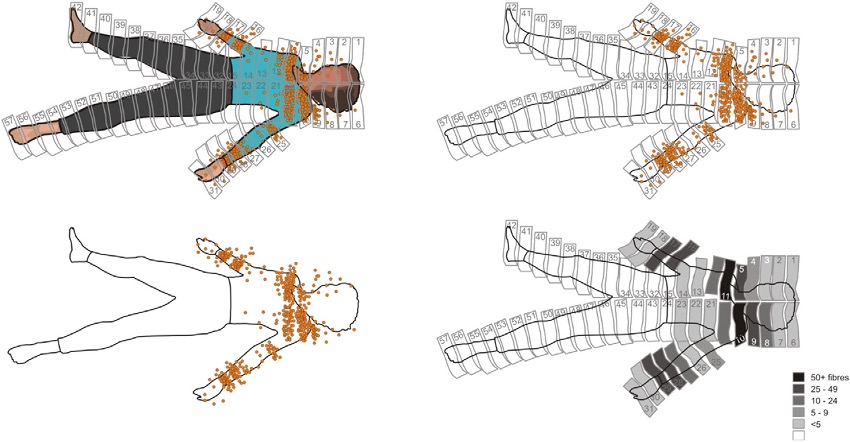
Different ways of representing the distribution of fiber traces on the victim’s body, used to illustrate the fiber examination report and facilitate understanding of contact areas. The colored image (top left) represents the actual crime scene photograph. The three other images show a schematic version of the body derived from that photograph. The position and density of the fiber traces can be represented using small colored symbols (here, orange dots) or by coloring the adhesive tape areas according to a graded color scale. © 2015 The Chartered Society of Forensic Sciences. Published by Elsevier Ireland Ltd. All rights reserved

The absence of traces does not always indicate the absence of contact, and the presence of traces may also have a legitimate origin.

Microscopic textile fiber traces

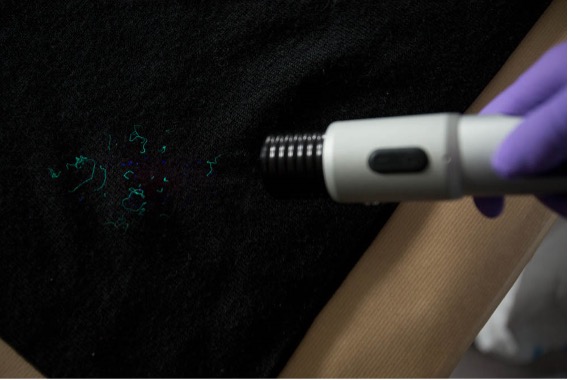
Textile fibers—microscopic entities and the fundamental components of textile materials—are generally present as protruding elements on the surface of clothing, from which they can be transferred through contact. The exchange of microscopic fiber traces between victim and perpetrator typically occurs through friction between their garments, particularly in areas of intense or repeated contact. It should be noted that fibers can also be transferred onto other substrates such as skin or hair. The exchanged fiber traces thus serve as microscopic evidence that contact has taken place—they simply await to be uncovered!

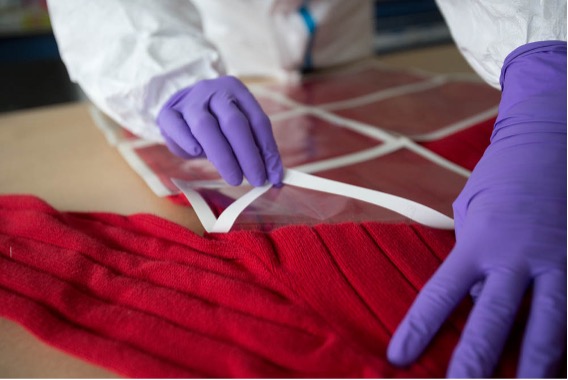
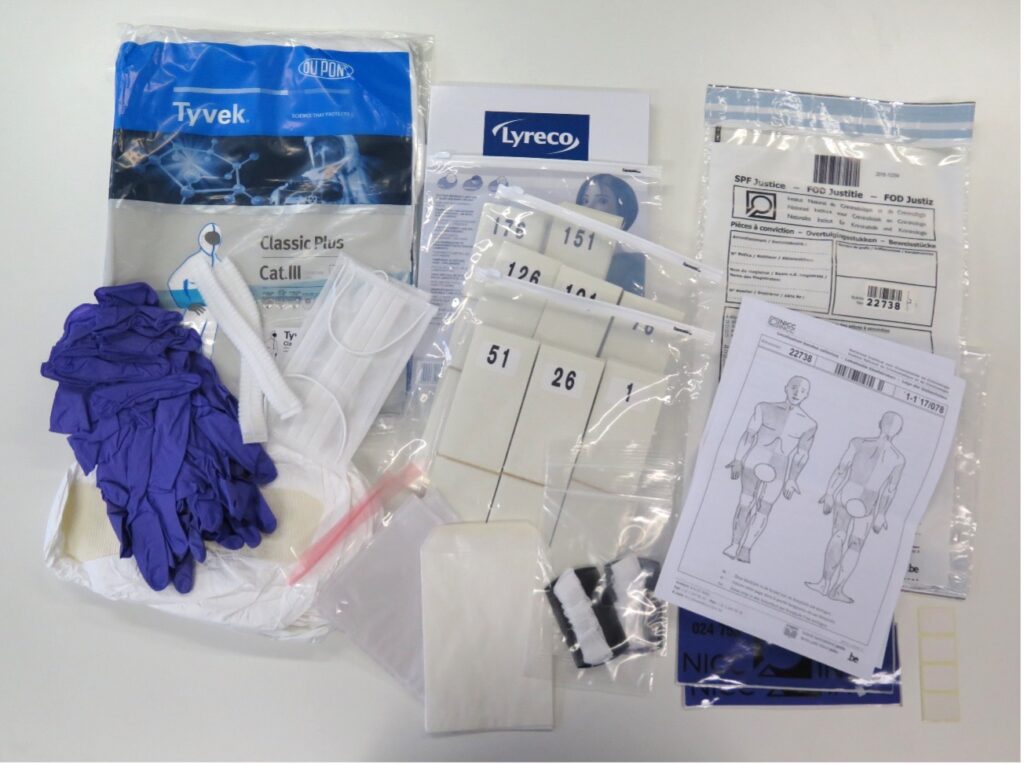
Microscopic textile fiber traces are usually invisible to the naked eye and therefore require systematic sampling. The most widely used collection method in Europe is the application of adhesive tapes over the entire surface likely to bear traces—a technique known as taping or tape-lifting. The manner in which adhesive tapes are applied depends on the working conditions and the objective of the collection. A “zonal” application (each adhesive tape is dabbed multiple times to cover an area larger than its own dimensions) may be considered sufficient when the objective is to preserve traces quickly, or when the garment has already been heavily handled—for instance, by emergency personnel. Conversely, if precise localization of traces is required, the ideal method is the “1:1” technique (each adhesive tape is applied once only to cover an area equivalent to its own size, with adjacent tapes placed edge to edge to cover a wider surface). The more precise the sampling technique, the clearer both the localization and quantity of fiber traces will appear on the trace mapping diagram produced after laboratory processing. It is worth noting that the “1:1” technique is recommended when blood or touch DNA traces are also to be analyzed on the clothing, as the “zonal” technique may disperse or dilute biological material.

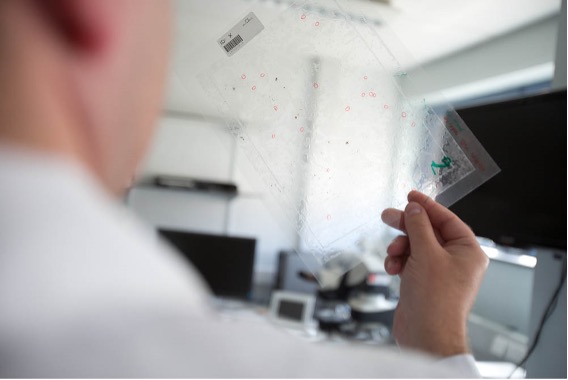
The search for microscopic fiber traces on adhesive tapes is still carried out entirely manually. In the absence of automated equipment, the laboratory analyst examines each adhesive strip under a stereomicroscope, looking for relevant traces. For instance, if the suspect was wearing a red cotton T-shirt, the analyst examining the victim’s samples will focus attention on red cotton fibers of a similar hue to that of the suspect’s garment. The detected traces are usually marked directly on the adhesive tape with an indelible marker, allowing for easy localization and counting.

The next step involves analyzing part or all of the recovered traces, after carefully extracting them from the adhesive tape and mounting them individually on properly labeled glass slides to ensure full traceability. According to forensic literature, optimal discrimination is achieved by combining high-magnification microscopic examination (typically 400×) with objective color measurement obtained through microspectrophotometric absorbance analysis. The chemical composition of synthetic fibers may also be verified, when necessary, using infrared spectroscopy. Fiber traces exhibiting the same properties as those of the comparison garment are described as matching or indistinguishable from an analytical standpoint.

In cases where there is no prior information regarding the clothing worn by the perpetrator, the same type of analytical work can still be conducted, but in a more investigative approach.

Knowing both the quantity and location of the so-called corresponding traces makes it possible to establish a trace map on the victim’s body—provided that sampling covered the entire body (clothing, skin, and hair) of the deceased. A simpler trace diagram can also be produced when at least the victim’s clothing has been promptly collected following seizure.

In the absence of information regarding the clothing worn by the perpetrator, a similar analytical approach can still be undertaken, albeit in a more investigative manner. In this case, the laboratory analyst must identify, on the adhesive tapes, fibers of similar appearance (shape and color) that recur consistently and are foreign to the victim’s clothing. The marked traces are then analyzed to determine whether they indeed form a group of fibers indistinguishable from one another from an analytical standpoint. If confirmed, the properties of this fiber group—particularly color and chemical composition—may be communicated to investigators to help target suspect garments during future searches. Such garments can subsequently be used as comparison material for the fiber traces, or analyzed for other types of forensic evidence such as blood or touch DNA.

The search for microscopic textile fibers is presented here primarily from the perspective of criminal contact between a victim and a murderer, involving the systematic collection of microtraces from the victim’s body at the crime scene. This procedure follows a standardized forensic protocol, notably applied in Belgium. However, the sampling and examination of fiber microtraces can, of course, be performed on other substrates besides the body or clothing of the victim—such as a suspect’s garments, vehicle seats or trunk, a knife, or any other object used as a weapon.

The forensic examination of textile fibers remains a largely overlooked discipline, the value of which is often underestimated.

Expertise de fibres en police scientifique - Forenseek

Figure 2: Microtrace collection technique using adhesive tapes applied to a victim’s body. The “1:1” technique is illustrated (left) with small adhesive strips that conform to the body’s morphology, and (center) with wider adhesive strips allowing for faster collection (“semi-1:1”). The “zonal” technique is illustrated (right), showing a schematic division of the body into multiple areas that are successively dabbed with adhesive tapes. © 2015 The Chartered Society of Forensic Sciences. Published by Elsevier Ireland Ltd. All rights reserved.

The crucial role of the fiber expert

The forensic examination of textile fibers is a little-known discipline, the value of which is often underestimated. Like other forms of trace evidence, it does not directly enable the identification of an individual as the source of the recovered material—a limitation that may appear, at first glance, as a weakness. However, fiber analysis should not be viewed in opposition to DNA analysis, but rather as a complementary discipline: while DNA leads to identification, fibers can lead to the reconstruction of criminal activity !

The role of the expert is therefore critical. Beyond reporting analytical observations, the expert’s main responsibility is to inform the reader of the report about the interpretative value of the analytical results. While a DNA expert can, without risk of misunderstanding, report a match between the suspect’s genetic profile and the trace recovered from the victim’s neck, a fiber expert must exercise greater caution when interpreting the correspondence between fiber traces and the suspect’s clothing.

The key criterion for such interpretation lies in what is known as the rarity of the fibers analyzed. Forensic literature identifies the most common fiber types as primarily cotton, followed by polyester, particularly in black, grey, or blue shades. These fiber types are therefore more likely to produce coincidental matches due to their high prevalence in the textile market. Other, less common fiber types can be regarded as rarer, thereby adding greater evidential weight to an analytical correspondence between trace fibers and the suspect’s garments. Beyond published data, the ideal way to assess rarity is through access to a fiber database or by relying on extensive professional experience accumulated over many years in the field. The creation of a European fiber database has been under discussion for over a decade and continues to represent a promising initiative that may finally come to fruition in the coming years.

A transparent way to qualify the results of a fiber examination is to formulate weighted conclusions derived from an evaluative approach, particularly one based on Bayesian reasoning. To this end, the expert works with two competing hypotheses and assesses the likelihood of the analytical results under each. These hypotheses can be framed at different levels, but the central focus of fiber analysis is most often activity level. At this level, the first hypothesis (typically the prosecution hypothesis) reflects what the suspect is alleged to have done, while the second (the defense hypothesis) represents the suspect’s own account of events. This ensures that the expert considers both perspectives—prosecution and defense— when evaluating the findings. In this evaluative process, the expert naturally takes into account not only the rarity of the fibers but also the quantity and distribution of the traces, along with other case-specific factors such as transfer mechanisms, persistence, and background contamination. The evaluation ultimately tips the balance in favor of one hypothesis or the other, with a certain degree of strength. This weighting is explained in an annex to the expert report, enabling the reader to understand the strength of the conclusion (weak, moderate, or strong). Generally speaking, a fiber examination may yield strong conclusions supporting intense contact between the suspect and the victim, as opposed to the legitimate contact the suspect may claim. The fiber trace mapping on the victim’s body can reinforce these conclusions by indicating preferential areas of contact. In the end, a suspect who provides a plausible explanation for their presence or for their DNA being found at the crime scene may still find themselves betrayed by their clothing !

Sources : 

  • De Wael, Lepot, Lunstroot & Gason, 10 years of 1:1 taping in Belgium— A selection ofmurder cases involving fibre examination, Science & Justice 56 (2016) 18-28.
  • Lau, Spindler & Roux, The transfer of fibres between garments in a choreographed assault scenario, Forensic Science International 349 (2023) 111746.
  • Sheridan et al., A quantitative assessment of the extent and distribution of textile fibre transfer to persons involved in physical assault, Science & Justice 63 (2023) 509-516.
  • Lepot, Lunstroot & De Wael, Interpol review of fibres and textiles 2016-2019, Forensic Science International: Synergy 2 (2020) 481-488.
  • Lepot, Vanhouche, Vanden Driessche & Lunstroot, Interpol review of fibres and textiles 2019-2022, Forensic Science International: Synergy 6 (2023) 100307.
  • ENFSI, Guideline for evaluative reporting in forensic science, v3.0, https://enfsi.eu/wp-content/uploads/2016/09/m1_guideline.pdf

When the forest hides the truth: how airborne LiDAR can help investigators in disappearance cases

Difficult disappearances to solve

Every year in France, nearly 40,000 people are reported missing. In 2022, the association ARPD recorded 60,000 “worrying disappearances”, including 43,200 minors; around 1,000 cases remain unsolved in practice [1,2]. Over time, the likelihood of finding a missing person—alive or even just their remains—drops drastically. The dense vegetation of undergrowth and forests becomes a major obstacle, rendering both aerial observation and the scent-tracking abilities of search dogs ineffective [3]. In France’s overseas territories, such as Martinique, disappearances are also numerous, and the topography of key disappearance zones is a serious impediment to ground searches and the use of more conventional methods to locate missing persons [4,5]. Drone pilots from the French Gendarmerie are often called in, but the drones currently used are only equipped with optical sensors, which struggle to detect anything beneath the vegetation cover. Nevertheless, drones remain valuable for rescue missions: in the United States, they are widely used to locate accident victims in the wild, deliver communication devices, medication, or supplies [6–8]. When dense canopy and vegetation make traditional searches ineffective, an alternative becomes necessary: LiDAR (Light Detection and Ranging). Already proven in many fields, including archaeology, LiDAR could bring real added value to judicial investigations in forest environments [9–11].

The promise of LiDAR

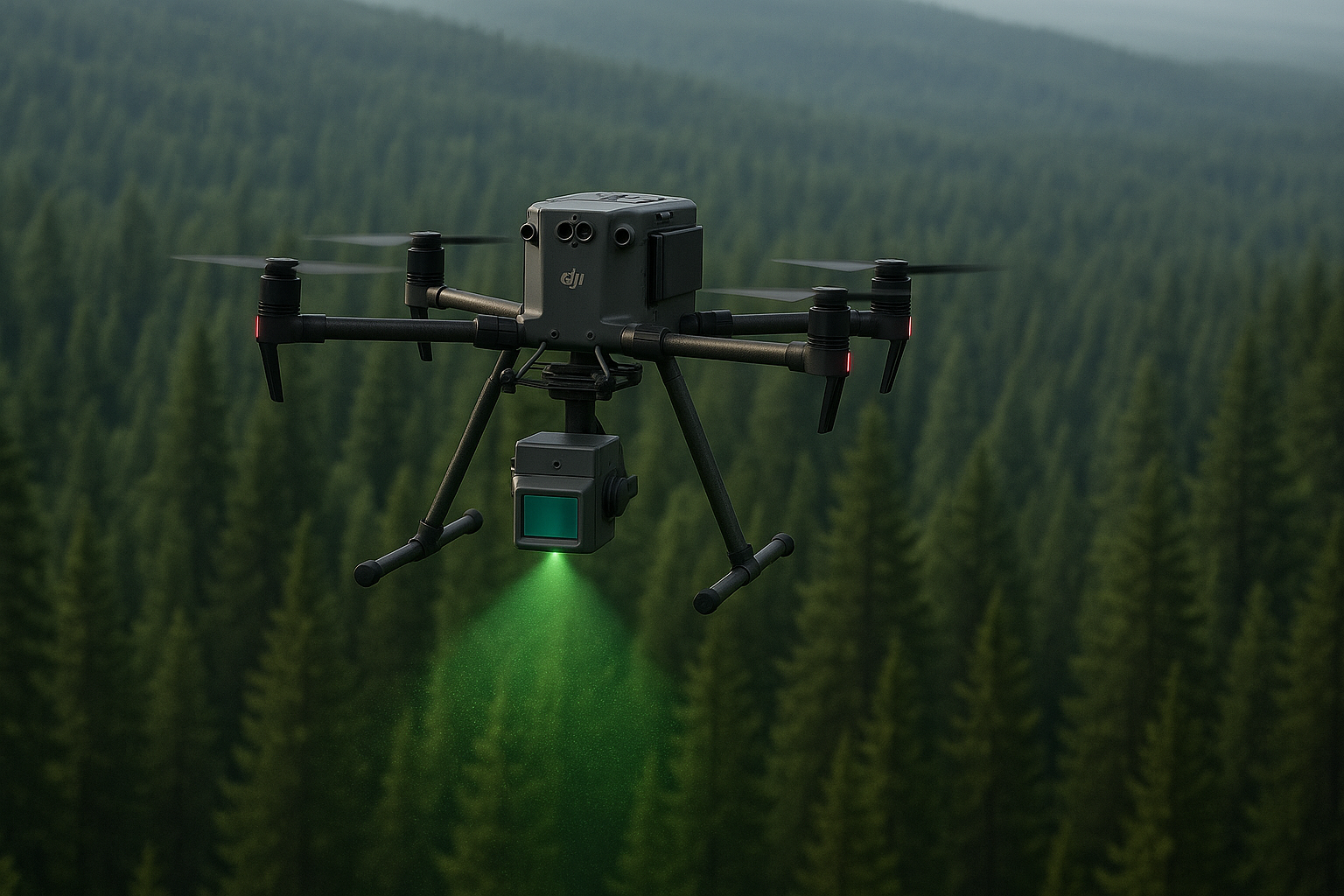
A LiDAR sensor emits up to 240,000 laser pulses per second. It measures the time taken for each beam to return to the emitter after hitting an obstacle, reconstructing a 3D point cloud [12]. Even though a large percentage of the beams bounce off leaves, the remainder reaches the ground and maps its relief. Investigators can select a precise height range—for example, between 15 and 50 cm above ground level—which effectively removes the canopy. This filtering provides access to the volumes present. A body or object can thus stand out from the natural relief [13].

A full-scale test in Isère

In April 2024, a team made up of a forensic anthropologist and a LiDAR drone specialist placed a volunteer lying down in a thicket in Montbonnot-Saint-Martin (Isère) to test whether a human body could produce a detectable signature despite dense vegetation. The test area, 0.8 hectares in size, contained 721 trees per hectare and showed a Normalized Difference Vegetation Index (NDVI) between +0.6 and +1, proof of an exceptionally thick canopy [13–15].

Two LiDAR sensors

Sensor (DJI)Max choes/pointFlight speed% of “ground” pointsVerdict
Zenmuse L131,9 m/s0,11 %The body is barely detectable
Zenmuse L252 m/s0,26 %Silhouette detected in just a few clicks

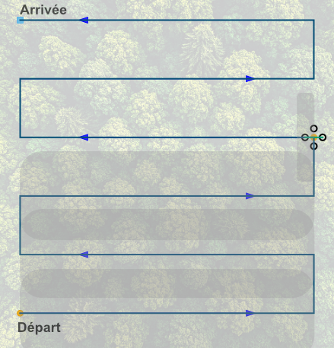
Much like a GPS (Global Positioning System), the drone’s remote-control screen provides a zenith view of the search area. When a mission is programmed, a zone is defined, and the drone’s software plots the route it must follow. The drone flies in a straight line, then upon reaching the edge of the zone, it performs a 90° turn, advances, makes another 90° turn, and continues in the opposite direction. As the drone retraces its path, the LiDAR beam overlaps the previous pass, enabling greater data acquisition both above and beneath the canopy (Figure 1).

Recherche de personnes en cas de disparition

Figure 1: Schematic representation of a drone’s flight path. The grey bands represent the areas scanned by the LiDAR. The dark grey zones show the overlap of the laser beam occurring with each drone pass.

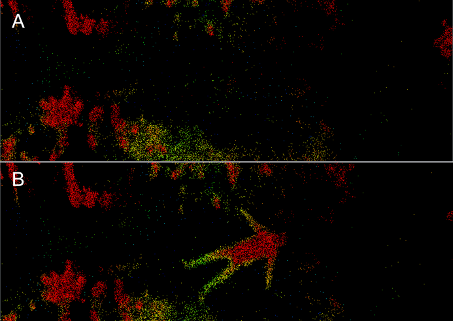
The test demonstrates that, even under a dense canopy, a next-generation LiDAR can capture enough ground points to detect a body on the surface.

After a 7-minute flight, the data are imported into DJI Terra Pro and then TerraSolid. Filtering at the 0.15–0.50 m height slice highlights a characteristic over-density at the volunteer’s location. Comparison with a control scan without a body makes it possible to distinguish natural anomalies (rocks, stumps) and to prepare a true/false positive matrix to assess the statistical robustness of the detection.

Weather and regulations: field limitations

The test demonstrates that, even under dense canopy, a next-generation LiDAR can capture enough ground points to detect a body on the surface (Figure 2). Selecting an appropriate height band is crucial to reduce noise from rocks or tree trunks. However, weather conditions (rain, fog, wind > 30 km/h) remain limiting factors, as do drone autonomy and regulatory distance constraints.

Recherche de personnes en cas de disparition

Figure 2: A: acquisition without a body on the ground, B: acquisition with the volunteer placed on the ground.

The aim is to evaluate up to which degree of decomposition bodies still leave a detectable LiDAR signature.

What’s next?

Airborne LiDAR offers a non-destructive tool to locate human remains under vegetation and to document the three-dimensional topography of a scene prior to any excavation, ensuring safe access to the body. Its rapid deployment (lightweight equipment, one to two operators) provides a cheaper and safer alternative to human search parties or helicopter flights in difficult terrain.

Initially, research is focused on the detection of living volunteers, but for cases where individuals are presumed deceased, tests will need to be carried out on decomposing bodies. The aim is to evaluate up to which degree of decomposition a body still leaves a detectable LiDAR signature. Such research cannot currently take place in France, so collaborations with foreign laboratories are being considered. Another possibility would be to complement LiDAR with other sensors, such as thermal imaging or multispectral sensors. Thermal imaging could detect heat sources linked to entomological activity on the body [16], while multispectral sensors could reveal chemical changes in soil or vegetation over time associated with decomposition [17,18].

In just a few hours, a simple raw point cloud can be transformed into a priority search zone.

Conclusion

This study demonstrates that even a tiny percentage of “ground points” can be enough to reveal the presence of a body in vegetation usually considered impenetrable. In just a few hours, a raw point cloud can be transformed into a priority search zone, reducing both the scope of the search and the anxious waiting of families. These results still need to be confirmed in other forest types and with actual donors, but LiDAR is already breaking through the opacity of disappearances.

The results confirm that airborne LiDAR sensors are capable of highlighting the presence of a body in heavily vegetated environments. In the densest conditions, the ground point density reached 0.26%. The study underlines the need to improve post-processing techniques, particularly the selection of cloud points and the development of true/false positive analyses, in order to optimize detection reliability. Finally, the integration of complementary sensors, such as thermal or multispectral devices, appears to be a promising avenue for identifying more precisely the thermal anomalies and chemical markers associated with decomposition.

References

[1] ARPD | ARPD, (n.d.). https://www.arpd.fr/fr (accessed February 28, 2024).

[2] M. de l’Intérieur, Disparitions inquiétantes, http://www.interieur.gouv.fr/Archives/Archives-des-dossiers/2015-Dossiers/L-OCRVP-au-caeur-des-tenebres/Disparitions-inquietantes (accessed April 17, 2024).

[3] U. Pietsch, G. Strapazzon, D. Ambühl, V. Lischke, S. Rauch, J. Knapp, Challenges of helicopter mountain rescue missions by human external cargo: Need for physicians onsite and comprehensive training, Scandinavian Journal of Trauma, Resuscitation and Emergency Medicine 27 (2019). https://doi.org/10.1186/s13049-019-0598-2.

[4] C. Gratien, La mort de Benoit Lagrée officiellement reconnue, Martinique La 1ère (n.d.).

[5] Disparition de Marion à la Dominique : où en sont les recherches ?, guadeloupe.franceantilles.fr (2024). https://www.guadeloupe.franceantilles.fr/actualite/faits-divers/disparition-de-marion-a-la-dominique-ou-en-sont-les-recherches-976553.php (accessed October 25, 2024).

[6] C. Van Tilburg, First Report of Using Portable Unmanned Aircraft Systems (Drones) for Search and Rescue, Wilderness & Environmental Medicine 28 (2017) 116–118. https://doi.org/10.1016/j.wem.2016.12.010.

[7] Y. Karaca, M. Cicek, O. Tatli, A. Sahin, S. Pasli, M.F. Beser, S. Turedi, The potential use of unmanned aircraft systems (drones) in mountain search and rescue operations, The American Journal of Emergency Medicine 36 (2018) 583–588. https://doi.org/10.1016/j.ajem.2017.09.025.

[8] H.B. Abrahamsen, A remotely piloted aircraft system in major incident management: Concept and pilot, feasibility study, BMC Emergency Medicine 15 (2015). https://doi.org/10.1186/s12873-015-0036-3.

[9] J.C. Fernandez-Diaz, W.E. Carter, R.L. Shrestha, C.L. Glennie, Now You See It… Now You Don’t: Understanding Airborne Mapping LiDAR Collection and Data Product Generation for Archaeological Research in Mesoamerica, Remote Sensing 6 (2014) 9951–10001. https://doi.org/10.3390/rs6109951.

[10]    T.S. Hare, M.A. Masson, B. Russell, High-Density LiDAR Mapping of the Ancient City of Mayapán, Remote. Sens. 6 (2014) 9064–9085.

[11]    N.E. Mohd Sabri, M.K. Chainchel Singh, M.S. Mahmood, L.S. Khoo, M.Y.P. Mohd Yusof, C.C. Heo, M.D. Muhammad Nasir, H. Nawawi, A scoping review on drone technology applications in forensic science, SN Appl. Sci. 5 (2023) 233. https://doi.org/10.1007/s42452-023-05450-4.

[12]    Zenmuse L2, DJI (n.d.). https://enterprise.dji.com.

[13]    P. Nègre, K. Mahé, J. Cornacchini, Unmanned aerial vehicle (UAV) paired with LiDAR sensor to detect bodies on surface under vegetation cover: Preliminary test, Forensic Science International 369 (2025) 112411. https://doi.org/10.1016/j.forsciint.2025.112411.

[14]    S. Li, L. Xu, Y. Jing, H. Yin, X. Li, X. Guan, High-quality vegetation index product generation: A review of NDVI time series reconstruction techniques, International Journal of Applied Earth Observation and Geoinformation 105 (2021) 102640. https://doi.org/10.1016/j.jag.2021.102640.

[15]    Z. Davis, L. Nesbitt, M. Guhn, M. van den Bosch, Assessing changes in urban vegetation using Normalised Difference Vegetation Index (NDVI) for epidemiological studies, Urban Forestry & Urban Greening 88 (2023) 128080. https://doi.org/10.1016/j.ufug.2023.128080.

[16]    J. Amendt, S. Rodner, C.-P. Schuch, H. Sprenger, L. Weidlich, F. Reckel, Helicopter thermal imaging for detecting insect infested cadavers, Science & Justice 57 (2017) 366–372. https://doi.org/10.1016/j.scijus.2017.04.008.

[17]    J. Link, D. Senner, W. Claupein, Developing and evaluating an aerial sensor platform (ASP) to collect multispectral data for deriving management decisions in precision farming, Computers and Electronics in Agriculture 94 (2013) 20–28. https://doi.org/10.1016/j.compag.2013.03.003.

[18]    R.M. Turner, M.M. MacLaughlin, S.R. Iverson, Identifying and mapping potentially adverse discontinuities in underground excavations using thermal and multispectral UAV imagery, Engineering Geology 266 (2020). https://doi.org/10.1016/j.enggeo.2019.105470.

AI-based facial reconstruction: a breakthrough in disaster victim identification

When conventional identification methods reach their limits… In forensic medicine, identification traditionally relies on three so-called “primary” methods: genetic analysis (DNA), fingerprint comparison, and forensic odontology. Their reliability is well established, yet their effectiveness depends on the condition of the remains and the availability of comparative data. In large-scale disasters—earthquakes, plane crashes, terrorist attacks—bodies may be burned, mutilated, or decomposed, rendering DNA analysis uninterpretable and fingerprints unreadable. In other cases, the challenge lies in the absence of ante-mortem data: no dental records, no biometric registration, and sometimes no official administrative identification at all. These situations often leave forensic experts at a standstill. It is precisely in such contexts that innovative technologies, such as artificial intelligence-based facial reconstruction, open up new perspectives.

An innovation from Panjab University

In collaboration with Ankita Guleria and Vishal Sharma, Professor Kewal Krishan has developed a pioneering method of AI-assisted facial reconstruction. Their model focuses on three skeletal structures known for their resistance to post-mortem degradation: the mandible, the maxilla, and the dentition. These anatomical elements form a true morphological signature, as they directly influence chin width, cheekbone prominence, overall facial shape, and lip position.

By combining these anatomical data with an extensive database of anthropometric measurements collected from populations in northern India, the researchers successfully trained an algorithm capable of generating a digital face closely resembling the individual’s real appearance. The results are striking: an estimated accuracy rate of 95%, an exceptional figure for an indirect method of post-mortem identification. This innovation quickly drew attention—it has been officially registered and protected by the Indian Copyright Office, underscoring both its scientific value and its technological originality.

Remarkable accuracy, yet unavoidable limitations 

The reported 95% figure should not be interpreted as the artificial intelligence’s ability to produce a perfectly photographic portrait. Rather, it indicates that in the vast majority of cases, the features generated by the algorithm closely match those of the real individual. In practical terms, the model faithfully reproduces the general facial proportions, maintains consistency with key morphological characteristics, and achieves a sufficient degree of resemblance to effectively guide investigations toward a targeted identification.

However, it is important to emphasize that this technology retains a margin of uncertainty. Soft tissues—such as lip thickness, the precise shape of the nose, skin texture, and distinctive features like wrinkles or scars—cannot be inferred solely from bone structure. An additional methodological limitation lies in the fact that the algorithm was trained on a specific population from northern India; therefore, its accuracy may decrease when applied to other ethnic or geographic groups.

These factors demonstrate that AI-based facial reconstruction should be regarded primarily as a complementary tool—one that can orient and support the work of forensic experts, but without claiming to replace the primary methods of identification in forensic medicine.

The use of artificial intelligence in victim identification raises ethical, legal, and regulatory concerns that cannot be overlooked. From an ethical standpoint, the handling of post-mortem biometric data requires particular vigilance. Reconstructing a face from human remains must never come at the expense of the dignity of the deceased or the sensitivity of their families—especially since such reconstructions, even when scientifically sound, can be perceived as intrusive if shared without proper safeguards.

From a legal standpoint, another question arises: what evidential value could an AI-generated facial reconstruction have before a court? Until judicial procedures clearly define the role of this tool, its use will remain limited to an orientational function rather than serving as formal evidence. The issue of liability in the event of a misidentification also remains unresolved.

Europe imposes a strict regulatory environment. Such applications must comply with the General Data Protection Regulation (GDPR) and fall under the scope of the forthcoming European Artificial Intelligence Act, which specifically governs “high-risk” uses. In other words, the implementation of this technology in forensic contexts will depend not only on its scientific reliability but also on its ability to fit within a clear and protective legal framework.

Perspectives for victim identification

Despite these constraints, the prospects offered by AI-assisted facial reconstruction remain highly promising. In the context of mass disasters, this technology could complement DNA or odontological analyses, helping to accelerate identification processes and reduce the waiting time for families. It could also prove valuable in complex criminal investigations where a body is too damaged for primary identifiers to be usable. Moreover, it opens new avenues in archaeology and anthropology, where it could help restore the appearance of ancient individuals for whom no genetic material is available.

This advance reflects the growing convergence between artificial intelligence and forensic sciences. While it does not aim to replace traditional identification methods, it enriches the forensic toolkit by providing experts with an additional opportunity to restore an identity to victims who had long remained unknown.


References :

  • Guleria A., Krishan K., Sharma V. Methods of forensic facial reconstruction and human identification: historical background, significance and limitations. The Science of Nature, 110 (2023).
  • Guleria A. et al. Assessment of facial and nasal phenotypes: implications in forensic facial reconstruction. Archives of Biological Sciences, mars 2025.
  • Panjab University develops AI-based facial reconstruction models with up to 95 % accuracy using jaws and teeth dimensions. Indian Express, juillet 2025, consultable ici.
  • Panjab University secures copyright for AI tech that reconstructs faces from jaws. Hindustan Times, publié le 27 juillet 2025

An investigative otter trained for the search of submerged bodies

In the United States, an otter named Splash has been trained to detect submerged human bodies using its extraordinary sense of smell. This unprecedented forensic initiative opens new perspectives for locating bodies in rivers and streams. In France, where four bodies were recently discovered in the Seine River, such a protocol could inspire the river brigades of the National Police and the National Gendarmerie, thereby enhancing the efficiency of judicial investigations.

Animals in the service of forensic science

For decades, animals have played a major role in criminal investigations and forensic science (see odorology and scent identification). Cadaver detection dogs are now indispensable assets in forensic investigations: they detect the volatile compounds associated with human decomposition and assist in locating buried or concealed bodies. However, in aquatic environments, these methods face significant limitations—reduced visibility, strong currents, and variable depths. It was under these conditions that an innovative idea emerged in Florida: assigning this mission to an animal perfectly adapted to aquatic environments. The otter—agile, fast, and gifted with an exceptional sense of smell—proved to be the ideal candidate. The Peace River K9 Search & Rescue association thus launched a pioneering program by training Splash, an Asian small-clawed otter who has become the world’s first “investigative otter.”

A unique training protocol: air bubbles simulating human decomposition

Splash’s training follows a precise and rigorous protocol. In the trainer’s backyard, pools were installed to create a controlled environment. The water is infused with air bubbles containing volatile organic compounds similar to those released by a decomposing human body.

The otter’s mission is clear: to detect these air bubbles invisible to the human eye. When it recognizes the scent, it immediately alerts its trainer by tugging on the mask he is wearing. This signal—simple yet effective—confirms the presence of a “target.” The concept relies on a remarkable and still little-studied ability: the otter can literally “taste” the air bubbles underwater, chemically detecting specific markers within them. Where divers and dogs reach their limits, the otter excels thanks to its natural ability to navigate complex and opaque aquatic environments.

The otter in the service of criminal investigations

American forensic authorities are closely monitoring this project. The FBI and the Florida Department of Law Enforcement have already expressed interest in this method, which could accelerate searches during criminal investigations or natural disasters. The potential applications are numerous:

  • Locating victims of drownings, homicides, or flash floods in lakes, ponds, rivers, or streams.
  • Quickly identifying submerged bodies in areas with low visibility.
  • Complementing existing search resources (divers, sonar, detection dogs).

For investigators and magistrates, this time saving is crucial: the discovery of a submerged body can provide essential forensic evidence (signs of violence, medico-legal analyses) before further decomposition occurs, allowing the judicial investigation to progress more rapidly.

Could France take inspiration from Splash?

En France, la découverte de quatre corps dans la Seine In France, the discovery of four bodies in the Seine River on August 13, 2025, in Choisy-le-Roi (Val-de-Marne), served as a reminder of how complex the search for submerged bodies remains. The river brigades of the National Gendarmerie and the National Police already deploy divers, sonar equipment, and cadaver detection dogs to locate victims. Yet, despite these resources, some cases remain unsolved due to the absence of recovered bodies. The use of animals such as otters could provide a valuable complementary tool. Their acute sense of smell, agility, and ability to operate underwater could increase the likelihood of discoveries—particularly in rivers like the Seine, where visibility is almost zero and currents can carry bodies far from their original immersion point. Such a system could also prove useful in other environments: dams, canals, or large ponds. In homicide or missing person cases, any technology or protocol capable of accelerating the location of a body represents a major asset for judicial investigations.

Limitations and ethical considerations

While the method has generated interest, it also raises several important questions. Training otters requires time, specialized expertise, and impeccable ethics concerning animal welfare. Integrating such animals into official search systems would necessitate strict protocols, scientific validation, and an appropriate legal framework. However, as with cadaver detection dogs, the potential benefits are such that a gradual adoption of this approach does not seem unrealistic. Investigators dealing with sensitive cases—such as homicides or disappearances—know how decisive each additional tool can be.

Conclusion

The story of Splash illustrates a new synergy between nature and forensic science. Where technology and divers reach their limits, animals endowed with extraordinary senses remind us that forensic investigation can also draw upon the living world. While the idea of integrating otters into river brigade operations may seem unconventional, it nonetheless represents a credible prospect: enhancing the efficiency of investigations and improving the chances of swiftly locating submerged bodies.

Références :

  • IFLScience – Meet Splash, the world’s first search-and-rescue otter hunting for missing people in Florida, consultable ici.
  • Popular Science – This otter is training to be a search and rescue diver, consultable ici.
  • Interesting Engineering – US otter trained for underwater search and rescue, consultable ici.

Heartbeat Detection as an Anti-Deepfake Tool

Deepfake videos generated by artificial intelligence are becoming increasingly realistic, threatening the integrity of digital evidence. To address this challenge, Dutch researchers have developed an innovative method to detect deepfakes using a previously overlooked biological marker: the heartbeat. Still under scientific validation, this approach could become a valuable tool in digital forensic investigations.

A biological signal impossible to fake?

At the core of this innovation is a team from the Netherlands Forensic Institute (NFI), working with the University of Amsterdam. Their method relies on remote photoplethysmography (rPPG), a technique that detects subtle color variations in facial skin—on the forehead, around the eyes, or along the jawline—caused by blood flow at each heartbeat. Current deepfake algorithms are unable to simulate these micro-variations consistently, opening a promising path for detecting manipulated content.

An idea revived by technological progress

The concept dates back to 2012, when Professor Zeno Geradts explored video footage in criminal cases to assess whether the filmed individuals were alive. At the time, a MIT study had demonstrated that heart rate could be extracted from facial videos, but video compression destroyed the signal. Today, modern compression technologies preserve these micro-visual variations far better. The NFI team identified 79 facial points of interest to measure the signal and compared the results to biometric data from clinical sensors and smartwatches. Findings are encouraging, though some limitations remain—particularly with darker skin tones.

Figure 1. Principle of rPPG.
The absorption and reflection of light by the skin vary depending on hemodynamic activity under light sources (sunlight, lamps, etc.). These variations are recorded by imaging devices (cameras, webcams, smartphone lenses, etc.) as videos or images. Through algorithmic analysis, rPPG curves representing physiological information can be extracted from these videos.

A complementary tool for digital forensics

Heartbeat detection does not replace existing authentication methods but adds a valuable new dimension to forensic video examination. Other approaches remain crucial in the authentication process, such as analyzing electrical network frequency (ENF) traces embedded in images, identifying the recording sensor through its digital fingerprint (PRNU), or carrying out visual/automated checks of blinking patterns, abnormal movements, or generation artifacts (like a hand with six fingers). By combining these methods, experts can strengthen the reliability of their conclusions and stay ahead of forgers’ evolving tactics.

Robustness lies in combining traditional forensic techniques with AI-based approaches, rather than depending on one unique method.

A technological cat-and-mouse game

As new detection methods emerge, deepfake creators will inevitably attempt to circumvent them. In the near future, algorithms may try to artificially embed biological signals such as heartbeats into fake videos. This makes ongoing technological monitoring essential to stay one step ahead. As Geradts emphasizes, robustness lies in combining traditional forensic techniques with AI-based approaches, rather than depending on one unique method.

Towards judicial integration?

This approach is not yet deployed in real-world investigations—it is still undergoing scientific validation, with an academic publication expected in the coming months. However, researchers hope that in specific cases, particularly with high-quality videos, this method could soon be implemented. It opens a promising new avenue in the fight against digital evidence manipulation, leveraging a hard-to-fake truth: human physiology.

Références :

  • Geradts, Z., Pronk, P., & de Wit, S. (2025, mai). Heartbeat detection as a forensic tool against deepfakes. Présentation à l’European Academy of Forensic Science Conference (EAFS), Dublin.
  • Computer Weekly. (2025, 24 juillet). Dutch researchers use heartbeat detection to unmask deepfakes. Read here.
  • ForensicMag. (2025, 30 mai). Scientist Develops Method to Use Heartbeat to Reveal Deepfakes. Read here.
  • Amsterdam AI. (2025, 27 mai). Hartslaganalyse helpt deepfakes te ontmaskeren. Read here
  • DutchNews.nl. (2025, 25 mai). Dutch forensic experts develop deepfake video detector using heartbeat signals. Read here.
  • Poh, M.-Z., McDuff, D., & Picard, R. W. (2010). Advancements in non-contact, automated cardiac pulse measurements using video imaging. Massachusetts Institute of Technology (MIT) Media Lab.

Touch DNA: a new approach to better understand the traces left behind

In criminal investigations, DNA analysis plays a central role in identifying the perpetrators of crimes and offenses. However, not all biological traces provide the same type of information. Touch DNA—deposited involuntarily on a surface after simple contact—remains challenging to interpret for forensic experts.

Why do some individuals leave more DNA than others? A recent study conducted by researchers at Flinders University in Australia proposes an innovative method to objectively assess this variability. By examining the individual propensity to shed skin cells, the team opens new perspectives in forensic genetics and the interpretation of biological traces at crime scenes.

A genuine interindividual variability

Some individuals, described as “good shedders,” naturally deposit large quantities of skin cells on objects they handle. Others, by contrast, leave only minimal traces. This difference, long observed by forensic biologists, complicates the interpretation of DNA results, particularly when assessing the likelihood of direct contact between a person and an object.

Until now, reliably and reproducibly quantifying this variability has been difficult. The Australian study specifically addresses this gap, providing a rigorous scientific protocol.

A simple and reproducible measurement protocol

The researchers developed a protocol based on a series of controlled contacts carried out by 100 participants, each asked to touch a standardized surface. The deposited cells were then:

  • Stained with a fluorescent marker,
  • Counted using microscopy,
  • Subjected to genetic analysis to confirm the presence of recoverable DNA.

The results showed that, for 98 out of 100 participants, the level of cell deposition was stable and reproducible over time. This protocol allows individuals to be classified into three categories: high, moderate, or low skin cell shedders.

A tool to better contextualize touch DNA evidence

The value of this method extends beyond biology. It may serve as a tool for judicial contextualization. For instance, a suspect identified as a high shedder could account for the abundant presence of their DNA on an object without having taken part in the offense. Conversely, the absence of DNA from a low shedder does not exclude the possibility of contact.

This information could be incorporated into likelihood ratio calculations used in DNA interpretation, thereby strengthening the robustness of forensic assessments.

Future perspectives for forensic science

The proposed method has several advantages: it is inexpensive, easy to implement in the laboratory, and could be adapted to various objects and realistic conditions (different surfaces, durations of contact, humidity). Further validation studies are still required before widespread adoption. Ultimately, however, this approach could be integrated into routine biological trace analysis, providing valuable support to magistrates and investigators in evaluating the probative value of DNA evidence.

References

  • Petcharoen P., Nolan M., Kirkbride K.P., Linacre A. (2024). Shedding more light on shedders. Forensic Science International: Genetics, 72, 103065, read here.
  • Flinders University. (2024, August 22). Heavy skin shedders revealed: New forensic DNA test could boost crime scene investigations. ScienceDaily, read here.