While dental analysis has become an established technique in forensic identification, the reliability of bite mark analysis is now under scrutinity due to the lack of sufficient scientific grounding.
Like DNA or fingerprints, teeth and jaws constitute a unique “identity card” for each individual. This observation gave rise to a distinct branch of forensic medicine—forensic odontology—which found one of its earliest applications in 1897, during the Bazar de la Charité fire in Paris. Faced with completely charred and unrecognizable bodies, the authorities decided to call upon the victims’ dentists.
When teeth leave their marks
Since then, this method of identification has been systematically employed whenever human remains must be identified, whether individually or in mass disaster situations, regardless of the circumstances of death. Dental structures are highly resistant to nearly all destructive factors, including burial, cremation, immersion, and even physico-chemical assaults.
In the absence of other data, a forensic odontologist’s examination of teeth—considering pathologies and tooth wear patterns in particular—can provide valuable information on sex, age, ethnicity, and dietary habits. By comparison with ante-mortem dental records, such analyses can formally establish an individual’s identity.
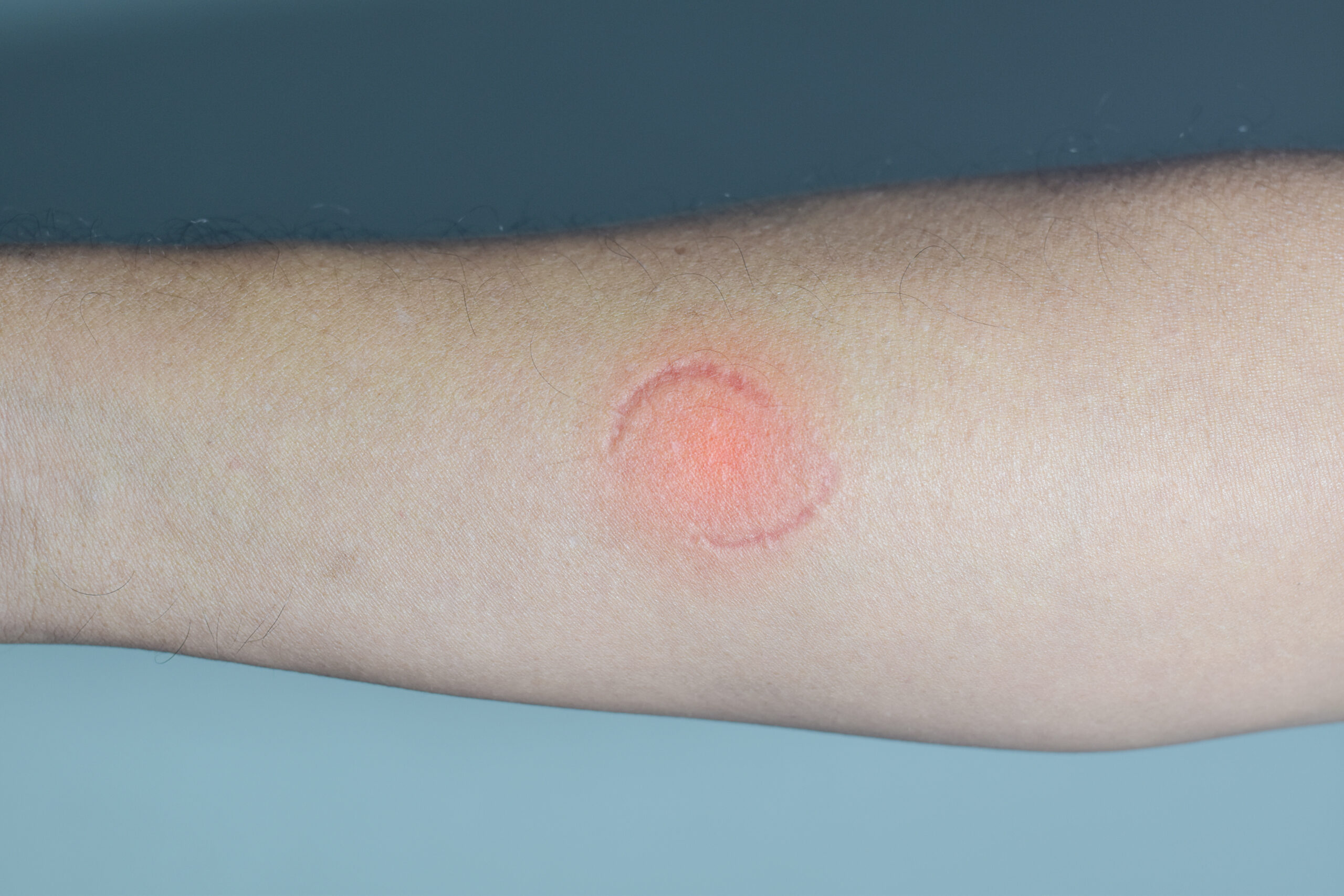
Another area of forensic odontology involves the interpretation of bite marks found on victims—whether living or deceased—as well as on perpetrators or even on certain objects. Today, experts conduct these analyses using digital technologies such as 3D laser scanning, which may lead either to the identification or, conversely, to the exclusion of a potential assailant. However, since there is no standardized or automated methodology and interpretation must take into account numerous factors beyond dental patterns, some specialists argue that this forensic technique lacks sufficient scientific grounding and cannot be considered conclusive evidence.
Reliability under scrutiny
The controversy, which began in the United States in 2009 with a study published by the National Academies of Sciences, Engineering, and Medicine, has recently resurfaced following a draft report issued by the National Institute of Standards and Technology (NIST), questioning the scientific rigor of such analyses.
According to NIST, the interpretation of bite marks relies on two fundamental assumptions: first, that dental impressions are unique; second, that bite marks remain perfectly preserved regardless of the medium. In reality, they often involve only part of the dentition (primarily the anterior teeth). Moreover, human skin—the most common substrate for such marks—is by nature a pliable tissue, subject to distortion depending on its elasticity, the victim’s movements, the development of bruising, and the degree of healing at the site. All these factors, experts argue, undermine the reliability of bite mark comparison as a means of incriminating a suspect.Although this federal agency’s report is still in draft form, its preliminary findings are already stirring significant debate within the scientific community and among advocacy organizations working to prove the innocence of individuals wrongfully convicted. One such organization, the Innocence Project, based in the United States, has highlighted that 26 people were wrongfully convicted on the basis of bite mark evidence—an alarming fact that foreshadows numerous legal battles to come
The fight against all forms of sexual violence and assault is a constant concern of the Gendarmerie units, which work daily in the field in partnership with all institutional and non-governmental stakeholders involved in addressing this phenomenon.
While improving the training of military personnel and strengthening prevention of such cases are essential approaches to optimizing the current system, the judicial phase remains crucial to identify perpetrators and bring them before the courts.
Victims of sexual assault may either report to an investigative unit, go to a hospital (Emergency Department or Sexual Violence Unit), or contact an association whose mission is to support victims of such offenses.
In the first case, this results in the filing of a formal complaint. In hospital settings or through an association, at the very least an official report is made. If the assault occurred within the previous five days, the victim enters a pathway that includes reception and support, anamnesis, forensic sampling, and traceability. Beyond five days, the victim is directed to information and medico-social support.
When a formal complaint is filed, the victim then follows a pathway sometimes experienced as burdensome or constraining, requiring multiple appointments where she must repeatedly recount what happened, undergo forensic examinations, and allow the seizure of items and objects for the purposes of a procedure, with sealed evidence forwarded to a forensic or hospital laboratory for medico-legal analysis. Otherwise, it is at least essential to ensure the preservation of the samples in the event of a later complaint or judicial referral.
Additional obstacles may include inadequate reception conditions or delays in the process. This causes stress for victims and their families, and some abandon their initial steps.
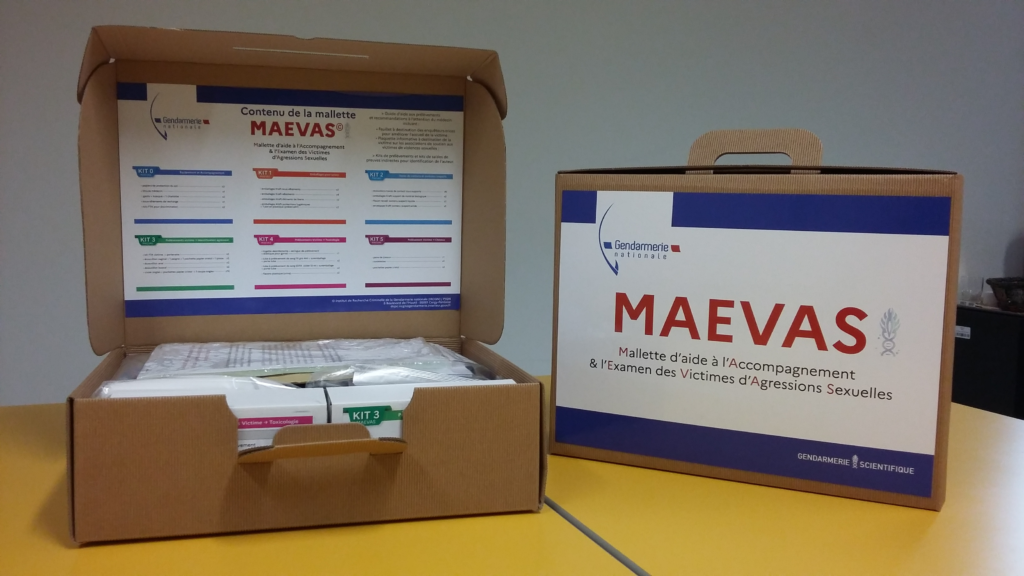
In this context, beginning in 2018, the National Gendarmerie developed the “MAEVAS” Program—Support and Examination Kit for Sexual Assault Victims—under the supervision of the National Gendarmerie’s Criminal Research Institute (IRCGN) in Pontoise (95).
Better supporting victims of sexual assault
“MAEVAS” offers an innovative, comprehensive approach designed to support victims of the most serious sexual offenses, regardless of age or gender, while providing collaborative methodological and forensic tools that enable all necessary investigations. These tools are grouped in a single kit, to facilitate the resolution of this category of offenses—from the reception of the victim filing a complaint, to the collection of forensic samples—aiming for optimum judicial processing while ensuring continuous support for the victim and her or his relatives throughout the investigation.
The aim is to avoid subjecting the victim to repeated interviews or subsequent supplementary procedures, which could be traumatizing. The body of a victim is not a crime scene like any other!
Indeed, the Medico-Judicial Units (Unité Médico-Judiciaire, UMJ)—where medical staff work in cooperation with the judicial authority, performing medical procedures at the request of investigators or the courts—are the structures best suited to respond effectively to this need. However, half of France is not provided with UMJs, which are often, if not exclusively, located in National Police jurisdictions where hospital emergency services are also available. The situation is very different in areas under the jurisdiction of the National Gendarmerie, particularly in overseas departments and territories.
Initially deployed within Gendarmerie units located far from an UMJ, “MAEVAS” will help reduce territorial inequalities and can be especially implemented in overseas territories.
Its availability in reception units should make it possible—where timely treatment in an UMJ is not feasible (due to distance, accessibility, etc.)—for a physician working in private practice, specifically requisitioned, to carry out the necessary forensic examinations in his or her office. This ensures that no victim is left without an appropriate response, which would otherwise undermine the recognition of the assault. The project is therefore based on close collaboration among all stakeholders, centered on the condition and support needs of every victim of such aggression.
In the future, “MAEVAS” may also be deployed in prisons or universities (hazing), and even in the sports environment. The concept could also be adapted for use within the Armed Forces (sexual assaults during overseas operations, aboard Navy vessels, on military bases, etc.) through the involvement of military physicians.
A complete forensic kit for investigators and physicians
The kit includes a summary document gathering multiple recommendations—from advice on how to welcome a victim, to forensic sampling procedures, and including aspects relating to interviews and victim support. In its initial version, a simplified content focusing primarily on suspect identification is proposed, allowing for faster initial deployment.
It also contains: – The necessary consumables, provided as pre-packaged kits, dedicated to various screenings and preliminary sampling (DNA, toxicology, trace evidence, hygiene kit, etc.), with the objective of identifying the perpetrator; – Guideline sheets to assist with sampling, as well as recommendations (health and forensic considerations, evidence location and preservation, etc.), for doctors and investigators, ensuring continuity of procedures and communication among all stakeholders.
“MAEVAS” can thus be deployed in units located far from Medico-Judicial Units (UMJ) and hospital services. It is the responsibility of these units to ensure that any victim reporting to their premises is supported with a “MAEVAS” kit.
Furthermore, given that Medico-Judicial Units (UMJs) and hospital emergency services wish to strengthen their contacts with investigators in order to improve coordination and operational actions, it may be envisaged in the future, in cooperation with the Ministry of Solidarity and Health, to provide them with “MAEVAS” kits.
The resolution of such cases requires complementary actions among stakeholders addressing both the condition and support needs of every victim of this type of assault. These actors often intervene one after the other, whereas a global, complementary, harmonized, and systematic approach would be less traumatic for the victim and allow investigators to make better use of the evidence. It is with this aim that on 13 March 2019 in Pontoise (95), a Gend’Lab(*) was organized on the theme: “Violence against women: the strengths of MAEVAS (Support and Examination Kit for Sexual Assault Victims).” The purpose of this Gend’Lab was to bring together all stakeholders able to contribute to the design and support of the kit, both upstream and downstream of its use (victim support associations, Ministry of Justice, Ministry of Health, the Medical Council, etc.).
* : Événement ouvert au public organisé par la Gendarmerie Nationale qui a pour objet d’exposer ses travaux ou projets scientifiques et techniques en présence des partenaires du projet et des organisations intéressées par le thème.
With “MAEVAS,” each actor involved completes their share of the case file, resulting in a coherent judicial file that can be easily used by a magistrate.
A pilot project launched in the first half of 2022
The “MAEVAS” kit, combining both the forensic dimension (support for investigators) and the victim-assistance dimension (references to victim-support associations), has been the subject of a field trial since mid-2022 in the departments of Charente-Maritime (17), Cher (18), and Val-d’Oise (95), which have different medico-legal environments.
As for overseas specificities, the Overseas Gendarmerie Command and the Ministry of Overseas France proposed piloting the kit in Réunion, due to its insular nature and the significant volume of cases potentially concerned by “MAEVAS,” and in French Polynesia, due to its multiple insularities, relative isolation, and the difficulties that may arise in accessing appropriate medical and forensic care.
Improving the response to victims
Each kit is intended for a specific actor and action, accompanied by an adapted form. This will help automate and standardize forensic and investigative procedures. The kit’s composition must be standardized and traceable (e.g., expiration dates), with careful consideration given to the preservation of collected samples.
This initiative demonstrates that specialists can combine their efforts and share experiences, clarify roles and responsibilities, and avoid wasting time and expertise, all for the benefit of addressing victims’ situations. A fine-grained understanding of the phenomenon is indispensable, enabling the system to be adapted over time.
Victims must be able to trust the State’s response, as they fear for themselves or their relatives. They need to know that support is available to mitigate the family trauma. This is especially true since victims often fear not being listened to or believed when reporting the facts.