Monthly Archives: June 2025

Photogrammetry, Lasergrammetry, and Artificial Intelligence: A Technological Revolution

Forensics and emergency response are currently at a turning point with the growing integration of advanced technologies such as photogrammetry, lasergrammetry (LiDAR), and artificial intelligence (AI). These technologies not only provide unprecedented levels of accuracy and efficiency but also open up new avenues for investigation and intervention, profoundly reshaping traditional methodologies.

Photogrammétrie et Lasergrammétrie : des outils de précision

As a surveying expert and officer specializing in the drone unit of the Haute-Savoie Fire and Rescue Department (SDIS74), I have directly observed how these tools enhance the accuracy of topographic surveys and facilitate the rapid analysis of complex scenes. Photogrammetry enables 3D reconstruction of various environments using aerial images captured by drones equipped with high-resolution cameras. This process quickly generates detailed digital terrain models, which are critical in urgent or forensic interventions where every detail matters.
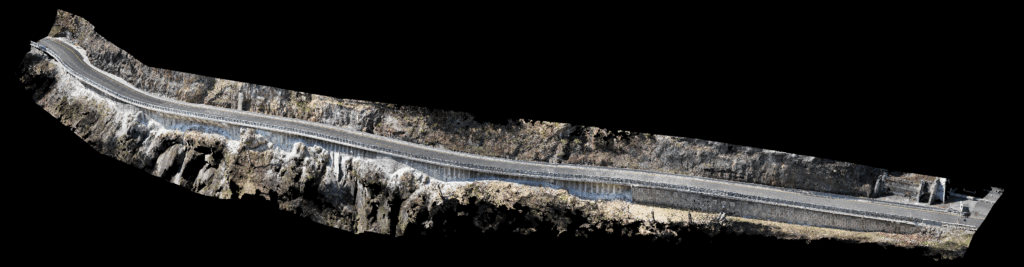
Road survey using photogrammetric methods, in true color. Credit: Arnaud STEPHAN – LATITUDE DRONE

It is possible to achieve extremely high levels of detail, allowing, for example, the identification of footprints by the depth left in the ground.

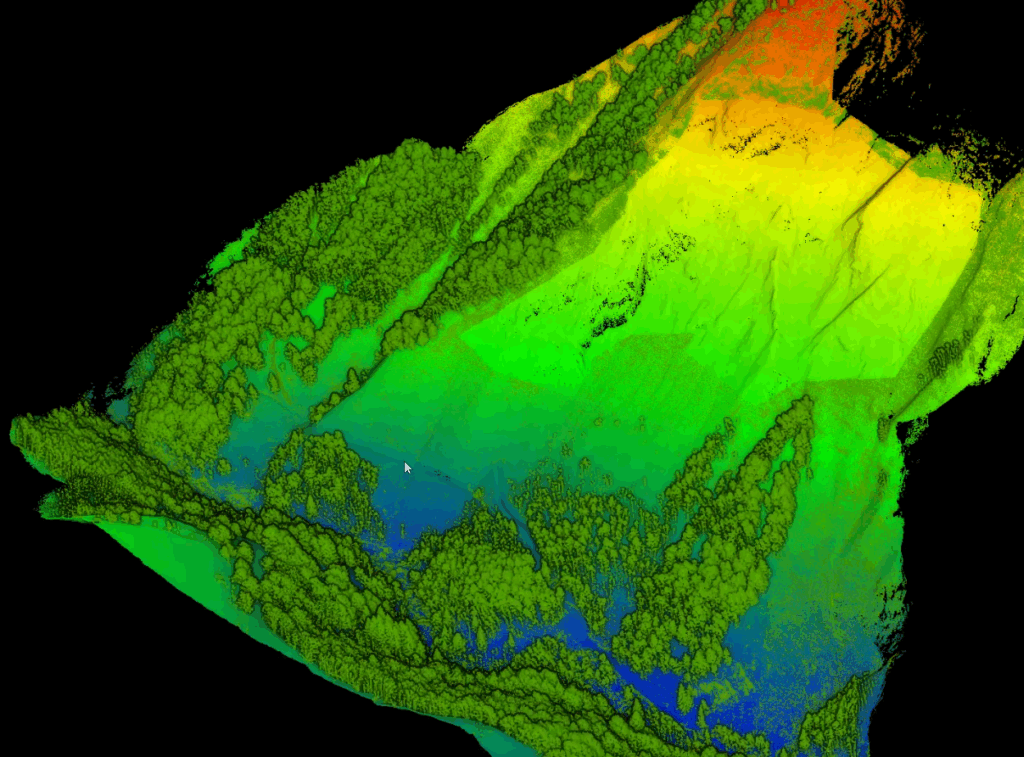
LiDAR scanning effectively complements photogrammetry by providing millimetric precision through the emission of laser beams that scan and model the environment in three dimensions. This technology is particularly effective in complex contexts such as dense wooded areas, steep cliffs, or rugged mountain terrain, where photogrammetry may sometimes struggle to capture all the necessary details.

To be more precise, LiDAR generally produces more noise on bare ground and hard surfaces compared to photogrammetry, which remains the preferred tool in such cases. However, in wooded areas, LiDAR can occasionally penetrate through to the ground and thus provide crucial information about the terrain, where photogrammetry may fail.

Photogrammetry only works during daylight, since it relies on photographic data in the visible spectrum.
Depending on the chosen flight altitudes and the type of sensor used, it is possible to achieve extremely high levels of detail, allowing, for example, the identification of footprints by the depth left in the ground. These technologies are already being used to precisely capture crime scenes. Traditionally, static scanners were used for this purpose, but drones now make it possible to greatly expand the capture perimeter while ensuring faster processing. This speed is crucial, as it is often imperative to capture the scene quickly before any change in weather conditions.

However, it is important to note that photogrammetry only works during daylight, since it relies on photographic data in the visible spectrum.

Topographic survey using LiDAR method and colored according to altitude. Vegetation differentiated in green. Credit: Arnaud STEPHAN – LATITUDE DRONE

Artificial Intelligence: towards automated and efficient analysis

The true revolution lies in the integration of these geospatial surveys into intelligent systems capable of massively analyzing visual data with speed and precision. In this regard, the OPEN RESCUE project, developed by ODAS Solutions in partnership with SDIS74 and the Université Savoie Mont-Blanc, stands as an exemplary case. This AI is fueled by an exceptional dataset of nearly 1.35 million images collected using various types of drones (DJI Mavic 3, DJI Matrice 300, Phantom 4 PRO RTK, etc.) across a remarkable diversity of environments, covering all seasons.
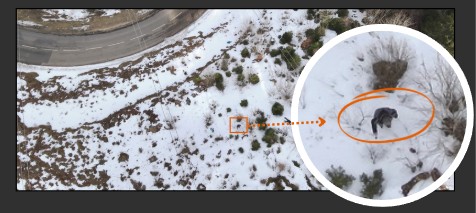
Illustration of OPEN RESCUE’s capabilities: a person isolated in the mountains during winter. Credit: Arnaud STEPHAN – ODAS SOLUTIONS

The robustness of the OPEN RESCUE AI is demonstrated by a maximum F1-score of 93.6%, a remarkable result validated through real field operations. The F1-score is a statistical indicator used to measure the accuracy of an artificial intelligence system: it combines precision (the number of correctly identified elements among all detections) and recall (the number of correctly identified elements among all those actually present). A high score therefore means that the AI effectively detects a large number of relevant elements while avoiding false detections. This intelligent system is capable of accurately detecting individuals as well as indirect signs of human presence such as abandoned clothing, immobilized vehicles, or personal belongings, thereby providing valuable and immediate assistance to rescue teams.
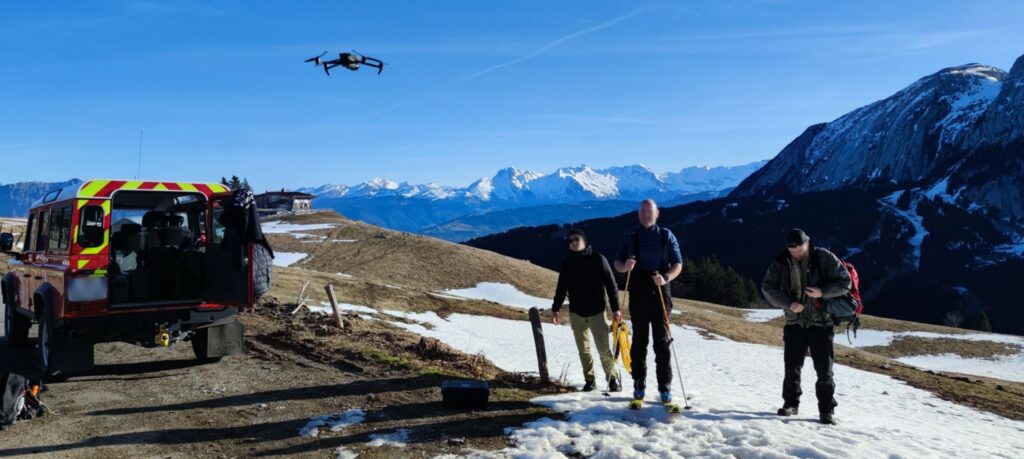
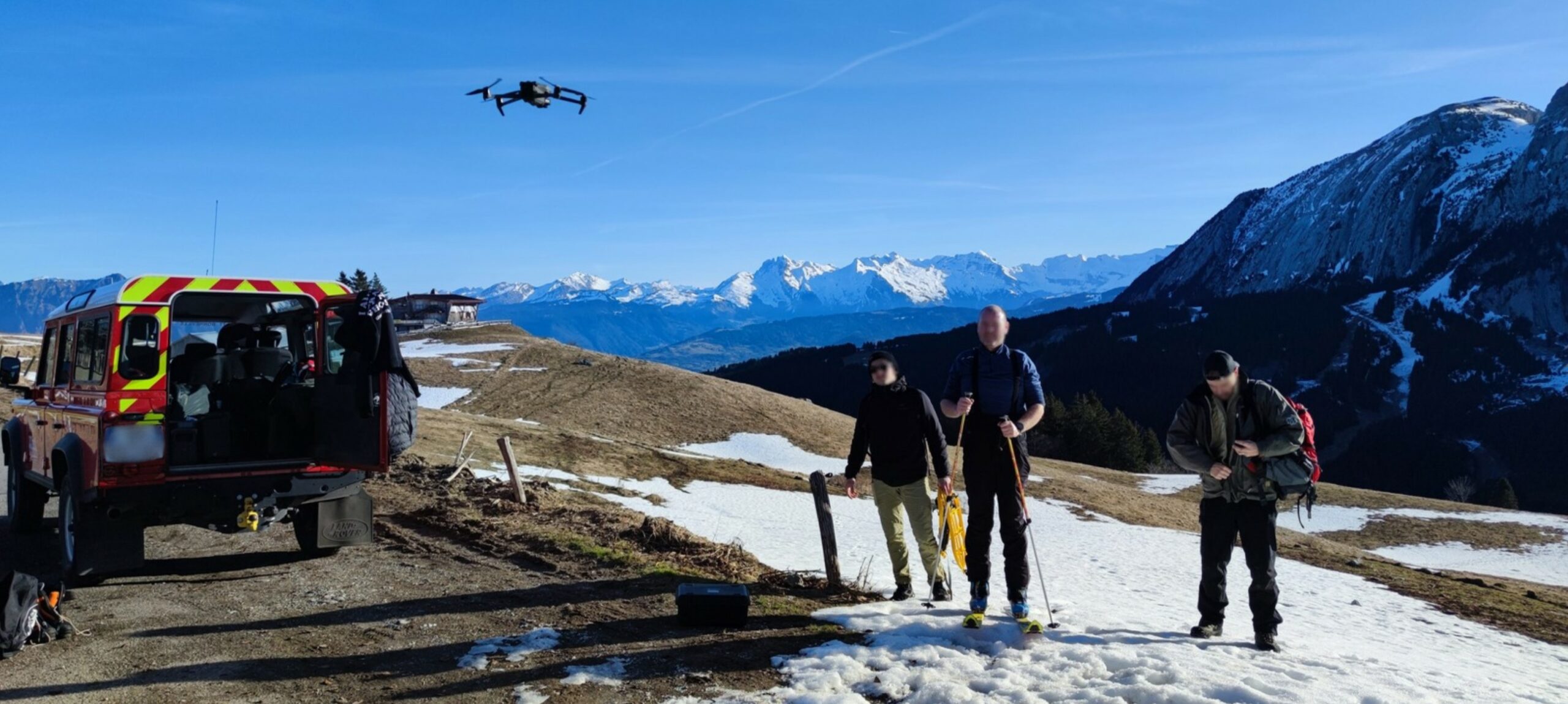
Collection of OPEN RESCUE training data with SDIS74 firefighters – Credit: Arnaud STEPHAN – ODAS SOLUTIONS

The arrival of this technology is radically transforming the way teams conduct their searches: it is now possible to methodically and extensively sweep entire areas, while ensuring that no relevant element has been missed by the AI in these zones. Although this does not replace canine units or other traditional methods, artificial intelligence provides a new and complementary level of thoroughness in the search process.

The arrival of this technology is radically transforming the way teams conduct their searches.

Practical Applications and Operational Results

In the field, the effectiveness of these technologies has been widely demonstrated. The autonomous drones used by our unit can efficiently cover up to 100 hectares in about 25 minutes, with image processing carried out almost in real time by OPEN RESCUE. This enables an extremely rapid response, ensuring optimal management of critical time during emergency interventions and missing-person searches.

Furthermore, the ability to precisely document the areas covered during operations provides a significant advantage in judicial contexts. The possibility of using these accurate 3D models and automatically analyzed data as evidence before courts offers greater transparency in judicial procedures and greatly facilitates the work of judges, investigators, and lawyers.
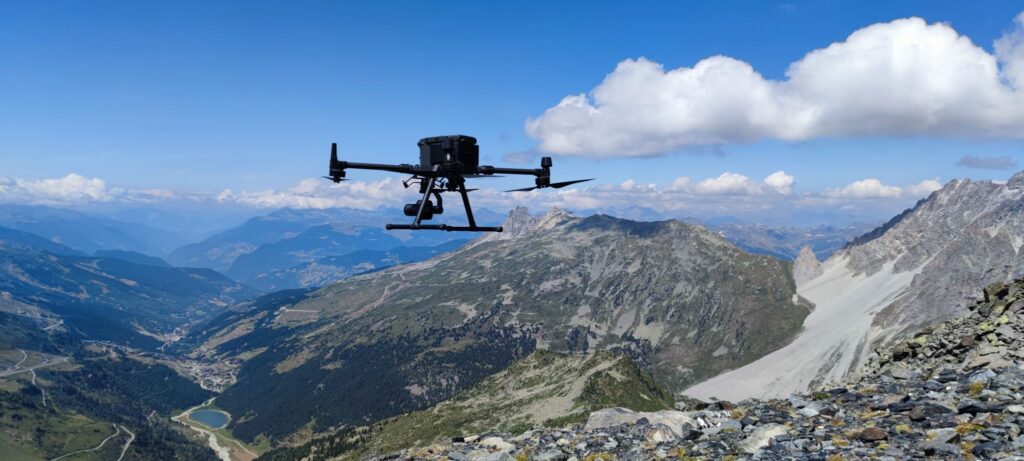
DJI Matrice 300 drone flying in a mountainous area – Credit: Arnaud STEPHAN – LATITUDE DRONE

Operational constraints and regulatory framework

The operational use of drones and these advanced technologies is subject to several strict regulatory constraints, particularly in terms of flight authorizations, privacy protection, data management, and air safety. In France, drones are regulated by the Direction Générale de l’Aviation Civile (DGAC – French Civil Aviation Authority), which imposes specific flight scenarios and precise protocols to be followed during missions.

In addition, the technical constraints of operations include the need for trained and regularly certified pilots, capable of carrying out missions safely and efficiently. Finally, roughly every six months, new innovative equipment is released, constantly bringing significant improvements such as higher capture speeds, better optical and thermal sensors, and the miniaturization of onboard LiDAR systems.

Conclusion

Ultimately, the growing integration of advanced technologies represents a decisive breakthrough in forensic sciences and emergency interventions, despite the operational and regulatory constraints to be taken into account. Their practical application not only enhances the efficiency and speed of operations but also opens up new possibilities for judicial analysis, thereby confirming their essential role in public safety and modern justice.
Entomotoxicology: the role of insects in forensic investigation

When the body no longer speaks, insects tell the truth. At the crossroads of toxicology and entomology, entomotoxicology turns these small organisms into key witnesses capable of revealing what time seeks to erase.

Insects serving the truth

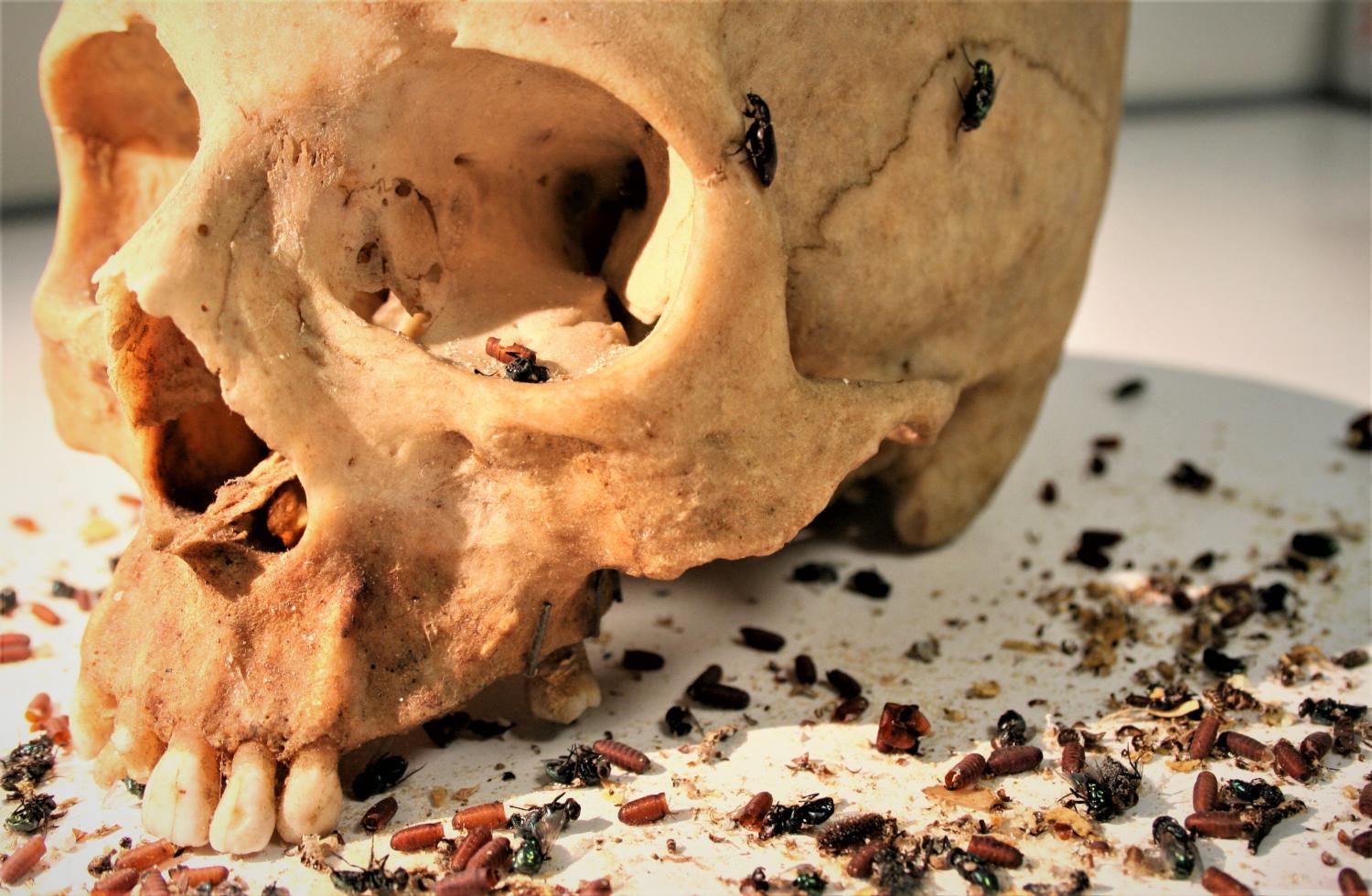
In certain deaths, especially those linked to drug abuse or suicide, the victim’s body may remain undiscovered for several days or even months. Decomposition begins immediately after death, releasing gases and fluids that produce putrefaction odors. These effluents quickly attract insects such as flies, which lay their eggs in the body’s natural openings. The emerging larvae feed on the decomposing flesh, thereby accelerating the breakdown process [Forensic Entomology – Damien Charabidze].

As insect colonization progresses, it further accelerates the gradual decomposition of body tissues. This degradation also alters organic fluids and tissues such as urine, blood, and the liver, rendering traditional matrices used in forensic toxicological analyses unavailable or unreliable. At this stage, insects—particularly blowfly larvae—become especially valuable for toxicological examination.

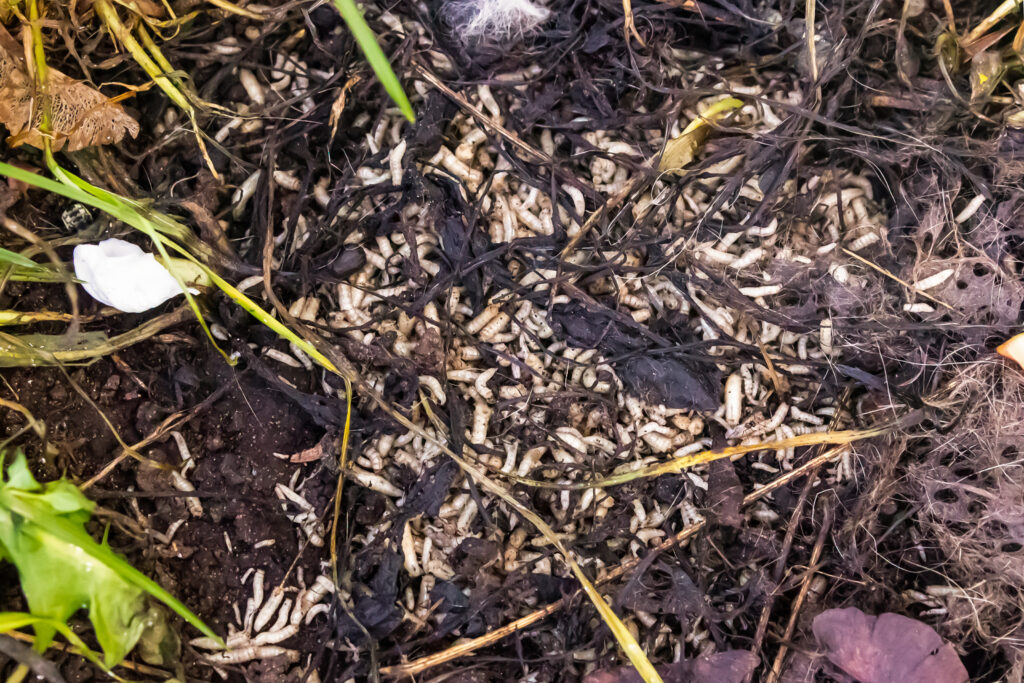
Discovery of larvae on a decomposing body

Because of their abundance, ease of collection, and resistance to environmental conditions, necrophagous insect larvae can be sampled from various regions of the body where they are present. This choice is critical, as the ante- and postmortem redistribution of substances (medications, drugs, toxins) within the body may vary between tissues, leading to qualitative and quantitative differences in the insects. Collecting multiple samples from different area therefore improves the accuracy and reliability of qualitative results. Numerous studies have demonstrated their potential to reveal toxic substances where traditional methods have failed [1–4]. To date, entomotoxicological analyses allow only for the qualitative detection of toxic substances present in the decedent’s body. This means that one can confirm the presence or absence of a drug, poison, or medication in the tissues consumed by the larvae, but not yet reliably determine its concentration.

Such results can therefore only support a hypothesis of intoxication. However, establishing whether the detected quantity was lethal is not yet possible, as this would require a more reliable quantitative approach.

In addition, the toxicologist must bear in mind that these small organisms are capable of metabolizing substances and producing metabolites similar to those generated by the human body, despite the usual complexity of such biotransformations in humans. Research into this phenomenon is still in its early stages.

Forensic entomological methods can assist in determining the minimum time elapsed between death and the discovery of the body.

Drugged insects, misleading dating!

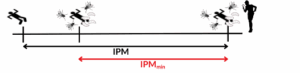
In a criminal investigation, a key factor to consider—especially in cases involving decomposed bodies—is the minimum postmortem interval (minPMI). This refers to the time elapsed between the moment when the first insects colonized the body and its discovery (Fig. 1).

Fig. 1. Simplified diagram illustrating the difference between PMI and minPMI.

It is referred to as a minimum because this estimate does not begin at the exact time of death but at the moment of the first insect colonization, which occurs shortly after death, ranging from a few minutes to several hours depending on environmental factors. Once rigor mortis, livor mortis, and the cooling of the body to ambient temperature have passed, it becomes increasingly difficult to estimate the time elapsed since death. The body then enters the putrefaction phase, during which forensic entomological methods can assist in determining the minimum time elapsed between death and the discovery of the body.

However, if the victim had consumed drugs prior to death, this can significantly affect the development of necrophagous insects by accelerating or delaying their growth.

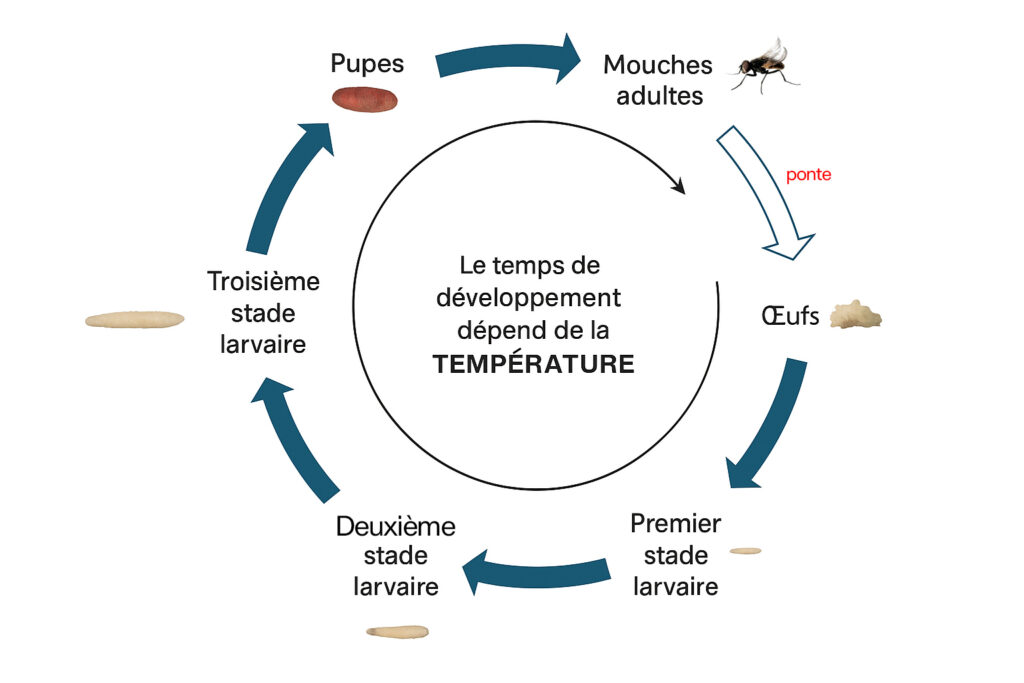
Forensic entomologists measure the size and study the developmental stage of the larvae present on the body, and by taking into account factors such as ambient temperature, the insect species identified, and data on necrophagous species succession [5, 6], they compare these findings with the life cycle of the insects concerned (Fig. 2).

Fig. 2. Life cycle of necrophagous flies (Diptera).

Since certain species colonize a cadaver very soon after death, they make it possible to determine the day of initial colonization and thereby estimate a minimum postmortem interval (minPMI).

However, if the victim had consumed drugs prior to death, this can significantly affect the development of necrophagous insects by accelerating or delaying their growth. Comparison with their life cycle is therefore biased, leading to overestimation or underestimation of the minPMI. This is why studies have been conducted to evaluate the impact of specific drugs on insect development, with the aim of eventually incorporating these variability ranges into more accurate minPMI estimations [7–12]. The way in which insects metabolize or fail to metabolize ingested toxic substances remains uncertain.

Limitations of entomotoxicology

Although insects can provide valuable information, entomotoxicology is not without limitations.

First, the environment plays a critical role: insect development is highly dependent on temperature, humidity, and climate. If the body is, for example, exposed to extreme heat or strong winds, insect colonization may differ. Ambient temperature directly influences insect survival and development. Harsh environmental conditions may kill the insects or slow their growth, thereby biasing or preventing analysis.

Moreover, beyond development, insect colonization itself can also be disrupted. For instance, when a body is submerged in water or covered (by clothing, tarpaulins, soil, debris, etc.), insect access is hindered. This may alter the dynamics of colonization and consequently the way insects feed on the body.

Another challenge in entomotoxicology is the uncertainty regarding how insects metabolize or fail to metabolize toxic substances they ingest. Unlike humans, their metabolism and the ways in which they store or eliminate toxic substances are poorly understood. As a result, it is difficult to establish a correlation between the amount of toxic substances detected in insects and the dose ingested by the deceased, making it problematic to confirm a lethal dose in the body and therefore to substantiate and accept a prior hypothesis of fatal intoxication.

Furthermore, methods for extracting, purifying, and analyzing toxic substances in insect larval tissues are not yet standardized. Each study must be adapted according to the substances being investigated.

Conclusion

Forensic entomotoxicology thus illustrates how insects could in the future become key witnesses in the resolution of criminal investigations. It opens up promising perspectives for forensic medicine by broadening the range of possibilities when no other biological sample is available. With advances in research, entomotoxicology may become an even more precise tool—not only qualitative but also quantitative—and essential in contributing to the establishment of truth in real forensic casework.

Bibliographie :

  • [1] Campobasso, C., Gherardi, M., Caligara, M., Sironi, L., & Introna, F. (2004c). Drug analysis in blowfly larvae and in human tissues : a comparative study. International Journal Of Legal Medicine, 118(4). https://doi.org/10.1007/s00414-004-0448-1
  • [2] Groth, O., Franz, S., Fels, H., Krueger, J., Roider, G., Dame, T., Musshoff, F., & Graw, M. (2021). Unexpected results found in larvae samples from two postmortem forensic cases. Forensic Toxicology, 40(1), 144‑155. https://doi.org/10.1007/s11419-021-00601-x
  • [3] Levine, B., Golle, M., & Smialek, J. E. (2000b). An unusual drug death involving maggots. American Journal Of Forensic Medicine & Pathology, 21(1), 59‑61. https://doi.org/10.1097/00000433-200003000-00010
  • [4] Beyer, J., Enos, W., & Stajić, M. (1980b). Drug Identification Through Analysis of Maggots. Journal Of Forensic Sciences, 25(2), 411‑412. https://doi.org/10.1520/jfs12147j
  • [5] Lutz, L., Verhoff, M. A., & Amendt, J. (2018). Environmental factors influencing flight activity of forensically important female blow flies in Central Europe. International Journal Of Legal Medicine, 133(4), 1267 1278. https://doi.org/10.1007/s00414-018-1967-5
  • [6] Matuszewski, S. (2021). Post-Mortem Interval Estimation Based on Insect Evidence : Current Challenges. Insects, 12(4), 314. https://doi.org/10.3390/insects12040314
  • [7] Boulkenafet, F., Dob, Y., Karroui, R., Al-Khalifa, M., Boumrah, Y., Toumi, M., & Mashaly, A. (2020). Detection of benzodiazepines in decomposing rabbit tissues and certain necrophagic dipteran species of forensic importance. Saudi Journal Of Biological Sciences, 27(7), 1691‑1698. https://doi.org/10.1016/j.sjbs.2020.04.044
  • [8] Gosselin, M., Di Fazio, V., Wille, S. M., Del Mar Ramírez Fernandez, M., Samyn, N., Bourel, B., & Rasmont, P. (2011b). Methadone determination in puparia and its effect on the development of Lucilia sericata (Diptera, Calliphoridae). Forensic Science International, 209(1‑3), 154‑159. https://doi.org/10.1016/j.forsciint.2011.01.020
  • [9] El-Samad, L. M., El-Moaty, Z. A., & Makemer, H. M. (2011). Effects of Tramadol on the Development of Lucilia sericata (Diptera : Calliphoridae) and Detection of the Drug Concentration in Postmortem Rabbit Tissues and Larvae. Journal Of Entomology, 8(4), 353‑364. https://doi.org/10.3923/je.2011.353.364
  • [10] Bourel, B., Hédouin, V., Martin-Bouyer, L., Bécart, A., Tournel, G., Deveaux, M., & Gosset, D. (1999). Effects of Morphine in Decomposing Bodies on the Development of Lucilia sericata (Diptera : Calliphoridae). Journal Of Forensic Sciences, 44(2), 354‑358. https://doi.org/10.1520/jfs14463j
  • [11] Zou, Y., Huang, M., Huang, R., Wu, X., You, Z., Lin, J., Huang, X., Qiu, X., & Zhang, S. (2013). Effect of ketamine on the development of Lucilia sericata (Meigen) (Diptera : Calliphoridae) and preliminary pathological observation of larvae. Forensic Science International, 226(1‑3), 273‑281. https://doi.org/10.1016/j.forsciint.2013.01.042
  • [12] O’Brien, C., & Turner, B. (2004). Impact of paracetamol on Calliphora vicina larval development. International Journal Of Legal Medicine, 118(4), 188‑189. https://doi.org/10.1007/s00414-004-0440-9