The similarity between identical twins is not only physical. They also share the same genetic heritage, which can undermine the famous DNA evidence. But perhaps not for much longer…
A recent case illustrates the challenge of judging a criminal matter involving twins. On March 17, 2021, the Assize Court of Val-d’Oise in Pontoise heard the case of two twin brothers charged with three attempted murders. Acquitted of the first two charges, they were nonetheless both sentenced to twelve years in prison for the third. A surprising decision, but one justified by the impossibility, in the first two cases, of determining with certainty to whom the DNA traces found on a handgun actually belonged.
This case is reminiscent of the Gomis brothers affair, involving a series of rapes and attempted rapes in the Marseille area in 2013. Unable to distinguish them based on their DNA, the police initially charged the wrong twin before obtaining a confession from the actual perpetrator.
Alike, but not 100% identical.
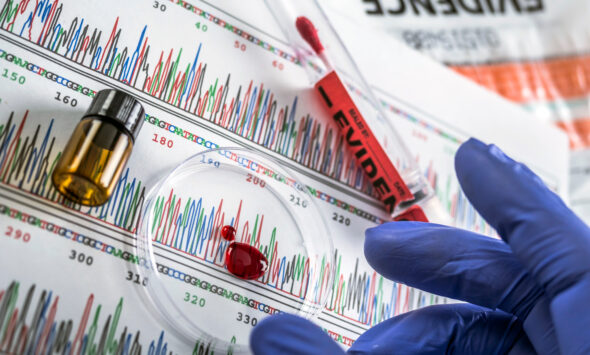
Identical twins, also known as monozygotic twins—originating from the division of the same egg fertilized by the same sperm cell—share the same genetic heritage. This makes it extremely difficult to differentiate them on the basis of DNA, which in recent years has become the gold standard of scientific evidence in criminal investigations. DNA analyses focus on tiny non-coding regions of the genome, which vary from one individual to another but are identical in true twins.This genetic challenge, however, may soon be overcome. In a study of 387 pairs of twins published on January 7, 2021 in the journal Genetics, Icelandic scientists highlighted the existence of early genetic mutations occurring during gestation, at the time of cell division. These sometimes minor alterations help explain physical differences as well as variations in susceptibility to certain diseases.
Distinct fingerprints.
In the future, advances in laboratory sequencing techniques may allow twins to be distinguished by their DNA. Until that technological leap is achieved, forensic science can still rely on fingerprint analysis. Every individual possesses unique fingerprints, with the statistical probability of sharing them with another person estimated at 1 in 64 billion—so low as to be practically impossible.
Contrary to common belief, twins are no exception to this rule. While DNA plays a fundamental role in shaping fingerprints, many other factors influence their formation. Developed in utero between the thirteenth and twentieth week of gestation, fingerprints are subject to a range of environmental ‘stresses’: pressure against the uterine walls, friction within the amniotic fluid or against the umbilical cord, thumb sucking by the fetus. According to some studies, maternal behavior may also affect fingerprint patterns: exposure to toxic agents (alcohol, drugs), certain medications, viral or bacterial infections, or even psychological stress during pregnancy can all increase the likelihood of alterations. After birth, accidents, skin diseases, or medical treatments may further modify the detail of the ridge patterns.
These are valuable indicators that forensic science can use, when confronted with a criminal case, to resolve the mystery of twin identity.
Sources
https://www.nature.com/articles/s41588-020-00755-1
https://www.livescience.com/do-identical-twins-have-identical-fingerprints.ht
Tous droits réservés - © 2026 Forenseek