A bite and a strangulation are two common acts in domestic violence, yet they leave very different genetic traces. That is one of the lessons from research to be presented in late October at ISHI 37, the largest annual international meeting devoted to DNA-based human identification [1]. The findings speak to a real difficulty in intimate partner violence cases. Finding a partner’s DNA on the victim’s body is not enough to establish how it got there, particularly when the two people live together and are in regular contact.
The paradox of DNA between partners
In most criminal cases, detecting a suspect’s DNA profile on a victim carries considerable probative weight. That reasoning largely breaks down in domestic violence cases. Partners live together and share the same bed, the same bathroom, the same clothes and countless everyday contacts. Each partner’s DNA is therefore very often found on the other [2]. Specialists call this background DNA, meaning genetic material that has built up through ordinary cohabitation rather than through any specific act.
The question that matters is then no longer really whose DNA it is. It becomes which activity led to its deposition, an ordinary contact of shared life or an act of aggression. This is what Daniel Arend, a young researcher featured in the Student Ambassador programme of the ISHI 37 symposium, is trying to put on an objective footing [1]. His work examines the transfer, persistence, prevalence and recovery of DNA (DNA-TPPR) in two acts emblematic of domestic violence, biting and strangulation [1].
Bites leave a different kind of trace
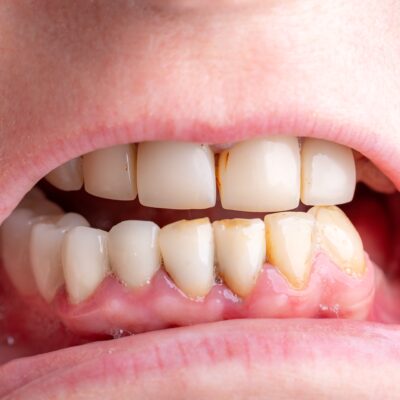
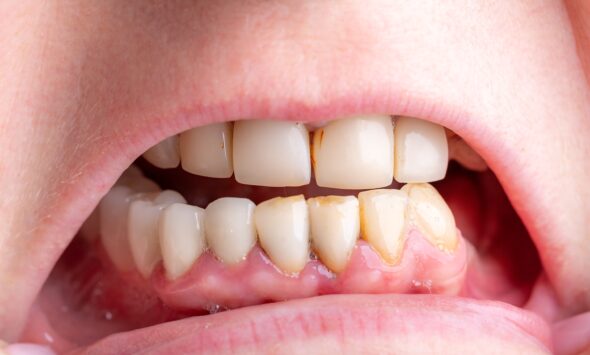
Daniel Arend’s research looks in particular at DNA recovery after simulated bites. According to the interview published by the organisers ahead of the meeting, bitten areas yielded near-complete profiles of the biting individual in many samples up to 16 hours after contact, the longest interval studied, even though the volunteers had returned to their usual activities [1]. The person who bit was often the major contributor to the mixture, whereas that person generally appeared only as a minor contributor when no biting had occurred [1]. These results should nonetheless be treated with caution, as they have not yet been published in a peer-reviewed journal.
Such persistence is not surprising in light of earlier work on salivary DNA. A study published in 2011 found that a full male profile could still be obtained 96 hours after saliva had been deposited on unwashed skin, in 8 of 9 experiments [3]. A bite can therefore leave a trace whose interpretation differs markedly from that of a simple skin contact.
The strangulation problem
Simulated strangulation involving skin-to-skin contact alone, by contrast, mostly produced only partial profiles [1]. These profiles were often impossible to distinguish from the background DNA associated with cohabitation [1]. The observation echoes research on manual strangulation going back to the late 1990s. Early work showed that the assailant’s DNA could be typed from epithelial cells transferred to the victim’s neck [4]. About a decade later, a British team found that even without any assault, nearly a quarter of the neck areas swabbed from 24 adult volunteers already carried non-donor alleles [5]. A Norwegian study later observed that among participants living with a partner, the partner’s DNA persisted on the neck and accumulated over the course of the day [2]. A neck swab showing the partner’s DNA may therefore prove nothing about strangulation, while a weak or partial profile is no more able to rule it out.
What this means for investigators and expert witnesses
For investigators and forensic practitioners, these data argue for early, targeted swabbing of bite sites, whose evidential value appears to hold over several hours, and for considerable caution when relying on neck swabs from partners who live under the same roof. For expert witnesses, judges and prosecutors, they support the evaluative approach advocated by the European Network of Forensic Science Institutes (ENFSI). This approach asks the scientist to assess the probability of the findings given competing propositions, framed here at the activity level, while taking into account the time elapsed, the victim’s activities and the context of cohabitation, rather than stopping at the mere presence of a DNA profile [6].
Daniel Arend’s work is part of this shift. Its value lies in the effort to generate data that document these situations more thoroughly, rather than treating the mere presence of a profile as direct proof of the alleged activity [1].
Findings that remain preliminary
The scope of this work still calls for caution. Daniel Arend’s results concern experimental scenarios and will be presented as a poster at ISHI 37 [1]. They do not yet amount to a study published in a peer-reviewed journal. They do, however, belong to a broader body of research built up over the past 15 years or so on how DNA moves between people who share the same living or working space. A recent Italian study of shared workspaces showed, for instance, that the DNA of one participant’s cohabiting spouse could be found on that participant’s personal items, in this case a credit card, even though the spouse had taken no part in any of the handling experiments [7]. This shared genetic background, largely overlooked twenty years ago, is now regularly invoked to challenge DNA evidence in the criminal courts.
In domestic violence cases, finding a partner’s DNA on the victim is therefore a piece of information that has to be read in context. The trace may well be relevant, but its evidential value also depends on how it could have been deposited and on the alternative explanations consistent with the findings.
Références
[1] Luther T. « Student Ambassador Poster Preview, Daniel Arend on DNA Transfer in Domestic Violence Cases ». ISHI News, 17 septembre 2026. https://www.ishinews.com/student-ambassador-poster-preview-daniel-arend-on-dna-transfer-in-domestic-violence-cases/
[2] Fantinato C., Gill P., Fonneløp A.E. « Non-self DNA on the neck, a 24 hours time-course study ». Forensic Science International: Genetics, 2022, 57, 102661. DOI 10.1016/j.fsigen.2022.102661.
[3] Kenna J., Smyth M., McKenna L., Dockery C., McDermott S.D. « The recovery and persistence of salivary DNA on human skin ». Journal of Forensic Sciences, 2011, 56(1), 170-175. DOI 10.1111/j.1556-4029.2010.01520.x.
[4] Wiegand P., Kleiber M. « DNA typing of epithelial cells after strangulation ». International Journal of Legal Medicine, 1997, 110(4), 181-183. DOI 10.1007/s004140050063.
[5] Graham E.A.M., Rutty G.N. « Investigation into “Normal” Background DNA on Adult Necks, Implications for DNA Profiling of Manual Strangulation Victims ». Journal of Forensic Sciences, 2008, 53(5), 1074-1082. DOI 10.1111/j.1556-4029.2008.00800.x.
[6] European Network of Forensic Science Institutes (ENFSI). « ENFSI Guideline for Evaluative Reporting in Forensic Science », approved version 3.0, 8 mars 2015. https://enfsi.eu/wp-content/uploads/2016/09/m1_guideline.pdf
[7] Onofri M., Tommolini F., Severini S., Gambelunghe C., Lancia M., Carlini L., Carnevali E. « Trace DNA Transfer in Co-Working Spaces, The Importance of Background DNA Analysis ». International Journal of Molecular Sciences, 2024, 25(4), 2207. DOI 10.3390/ijms25042207.
Tous droits réservés - © 2026 Forenseek